

Cold-weather products received lower customer ratings when local temperatures were colder in an analysis of outdoor retailer REI’s reviews, illustrating how conditions around a purchase can shape a product’s apparent quality.
The research examined 218,918 ratings and compared patterns across product categories. It found a relationship for gear intended to keep people warm, while ratings for comparison categories such as bicycles did not show the same temperature pattern.
Matt Meister and Nicholas Reinholtz’s Journal of Marketing study, first published online in 2025 and included in the November 2026 issue, combines the review analysis with experiments.
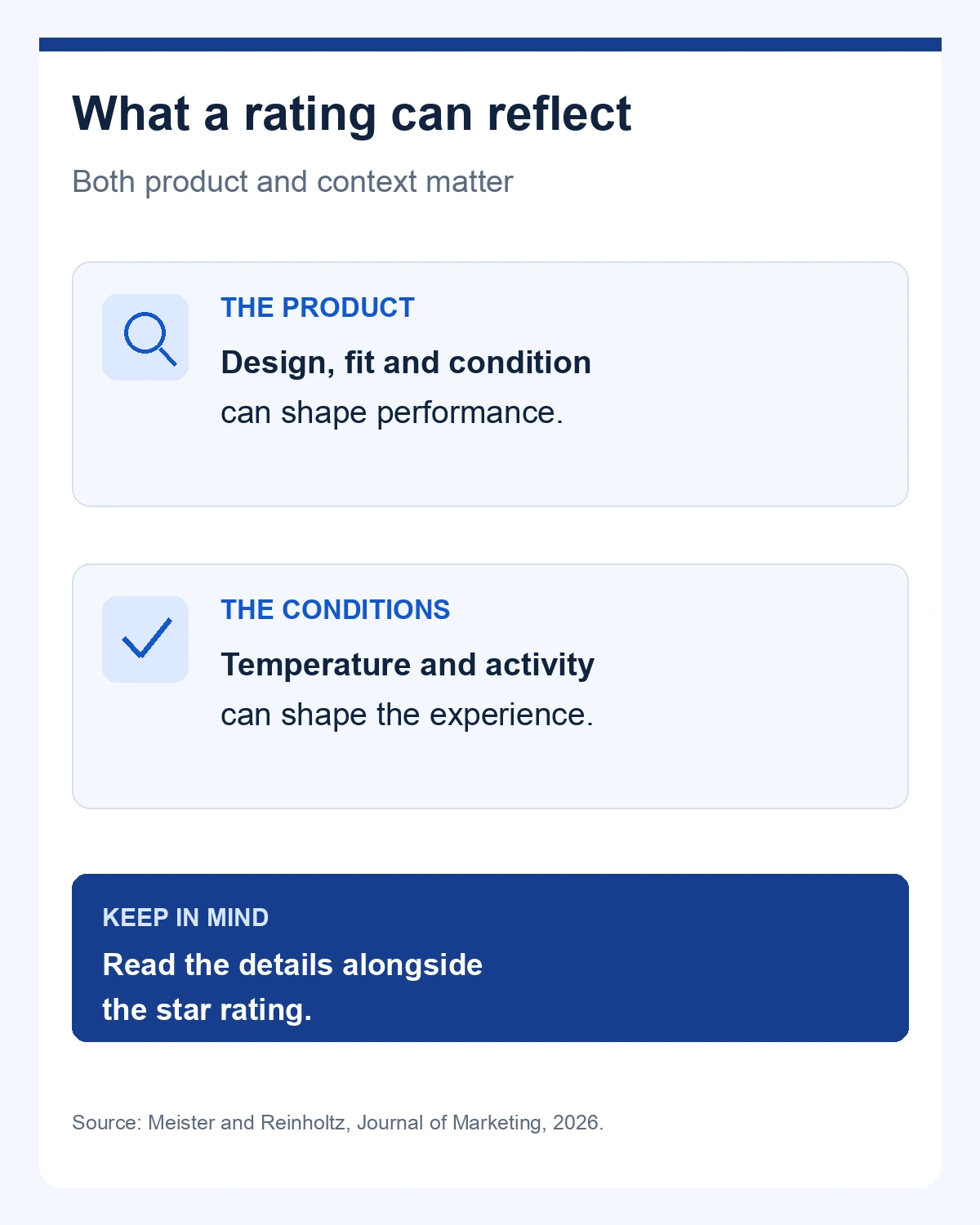
What a star rating captures
A customer rating reflects an experience, which may depend on the product and the situation in which it was used. A jacket evaluated during unusually cold weather faces a different test from one worn on a milder day.
The researchers controlled for factors including climate and season in their analysis. The review data nevertheless show associations, not proof of the reason for every rating. The study does not show that negative reviews are invalid or that cold-weather products are always rated unfairly.
They also examined other contexts, including rain gear, and tested the idea in a laboratory setting. In some tests, prompting people to consider the conditions under which they used an item reduced the effect.
More context can help shoppers
A shopper comparing reviews can look beyond the average score. Details such as temperature, duration of use, fit and the activity involved may help explain whether a review is relevant to their own needs.
That does not mean dismissing a low rating from a difficult situation. A product intended for demanding conditions should be assessed against the claims its seller makes. Context helps readers interpret the experience rather than replace it.
What retailers can learn
Review forms can invite customers to describe how and where they used a product without steering them toward a favorable rating. Retailers can make that information easy to find and allow shoppers to filter reviews when enough data are available.
Businesses should avoid changing or suppressing ratings merely because conditions were challenging. A useful review system preserves honest feedback and presents the information customers need to judge it.
Our report on organizing online reviews examines another way presentation can affect how people use customer feedback.
For companies tracking product quality, a change in the mix of customers or conditions can complicate comparisons over time. Looking at review details alongside returns, support requests and product specifications can provide a fuller picture than a single average.
