
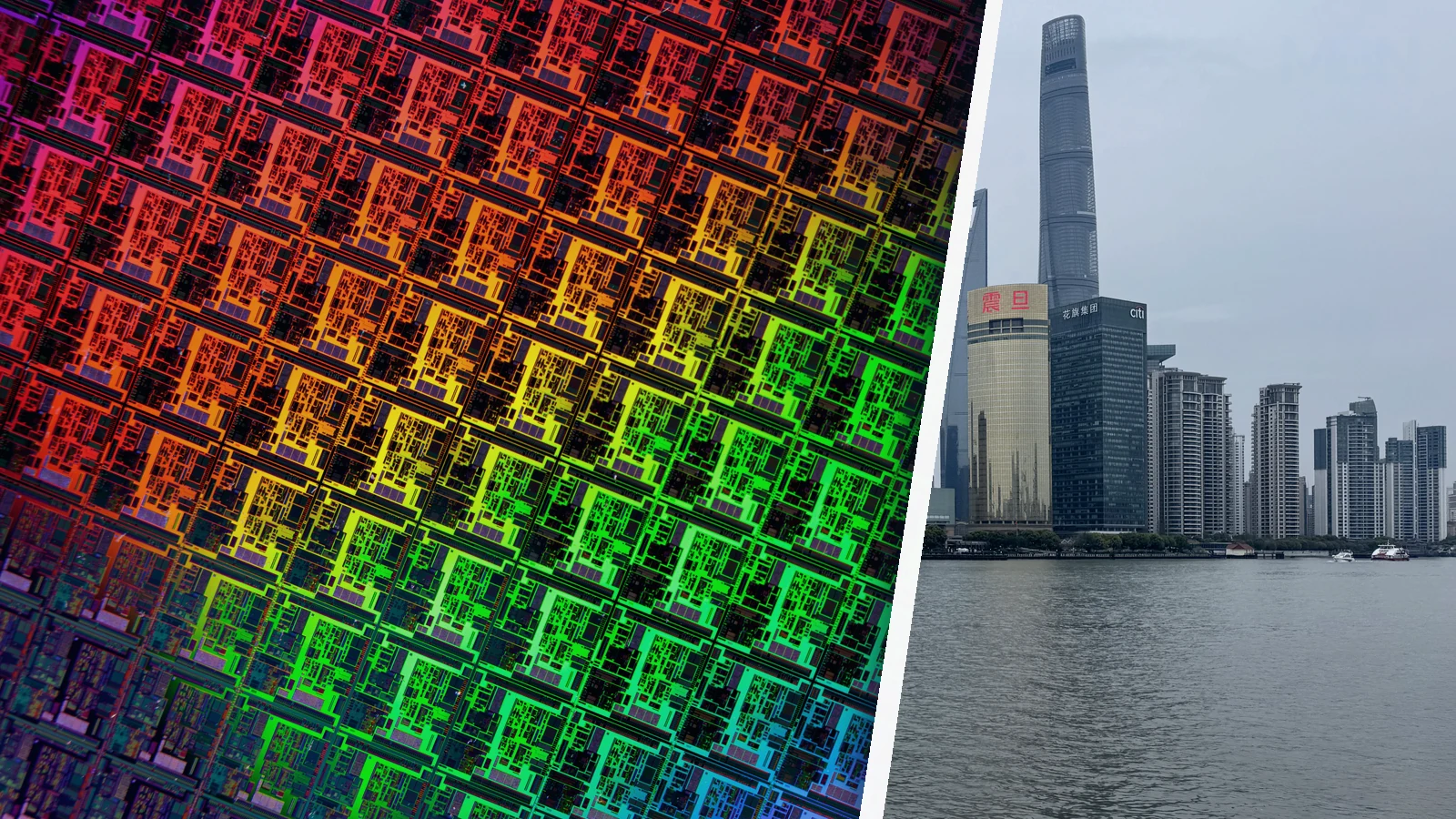
The parent company of Chinese memory-chip maker Yangtze Memory Technologies, or YMTC, plans to raise 33 billion yuan through a Shanghai initial public offering, with most of the money earmarked for upgrading mass-production lines.
The Shanghai Stock Exchange accepted the application on 21 August. Acceptance starts the exchange review. It does not mean the IPO has been approved, priced or completed.
The preliminary prospectus covers an issue of between 1.98 billion and 2.43 billion new A-shares before any over-allotment option. That would represent 10% to 12% of the company after the offer. A-shares are yuan-denominated shares traded on mainland Chinese exchanges.
The proposed listing is on Shanghai’s STAR Market, a board designed for science and technology companies. The offer price and timetable have not yet been disclosed.
Production upgrades take most of the proceeds
According to the company’s preliminary prospectus, 20.8 billion yuan would go towards upgrading its mass-production lines. The remaining 12.2 billion yuan is allocated to research and development projects.
YMTC makes 3D NAND flash memory. NAND is the type of semiconductor memory that retains data after the power is switched off. It is used in solid-state drives, smartphones and other storage products. In 3D NAND, memory cells are stacked vertically to increase capacity without making the chip much larger.
The filing shows a sharp financial recovery. Revenue rose from 18.74 billion yuan in 2023 to 45.20 billion yuan in 2024 and 63.18 billion yuan in 2025. Net profit attributable to the parent moved from a 19.18 billion yuan loss in 2023 to profits of 6.77 billion yuan in 2024 and 14.21 billion yuan in 2025.
In the first three months of 2026 alone, revenue reached 47.04 billion yuan and net profit attributable to the parent was 33.38 billion yuan. The quarterly profit was therefore more than twice the amount earned in the whole of 2025.
YMTC says calculations based on TrendForce data placed it third among global NAND suppliers, and first in China, by both revenue and shipments in the first quarter. That ranking is presented in the prospectus as the company’s calculation, rather than as an exchange finding.
Strong profits do not remove the need for capital
The proposed 33 billion yuan fundraising is equal to about 98.9% of the company’s first-quarter net profit, based on an MBN calculation. That makes this look very different from a rescue financing. It also shows how quickly a chip manufacturer can absorb capital even when earnings are unusually strong.
During the period from 2023 through March 2026, the group says it spent about 96.39 billion yuan in cash on acquiring and building long-term assets. Research and development spending totalled about 15.95 billion yuan. Depreciation and amortisation costs reached about 50.95 billion yuan.
Depreciation is the accounting process that spreads the cost of factories and equipment across their useful lives. For a memory-chip manufacturer, it remains a large expense after the production line has been built. The company must also keep investing as chip designs and manufacturing processes advance.
This is the practical logic behind the IPO. YMTC is not merely seeking more output. The proposed spending is intended to improve production technology and fund the next rounds of product development.
Artificial-intelligence infrastructure adds to the opportunity because AI systems require substantial data storage as well as computing power. However, the filing does not show that AI alone caused YMTC’s profit increase. Data-centre growth also depends on other physical inputs, including the electricity and grid connections needed to operate new facilities.
NAND prices remain the central financial risk
The prospectus says the global NAND market was in a supply-constrained, high-demand cycle when the document was signed. That helped lift YMTC’s profit and margin, but memory chips have a history of pronounced price cycles.
If demand growth slows, or large suppliers expand capacity, additional supply can push selling prices lower. YMTC warns that its high fixed depreciation costs can magnify the effect of price changes on margins and profit.
The company also identifies trade restrictions, supply-chain disruption and rapid technological change among its risks. YMTC competes with much larger international suppliers, while continuing to spend heavily on equipment and development.
The IPO would give the group another large pool of capital for that competition, but the size of the planned raise should not be confused with money already secured. The exchange still has to review the application, and investors do not yet have an offer price or listing date.
