
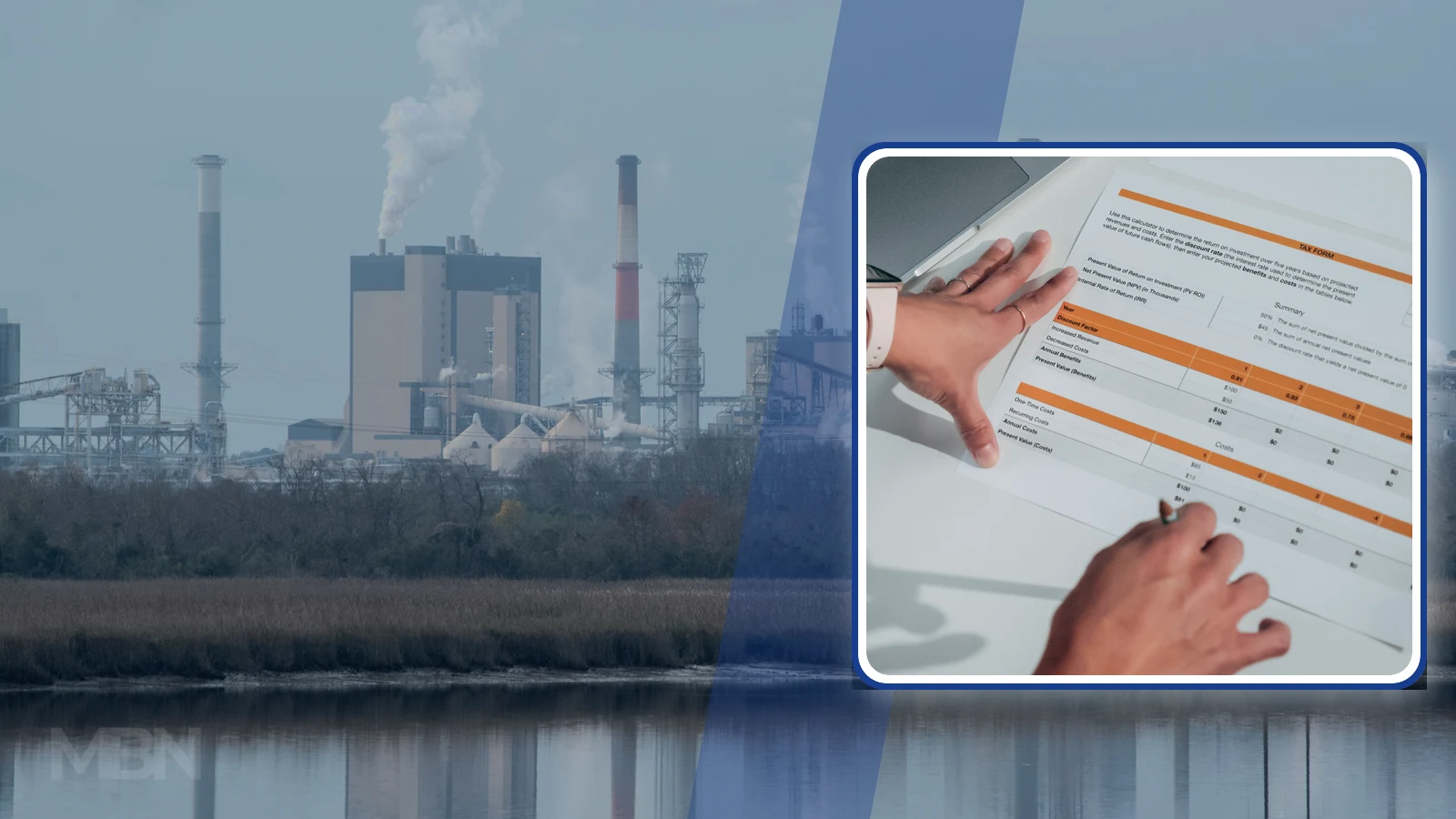
US industries covered by mandatory greenhouse gas reporting recorded a 3% to 4% increase in new business establishments after emissions data became public, relative to industries outside the programme, according to a peer-reviewed study. The result suggests that disclosure can affect competition as well as corporate emissions.
The research does not show that every new location was an independent startup, nor does it establish that the reporting rule reduced total emissions once new entrants were included. It does, however, identify a market response that is easily missed when disclosure policies are judged only by what established companies do.
Raphael Duguay, Chenchen Li and Frank Zhang of Yale University conducted the research, which was published in the August 2026 issue of the Journal of Accounting and Economics.
The study compared exposed and unexposed industries
The researchers examined the US Environmental Protection Agency’s Greenhouse Gas Reporting Program, commonly shortened to GHGRP. The programme requires large sources of greenhouse gases, fuel and industrial-gas suppliers, and certain carbon dioxide injection sites to report emissions and related information.
Many facilities are covered when their annual emissions reach at least 25,000 metric tonnes of carbon dioxide equivalent. Carbon dioxide equivalent converts different greenhouse gases into a common measure based on their warming effect.
Facilities began measuring emissions for the programme in 2010, but the data were not made public until January 2012. That timing allowed the researchers to distinguish the act of measuring emissions from the effect of publishing the information.
Using a statistical method called difference-in-differences, the team compared changes in industries exposed to the reporting mandate with changes in industries that were not covered. The method asks whether the two groups moved differently after disclosure began, while accounting for factors such as the year, county, industry, local population and income.
The main analysis used county and industry data from 2009 to 2014. It drew its establishment figures from the US Census Bureau’s Statistics of U.S. Businesses. Before the emissions information became public, the exposed and comparison industries had followed similar trends in establishment births. After publication began, the increase in exposed industries was about 3% to 4% larger.
The result remained positive under several alternative statistical models. A separate analysis using more detailed industry categories also found a higher establishment-birth rate after disclosure.
A new establishment is not always a new company
The meaning of “business birth” needs care. The Census Bureau defines an establishment as a single physical location where business is conducted. An establishment birth occurs when that location moves from zero employment in the first quarter of one year to positive employment in the first quarter of the next.
A new establishment may be a startup, but it may also be another location opened by an existing company. The study therefore measures new operating locations with paid workers, not newly incorporated businesses alone. It also excludes businesses without paid employees.
This distinction narrows the claim, but it does not remove the competitive point. Additional factories, warehouses, offices or service locations can still increase capacity and put pressure on established operators.
Disclosure may create space for competitors
The authors considered two explanations for the increase.
First, disclosure may change how established companies operate. Earlier research found that emissions reporting can push firms to cut pollution after investors, campaigners and the public gain access to comparable data. In the new study, incumbent firms in affected industries reduced economic activity, increased spending on research and capital equipment, and experienced lower profitability after the programme was introduced.
Those adjustments can create room for other operators. The increase in establishment births was greater in industries where established firms cut emissions and where public or shareholder scrutiny was stronger.
Second, disclosure may weaken an incumbent’s information advantage. Emissions reports can contain clues about fuel use, production processes, operating constraints and costs. An entrepreneur or rival may use that information to judge demand, identify an underserved area or estimate whether entry is commercially viable.
The pattern is consistent with both explanations. However, the authors explicitly describe the evidence for these mechanisms as descriptive rather than causal. The study does not track an entrepreneur from an emissions database to the decision to open a particular site.
The effect on total emissions remains uncertain
More business formation is normally treated as good news for competition, jobs and economic activity. From an emissions perspective, the answer is less obvious.
A new operator may start below the programme’s reporting threshold. If it takes production from a larger company that has reduced output, some pollution may move to a less visible part of the market. The authors warn that studies looking only at established reporting companies could therefore overstate the programme’s net emissions reduction.
That remains a possibility, not a measured result. The researchers did not calculate emissions from the new establishments. Some entrants could use cleaner equipment or business models, while others could grow and eventually become subject to reporting. The analysis also does not show whether the new locations survived, became profitable or raised employment across the industry after the 2009 to 2014 study period.
California was excluded from the main sample because its environmental regulations differed from those elsewhere in the country, although adding the state in a robustness test did not overturn the principal result.
Transparency can alter the structure of a market
The practical lesson is that disclosure is not merely an administrative exercise. Once information becomes public, established firms, investors, campaigners and prospective competitors can all act on it.
That creates a policy trade-off. A reporting threshold reduces the burden on small operators, but it may also leave part of an industry’s emissions outside the public dataset. Extending the rule to much smaller facilities would improve coverage while increasing compliance costs.
The EPA says approximately 8,000 facilities are currently required to report under the GHGRP. The new study does not determine the best threshold. It shows why regulators assessing such programmes may need to look beyond reported emissions and examine who enters the market, who expands and where production moves next.
