
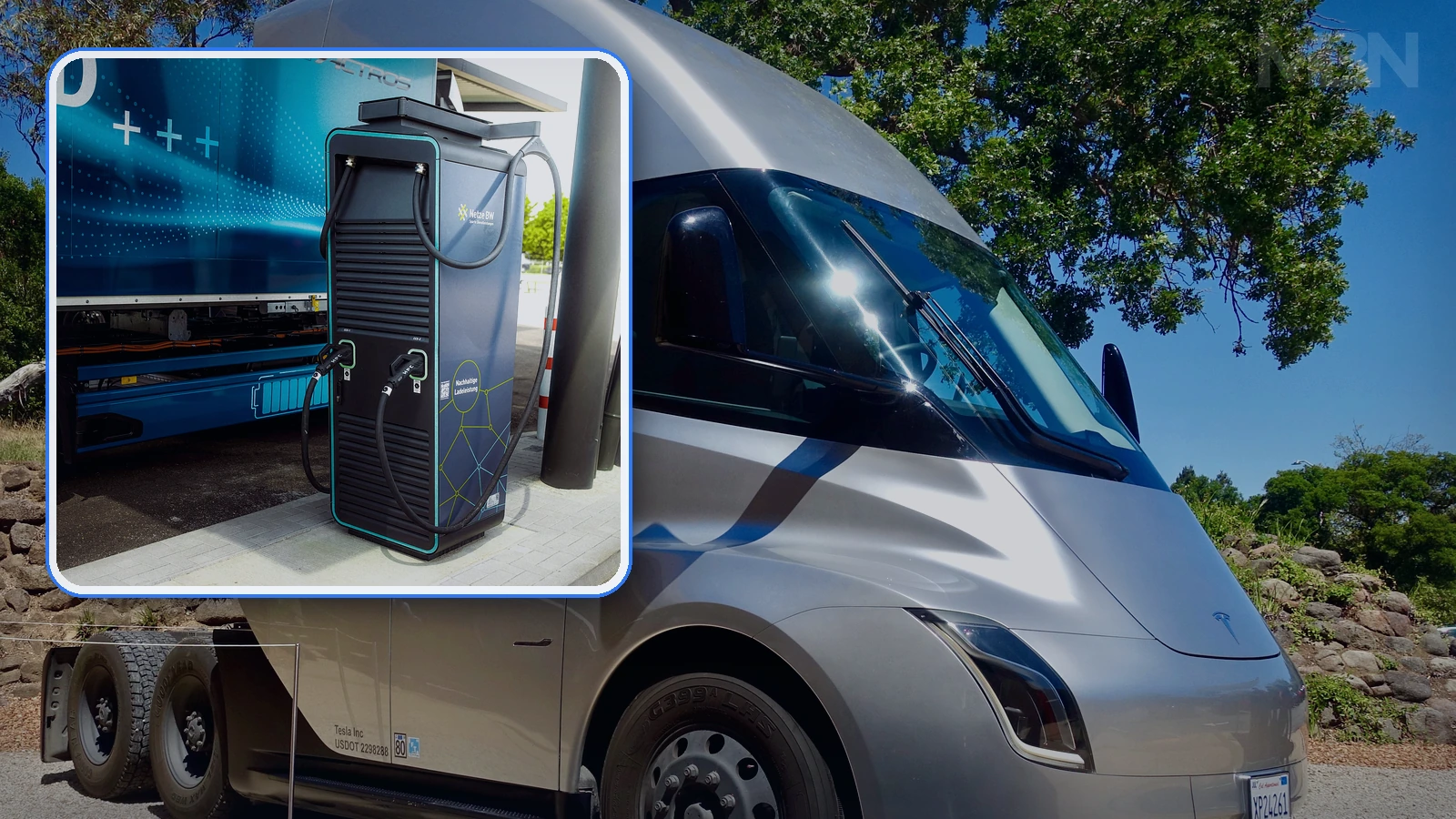
Einride says it plans to deploy 500 Tesla Semi trucks on its Saga AI freight platform, a programme that would triple its vehicle fleet, as the Swedish transport technology company reported higher first-half revenue alongside a wider loss and heavier cash use.
The announcement came with Einride’s results for the six months ended 30 June 2026, its first earnings release since completing its business combination and listing on Nasdaq on 10 June.
The Tesla programme was agreed after the reporting period. Einride said the additional trucks would take its deployed fleet from about 250 vehicles to roughly 750. It did not disclose a delivery timetable, purchase price, financing providers or the commercial terms of the arrangement.
The 500 trucks are a plan, not a completed delivery
Einride intends to finance the Tesla Semis through third-party arrangements rather than paying for the entire fleet with newly raised shareholder capital. Chief financial officer Anubhav Verma described the approach as asset-backed financing, meaning funding supported by the value and earning potential of the vehicles.
This matters because issuing new shares to buy trucks would dilute existing investors, reducing their percentage ownership. Outside vehicle finance can limit that immediate dilution, but it does not make the trucks free. The eventual leases or loans will have costs, conditions and repayment obligations, none of which Einride disclosed with the announcement.
The company also has to obtain the vehicles and charging capacity, place them on suitable routes and keep them working often enough to cover those costs. Einride’s filing specifically identifies its ability to secure third-party finance on acceptable terms and successfully deploy the planned fleet as risks.
Saga AI manages freight, but it does not make the Tesla Semis driverless
Saga AI is Einride’s digital freight operating platform. It is used to plan transport, allocate vehicles, manage charging and monitor how loads move through a network. Putting a truck on the platform refers to managing its freight operation through that software.
That is separate from autonomous driving. Einride’s filing does not describe the 500 Tesla Semis as driverless vehicles. The company also develops cabless autonomous trucks, but those operations are reported separately. Einride said its contracted autonomous deployments had accumulated more than 5,400 driverless hours by 30 June, across six deployments in the United States and Europe.
Tesla describes the Semi as a battery-electric heavy truck and currently says deliveries begin in 2026. That general product timetable is not a delivery schedule for Einride’s 500-truck programme.
Amazon is expected to drive second-half growth
Einride separately plans to deploy 75 manually driven electric heavy trucks across five US locations for Amazon. The companies expanded that relationship after an initial trial, and Einride will provide charging support and manage selected loads through Saga AI.
Those 75 vehicles are for Amazon’s middle-mile network. Middle mile is the part of a delivery journey in which goods move between facilities such as fulfilment centres, sorting hubs and delivery stations, before the final trip to a customer’s address. Amazon uses the same distinction when describing its freight network.
Einride expects the Amazon ramp and other US and European deployments to lift constant-currency revenue by 60% to 73% in the second half of 2026 compared with the same period a year earlier. That is management guidance, not booked revenue, and it depends on the timing and utilisation of the deployments.
Reported revenue rose less than the constant-currency figure
Einride highlighted a 26% increase in first-half constant-currency revenue to SEK273 million, about $27 million. Constant currency removes the effect of exchange-rate movements by translating both periods using the same rates, which can make the underlying change in sales activity easier to see.
The company’s financial statements show reported revenue of SEK263.5 million, up 21.7% from SEK216.5 million a year earlier. The difference does not mean either figure is wrong. The 26% measure is a company-defined, non-IFRS comparison, while SEK263.5 million is the revenue recorded in the statutory accounts.
Listing charges explain part of the loss, but not all of the cash pressure
The net loss widened to SEK1.12 billion from SEK887.4 million. Einride attributed much of the result to costs connected with its public listing and business combination.
These included a SEK636 million non-cash recapitalisation expense, SEK245 million of one-time share-based compensation and SEK203 million of advisory fees. A SEK582 million non-cash gain from remeasuring a warrant liability partly offset those charges. A warrant gives its holder the right to buy shares under specified terms, and changes in its accounting value can affect profit without moving cash during the period.
Adjusted EBITDA, a company-defined measure that removes interest, tax, depreciation, amortisation and selected other items, still showed a loss of SEK363.1 million. That was 69.7% wider than the SEK214.0 million adjusted loss a year earlier.
Cash used in operating activities rose 88.2% to SEK536.7 million. This is the more direct measure of how much cash the day-to-day business consumed during the half year, and it shows that the underlying funding requirement cannot be explained only by non-cash listing accounting.
Vehicle finance and company finance are two different tests
The Tesla plan creates a two-part financing story. Asset-backed structures could fund the trucks without Einride issuing shares for each vehicle purchase. At the company level, however, Einride remains dependent on outside capital while it expands.
In its full interim report, Einride said its SEK747.6 million cash balance at 30 June would not be enough to fund its long-term operating plan. It expects to seek more equity or debt, which could dilute shareholders or impose financial restrictions. The statement is not a claim that the company faces an immediate cash shortfall, but it makes future access to capital a material part of the growth plan.
The cash balance was up from SEK278.8 million at the end of 2025, largely because the Nasdaq transaction included an approximately $113 million private investment in public equity, commonly called a PIPE. Net cash provided by financing activities reached SEK1.02 billion in the first half, compared with SEK362.1 million a year earlier.
The 2028 target depends on converting plans into paying work
Einride is targeting cash flow breakeven in 2028, when it aims to have approximately 1,500 to 2,000 trucks in operation. Cash flow breakeven means the business is no longer consuming more cash than it generates over the relevant period.
Management says its expansion is supported by about $800 million of potential long-term annual recurring revenue in joint business plans with customers. Annual recurring revenue, or ARR, is an estimate of revenue that would repeat over a year. In this case, the company explicitly describes the figure as potential: it still has to be converted into contracted, revenue-generating capacity.
The practical test is therefore not simply whether Einride can announce a 500-truck fleet. It is whether the company can finance and receive the vehicles, secure charging and customer routes, keep the trucks productively deployed and turn that activity into cash before its wider operating needs require substantially more capital.
