
Minimum wage increases across America will benefit millions of workers in 2025. What are the key changes, the driving forces behind these wage hikes, and the implications for the country’s workforce and businesses?
Why Are Minimum Wages Increasing?
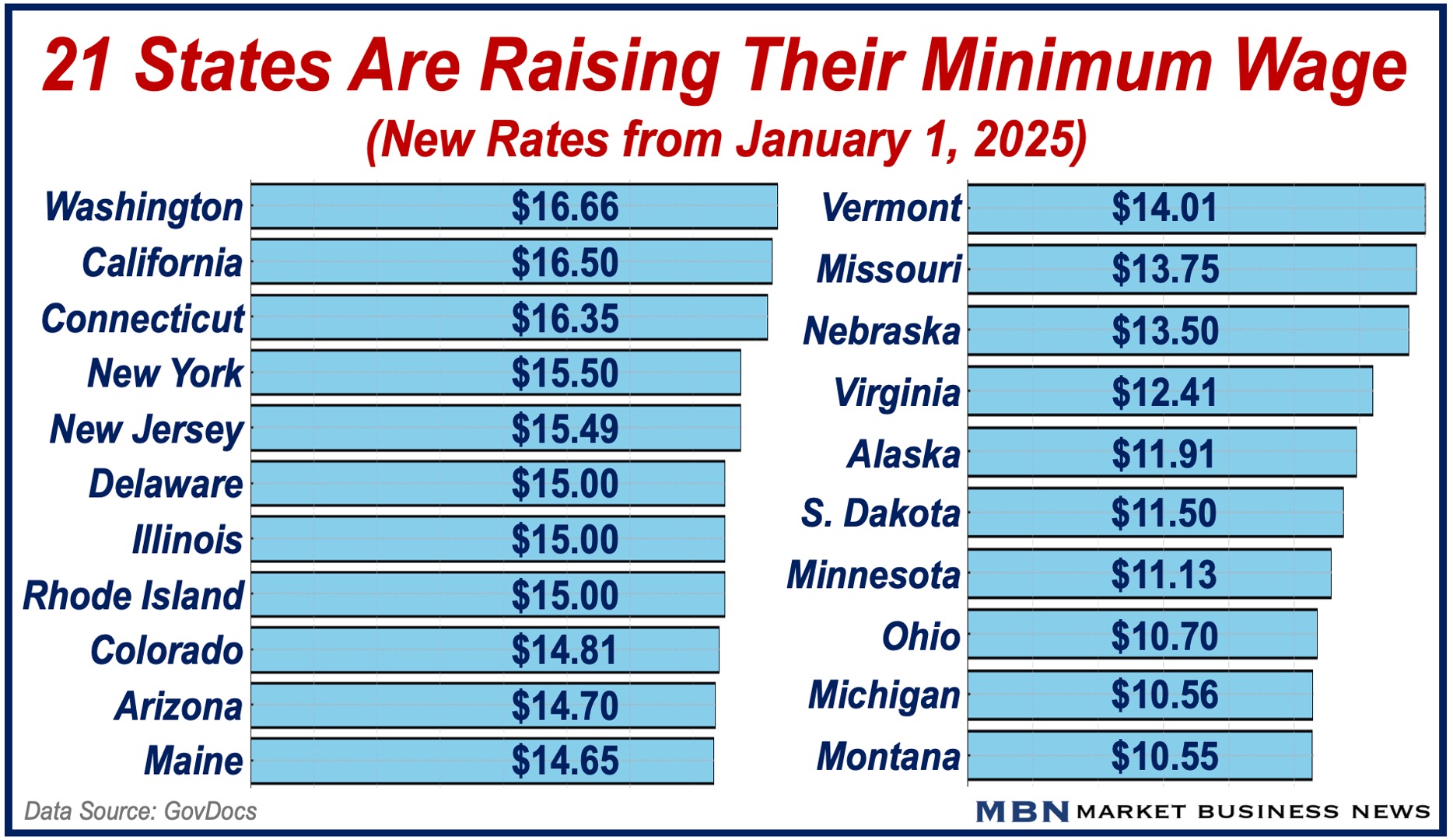
The year 2025 will mark a record number of state and local minimum wage hikes. Twenty-one states and over 40 cities and counties will raise their wage floors starting January 1, with some increases tied to inflation.
Several states are stepping up their minimums to $15+, reflecting growing political and public support.
Over the last ten years, the movement for wage increases has gained significant traction. Initiatives such as the “Fight for $15” have sparked legislation and ballot measures across the United States.
Proponents of these hikes say they help workers keep pace with rising living costs and help reduce economic inequality.
Key States and Changes
-
Washington
At $16.66 per hour, the state will have America’s highest minimum wage. Some local rates will exceed $21.
-
California
Most workers will earn $16.50 per hour, while healthcare workers may see rates as high as $18 or more.
-
Delaware
Delaware, where the minimum wage will rise by $1.75 to $15 per hour, will implement the largest single-year hike.
-
Connecticut
The minimum wage will rise to $16.35, one of the highest rates in the country.
-
No Change
States like Mississippi and Texas, on the other hand, will continue adhering to the federal minimum wage of $7.25, which has remained the same for the last 15 years (since 2009).
Federal Minimum Wage: A Stagnant Benchmark
In twenty US states, the minimum wage has remained stubbornly at $7.25 per hour since 2009.
Critics argue that the federal rate is unrealistic and leaves millions of workers barely able to meet basic living expenses.
Efforts to raise the federal minimum wage have faced stiff resistance in Congress. While some lawmakers support moderate increases, others advocate for higher rates tied to inflation.
Impact on Workers and Businesses
The Economic Policy Institute, a non-profit American think tank which is affiliated with the labor movement, estimates that over 9 million workers will receive raises in 2025 due to minimum wage increases.
Women and minority workers, particularly Black and Latino employees, are expected to benefit disproportionately from these changes.
The debate over higher minimum wages remains contentious in America, as it does in many other countries.
Critics argue that higher minimum wages raise labor costs, which could lead to job losses, particularly for less experienced workers. Proponents say they reduce poverty and stimulate local economies.
The Role of Inflation
Many states today index their minimum wages to the inflation rate, thus ensuring that wages rise in step with living costs.
This approach has become increasingly relevant amid recent inflation spikes, which have disproportionately affected low-income households.
Most studies have shown that raising the minimum wage does not push up the inflation rate.
According to the W.E. Upjohn Institute for Employment Research:
“Many business leaders fear that any increase in the minimum wage will be passed on to consumers through price increases, thereby slowing spending and economic growth, but that may not be the case. New research shows that the pass-through effect on prices is fleeting and much smaller than previously thought.”
Conclusion
The widespread adoption of higher minimum wages in 2025 signals a significant shift in the U.S. labor market. While these changes promise to improve living standards for millions, they also highlight ongoing disparities between states and the federal government.
As the debate over fair wages continues, the trend toward state-led wage hikes shows no signs of slowing.
