
The International Maritime Organization has introduced a voluntary safety code for autonomous and remotely operated cargo ships, giving shipowners a framework for using technology that could move more maritime work ashore. The commercial question is whether those systems can make transport safer and less expensive after the costs of equipment, communications and land-based operations are counted.
The UN shipping agency adopted the code in May 2026, and it took effect on July 1. Known as the MASS Code, it covers Maritime Autonomous Surface Ships and supplements existing shipping rules.
Its arrival should not be confused with a fleet of crewless container ships entering international service. The IMO says there are currently no commercially operating, internationally trading cargo ships covered by the SOLAS safety convention operating autonomously or under remote control. Domestic and specialist maritime projects are further along.
Autonomous functions can operate alongside a crew
Remote control and autonomy describe different arrangements. A remote operator directs a vessel from elsewhere. An autonomous system performs specified functions without direct human intervention. A ship can combine these approaches with people working aboard.
Under the IMO’s explanation of the framework, ordinary automation alone does not qualify a vessel as a MASS. Approval and certification are required.
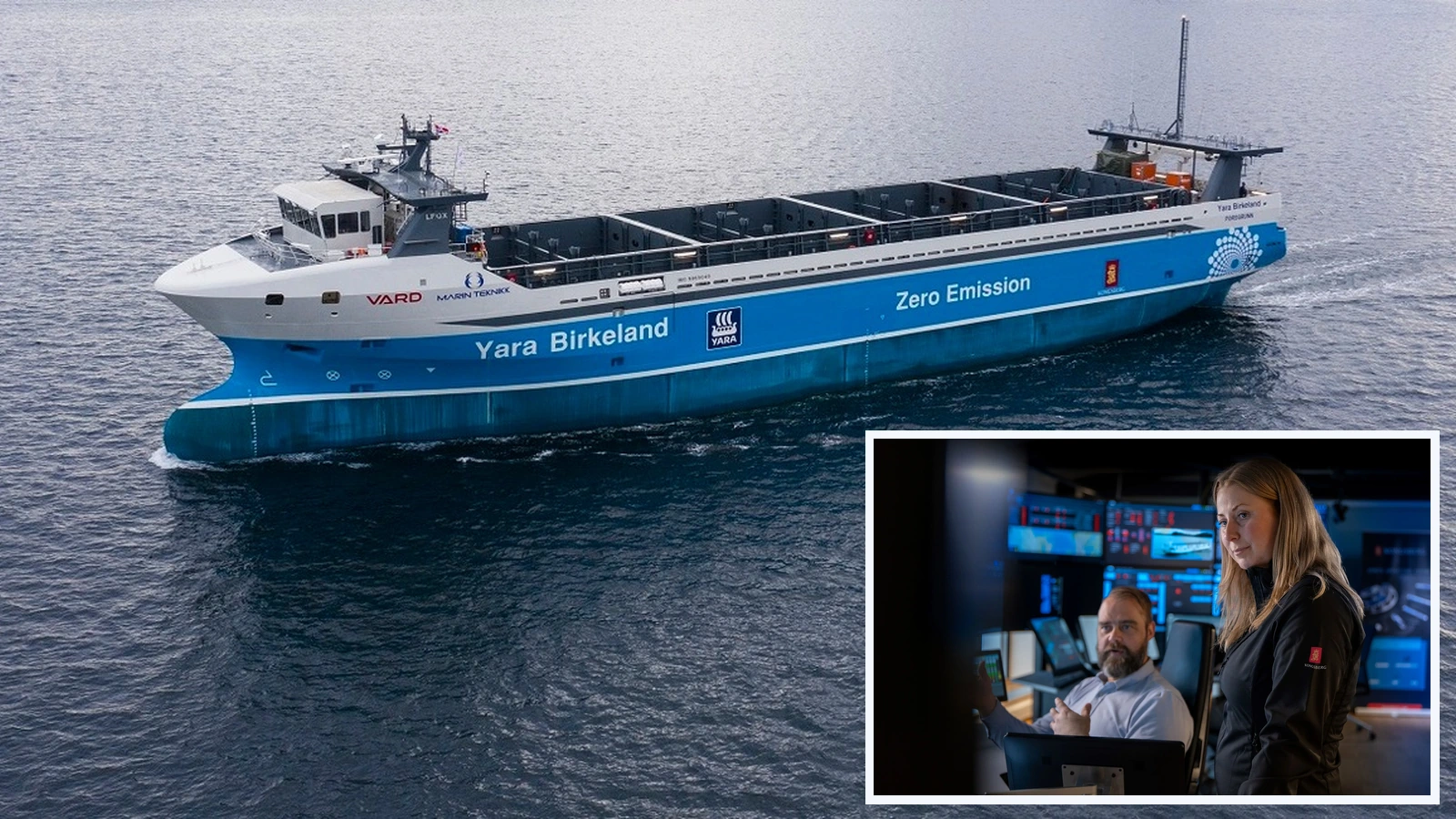
Norway’s Yara Birkeland illustrates how the transition can proceed task by task. The electric container vessel began commercial operations in spring 2022 between Yara’s fertilizer production site at Heroya and Brevik. Its capacity is 120 twenty-foot equivalent units, or TEU, the standard measure based on the space occupied by a 20-foot container.
In its 2024 operational update, Yara said the ship could leave the quay, make the approximately 11-nautical-mile crossing and dock autonomously under onboard supervision. Mooring, the work of securing the vessel, remained manual. Those details describe the published update, not a verified account of its staffing today.
Specialist offshore work offers another example. Kongsberg Maritime reported in 2025 that the 24-meter REACH REMOTE 1 had completed fully remote-controlled deployments off Norway. It also announced a contract for two additional vessels. Offshore subsea operations and international container transport have different operating demands, so progress in one cannot establish readiness across the other.
Lower crewing costs would come with new expenses
For an owner, the appeal includes moving some duties away from a vessel and reducing the need to keep people at sea. But a smaller onboard workforce would leave other bills to pay: sensors, software, reliable communications, remote control facilities and the personnel needed to operate and maintain them.
The business case would depend on how those costs compare over the ship’s working life. Repeated journeys between known terminals may offer more manageable conditions for introducing autonomous functions than services calling at many different ports.
Yara’s experience also cautions against treating operating savings as a quick return on investment. In the 2024 update, a company adviser said the vessel saved money per container transported while describing the investment’s payback period as very long. The project combines electric propulsion, a shift from road transport and autonomous functions, so its savings cannot be attributed to autonomy alone.
Cheaper operation would not guarantee cheaper freight
Importers pay freight rates, the prices charged for moving cargo. These reflect demand and available shipping capacity as well as the cost of running a vessel. Any savings from autonomy would enter a market already affected by fuel prices, port congestion and disruptions to trade routes.
UN Trade and Development’s 2025 maritime transport review documented how Red Sea diversions lengthened voyages, absorbed shipping capacity and raised costs. Software that operates a vessel cannot remove the extra distance imposed by a dangerous route.
Our earlier coverage of Maersk’s freight rates and cargo volumes examines how those market pressures feed into a carrier’s earnings.
For businesses waiting for components or finished goods, dependable arrival times may be as valuable as a lower transport bill. Autonomy’s contribution would have to be demonstrated in actual service, including delays, maintenance and interruptions, before customers could build it into their supply plans.
Maritime skills would still be needed on land
Moving a control station ashore changes where a job is performed. It also creates training demands, because operators must understand both vessel behavior and the systems through which they monitor it.
In April 2026, classification society DNV, which develops technical standards and assesses ships, and the Singapore Institute of Technology announced research into remote maritime operations and training. Their work includes shore-based facilities for bunker vessels, which supply fuel to other ships.
The agreement is evidence of preparation for different jobs, not a forecast of how many seafaring positions will disappear. Employment effects will depend on which functions move ashore, how vessels are staffed and how much additional technical work the systems require.
Safety extends beyond steering the ship
DNV’s standards for autonomous and remotely operated ships cover engineering, safety and operations as well as navigation. A system capable of following a route still needs arrangements for machinery faults and other events that crews would normally handle.
Communications are another dependency. Operators need to establish what happens if a shore connection fails, rather than assume a remote operator will always be able to intervene.
The MASS Code keeps overall responsibility with a human master, including when that person is ashore. Operators must define safe operating limits, such as weather and visibility, and the response when conditions exceed them. The framework also addresses cybersecurity and remote operations centers.
Ports remain part of the problem to solve. Yara’s experience with manual mooring shows how a voyage can become highly automated while a task at the berth still needs people. Such arrangements affect staffing, terminal investment and the routes on which an operator can use the technology.
Binding international rules are still being developed
The voluntary code gives governments and operators an opportunity to accumulate experience. SOLAS, the International Convention for the Safety of Life at Sea, and other applicable mandatory rules still apply.
The IMO’s timetable envisages adopting a mandatory MASS Code by July 1, 2030, with entry into force on January 1, 2032. Those are planned regulatory milestones, not a deadline for ships to become autonomous.
For owners commissioning vessels now, the investment decision comes earlier. They must choose equipment and operating arrangements while the rules are still developing, and while the cost of maintaining a dependable service with fewer people aboard remains specific to each route and ship.
