
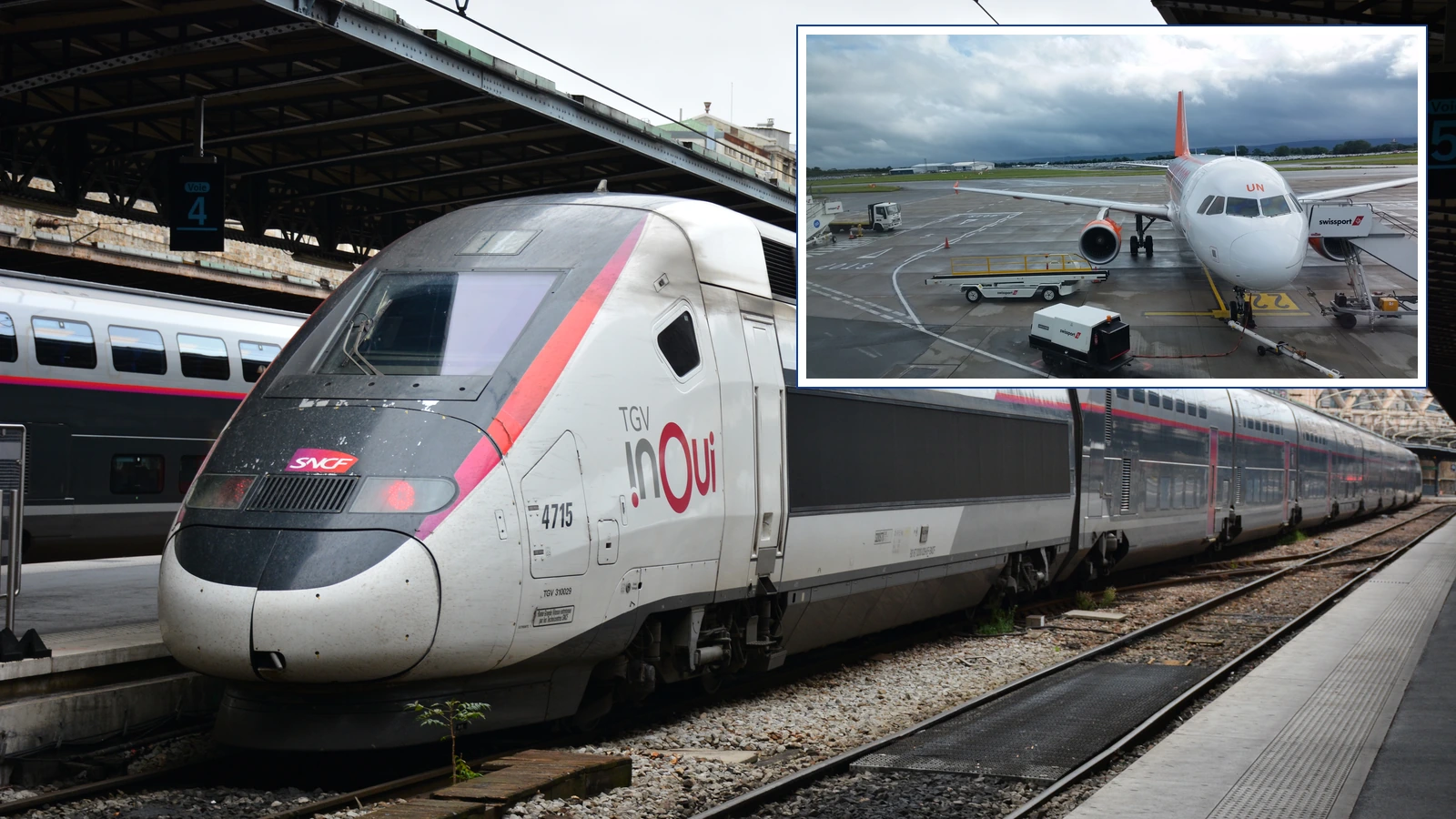
The European Commission estimates that completing the EU’s planned high-speed rail network by 2040 will require €345 billion in infrastructure investment alone. The aim includes making trains a more attractive alternative to short-haul flights, but faster tracks will need affordable fares and convenient connections to win passengers.
The Commission reiterated the investment estimate at talks with investors on 25 June 2026. It is an estimate of the infrastructure required, rather than funding already secured.
Its high-speed rail plan, launched in November 2025, envisages Berlin to Copenhagen falling from around seven hours to four by 2030. Sofia to Athens could take six hours by 2035, compared with an indicative baseline of 13 hours and 40 minutes.
These are proposed improvements, not current services. The Commission’s baseline journey times came from publicly available timetables in April 2025.
What is high-speed rail?
High-speed rail uses infrastructure designed or upgraded for faster passenger trains. In its transport statistics, the Commission includes specially built lines allowing speeds of at least 250 kilometres per hour, alongside upgraded lines allowing at least 200 km/h.
Those speeds describe what the infrastructure permits. A passenger’s scheduled journey also reflects stops, slower sections and the route taken. A train capable of reaching 300 km/h will not necessarily average that speed between two cities.
The commercial comparison with flying depends on the whole journey. Travellers need to reach their destination at a suitable time, at a price they are willing to pay. Maximum speed is only one part of that calculation.
Airport transfers change the comparison
A short flight can involve a much longer trip. Travel to the airport, security, boarding and the transfer from the destination airport all take time. Passengers with checked luggage may also need to allow for bag drop and baggage collection.
A centrally located railway station can reduce those additional stages. That advantage depends on the particular service: some rail journeys require check-in and security, and some high-speed stations sit outside city centres.
A Commission-commissioned study of airports and airlines reviewed research identifying door-to-door journey time as a key influence on the choice between air and high-speed rail.
Citing an ALG analysis from 2024, the study reported that rail had a door-to-door advantage of around 40 minutes on both Madrid to Valencia and Paris to Bordeaux. Average rail prices were also lower in those comparisons. These were findings from the data examined, rather than quotations for tickets available today.
The study also reviewed evidence of rail competition putting pressure on airfares, capacity and passenger traffic. The effects varied between markets.
There is therefore no single train journey time at which flying becomes uncompetitive. A direct service between central stations offers a different proposition from one requiring a change, a long transfer or an inconvenient departure.
New lines need enough passengers
For governments, a train’s ability to compete on an existing line is only part of the investment decision. Building that line can require land, bridges, tunnels, stations, power supplies and signalling. Cross-border services also need compatible infrastructure and operating arrangements.
The Commission’s 2025 policy document distinguishes the €345 billion estimate from an external estimate of €546 billion for a larger network, extending beyond the planned trans-European network and tripling the existing EU high-speed network. These are different investment scenarios.
Airlines need aircraft and airports, but adding a service between existing airports does not require a dedicated track along the route. Rail’s much larger investment in connecting infrastructure has to be justified over many years.
Ticket prices will help determine how many passengers use it. A Eurobarometer survey cited in the Commission’s policy analysis found that 61% selected cost among the most important factors when planning regional or long-distance journeys, while 47% selected total travel time.
The Commission says competition between rail operators has brought lower prices and more services in markets with suitable infrastructure. New tracks alone cannot ensure either outcome: operators need access to capacity, trains and maintenance facilities.
Environmental benefits also enter the public investment calculation. The International Energy Agency’s 2019 assessment of rail identifies high-speed trains as an alternative to short-distance flying and rail as an energy-efficient form of transport.
That supports examining rail alongside aviation. It does not establish that every proposed railway is worth building. A corridor’s expected passenger demand and construction requirements still need to be assessed.
Booking and connections matter too
On 13 May 2026, the Commission proposed rules to simplify travel booking, including journeys involving several rail operators.
The proposals would make it easier to compare and buy services through digital platforms. They would also strengthen protection for passengers buying connecting rail journeys in a single transaction, including when a delay causes a missed connection. Those proposed protections should not be confused with rules already in force.
Rail can also bring passengers to flights. For someone connecting to a long-haul service, a train to the city centre may be less useful than a short flight arriving at the departure airport.
Lufthansa Express Rail already combines Deutsche Bahn journeys to Frankfurt Airport with Lufthansa flights in one booking. Lufthansa says the service includes a connection guarantee and rebooking when delays disrupt the transfer.
Such arrangements give rail operators an opportunity beyond winning passengers away from airlines. They can carry the connecting passengers airlines still need, provided the timetable, ticket and airport transfer work together.
