

What does it take to shepherd a biotech start-up business to commercial success? How do you get biotech innovation – which generally requires enormous investment over prolonged periods – to make money?
Innovation refers to the invention, creation and production of new products and services. Companies that do not have an innovation system tend to lose out to their competitors that do.
Scientist Mitchell Finer, Ph.D., an expert in molecular biology and biochemistry, who has played a pivotal role in the commercial success of several biotech companies, including most recently as Chief Scientific Offer of gene therapy innovator Bluebird Bio, shares his experiences and thoughts in an interview published in the peer-reviewed journal Human Gene Therapy Clinical Development (citation below).
The journal’s editor, James M. Wilson, MD, PhD., asks Dr. Finer about the timing, technology, plus other factors that contributed to the success of companies such as Cell Genesys and Bluebird Bio.
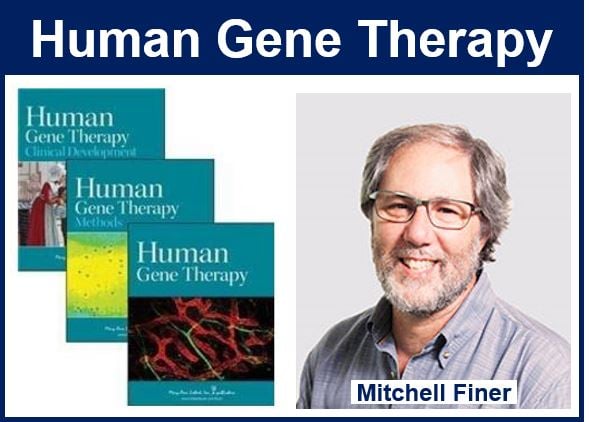
Dr. Finer talks about the turbulent history of gene therapy, the recent early success of CAR-T therapy in treating patients with leukemia, with results suggesting a promising future for long-term therapy.
Gene therapy renaissance
Regarding what Dr. Wilson describes as the ‘gene therapy renaissance,’ Dr. Finer says:
“I think we are just starting to enter the mainstream with great clinical data from multiple vectors and clinical indications, and starting to be able to access capital like any other biomedical venture activity.”
Dr. Wilson says:
“Mitch has been a true pioneer in gene therapy beginning 30 years ago when he and I were postdoctoral fellows in Richard Mulligan’s laboratory. His perspectives and the state of gene therapy in current day biotechnology are incredibly important.”
The best model as a successful biotech company
Dr. Finer believes the best example of a successful biotech company, that has a long-term track record of innovation combined with commercial success, is San Francisco-based Genentech Inc., which since 2009 has been a wholly-owned subsidiary of Roche.
Dr. Finer says:
“I think Genentech is the classic model. A focus at Genentech—as I understand it from a lot of the early people who were there, many of whom I had worked with at Cell Genesys, some of them who became investors—was very innovative science and discovery, having a strong translational group and a science-based process development and manufacturing group that was closely tied to research.”
“That is the way people tell me the Genentech story. They went from recombinant proteins to monoclonal antibodies, whereas Amgen got stuck. A lot of these companies, Amgen, Biogen, got mired in a series of technical issues and example of which is Genzyme, which eventually fell apart due to issues of manufacturing.”
Genentech’s process development and manufacturing have been very closely tied to research.
“As you scale up, there are issues that you do not anticipate that are actually scientifically quite interesting. And if you have people who are sort of just turning the crank, just making another “product,” you lose that edge. You are also unable to overcome translational barriers that are inherent in the development of innovative products,” Dr. Finer added.
Citation: “There and Back Again: Mitchell Finer on the Journey of Biotech from Start-Up to Success.” Interview by James M. Wilson, MD, PhD. Human Gene Therapy Clinical Development. September 2015, 26(3): 140-143. DOI:10.1089/humc.2015.29003.mfi.
