
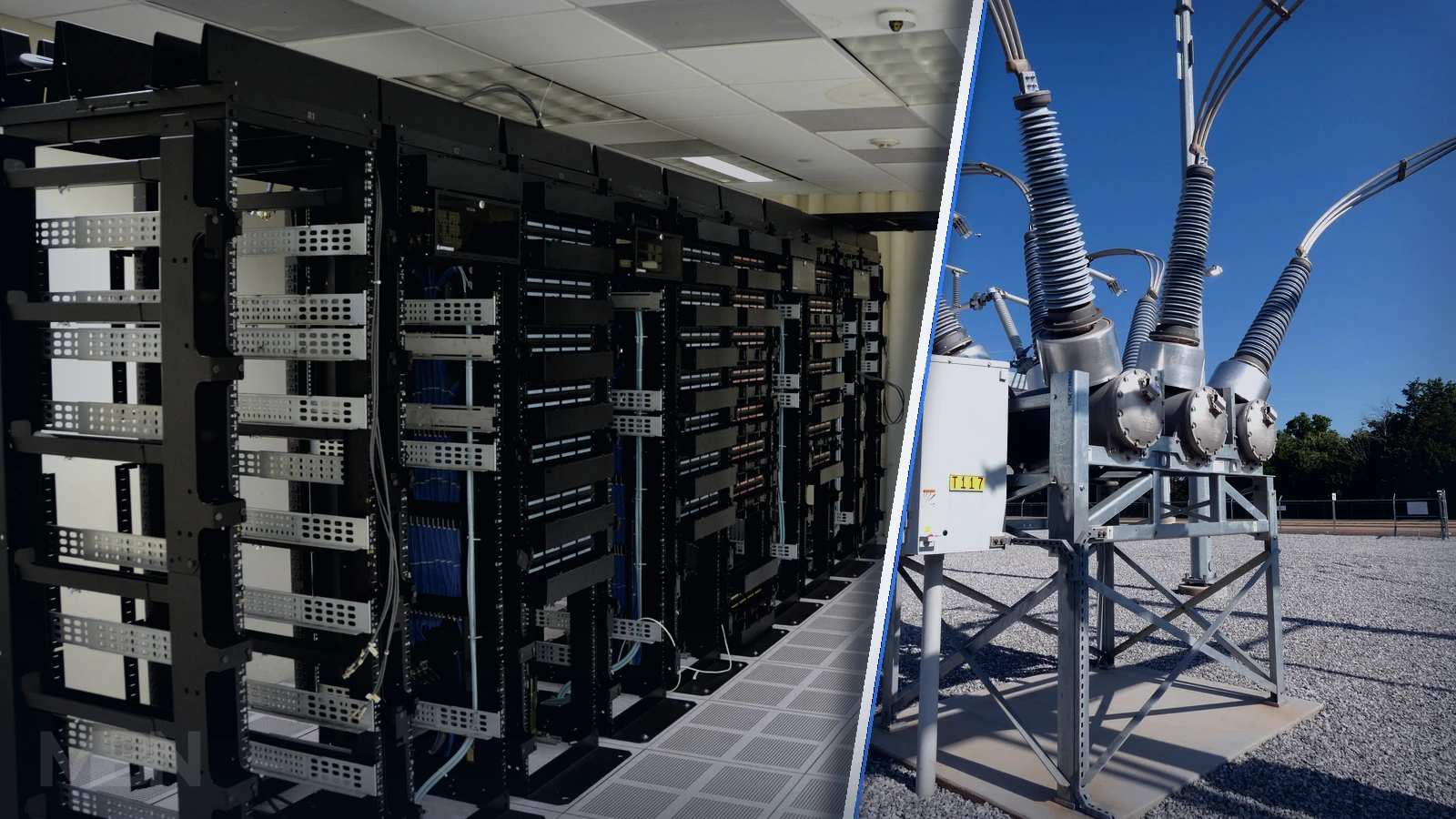
Core Scientific has completed its approximately $444.3 million cash acquisition of Polaris DS, giving the data center operator control of about 440 megawatts of gross, grid-connected power capacity in Muskogee, Oklahoma. The deal centers on electricity access rather than the purchase of a finished 440MW artificial intelligence facility.
The transaction closed on August 13, 2026, and was announced the following day in a filing with the US Securities and Exchange Commission. The purchase price remains subject to customary post-closing adjustments.
Core Scientific could also pay another $40 million if an additional 40MW of firm capacity becomes available to Polaris before December 31. The company said the existing 440MW is in service under electricity agreements with Oklahoma Gas & Electric.
“Through site acquisitions this year, we have added more than 600 MW of leasable power to our portfolio,” chief executive Adam Sullivan said in the closing announcement.
The transaction is principally a power and land purchase
Core Scientific did not acquire Polaris’s operating mining business, workforce, intellectual property or customer and supplier contracts.
The original merger filing said the assets remaining in Polaris at completion would consist of approximately 40 acres beside Core Scientific’s existing Muskogee operation, an electrical substation, electricity-service agreements for up to 440MW of continuous power and other utility contracts.
The operating business was to be transferred to an affiliate of the seller before closing. That affiliate can lease parts of the property for nominal consideration until no later than June 30, 2028, while it winds down the existing operation and pays its own utility expenses.
Data Center Dynamics described the deal when it was announced in May as the purchase of an active cryptocurrency-mining site and its 440MW grid connection.
Dividing the closing consideration by 440MW produces a simple ratio of approximately $1.01 million per gross megawatt, according to an MBN calculation. The contingent payment has a similar relationship: $40 million for another 40MW.
That ratio is not a general market price for data center power. The acquisition includes land, a substation and utility agreements, while the gross capacity is neither vacant nor equivalent to finished customer space. It does, however, show how closely the transaction’s economics are tied to secured electricity capacity.
Gross power is not customer-ready capacity
Core Scientific defines gross utility power capacity as the total electricity covered by agreements for its sites, including capacity commissioned for future use. Its separate measure of leasable customer power estimates the non-redundant load that can be made available to customers’ computing equipment.
The distinction matters. Core Scientific plans to expand the Muskogee campus to approximately 1.5 gigawatts of gross power, but estimates that this would provide about 1.0GW of leasable capacity. Part of the proposed expansion would use additional grid connections, while another part would rely on generation installed behind the meter.
The company expects to begin delivering the next approximately 82MW at Muskogee to a customer in the second half of 2027. That is a forward-looking construction target, not capacity that is available for billing today.
Core Scientific is replacing mining revenue with colocation
The purchase forms part of Core Scientific’s transition from Bitcoin mining to high-density colocation, in which customers rent data center capacity for AI and other computing workloads.
That change was visible in the company’s second-quarter results. Colocation revenue increased to $136.7 million from $10.6 million a year earlier. Revenue from Core Scientific’s own digital-asset mining fell to $21.5 million from $62.4 million.
Total quarterly revenue more than doubled to $164.2 million, while gross profit rose to $70.0 million from $5.0 million. The company reported adjusted earnings before interest, tax, depreciation and amortization of $41.1 million. Adjusted EBITDA is a non-GAAP performance measure.
The GAAP net loss was much larger at $1.16 billion. Core Scientific said it was primarily caused by a $1.05 billion accounting charge from the increase in the fair value of warrants and contingent value rights as its share price appreciated.
The conversion is also capital intensive. Core Scientific reported $797.5 million of capital expenditure during the quarter, including property purchases and acquisitions of land and development rights. It had $1.77 billion in cash and cash equivalents on June 30, making the Polaris consideration equal to roughly one-quarter of that quarter-end balance. The cash position may have changed before the acquisition closed.
Power demand makes existing connections more valuable
A 2026 update from Lawrence Berkeley National Laboratory estimates that data centers could account for 11.8% of US electricity consumption in 2030. Its scenario range runs from 9.5% to 15.3%.
The International Energy Agency expects worldwide data center electricity consumption to rise from about 485 terawatt-hours in 2025 to approximately 950TWh in 2030. It expects consumption by AI-focused facilities to triple over the same period.
The IEA also reports that grid connections, approvals, transformers and other energy equipment are restricting near-term construction. Data centers concentrate substantial demand at individual sites, so a project can have access to servers and financing while still waiting for enough electricity.
Core Scientific is trying to reduce some of that waiting time by acquiring land that already has a substation and active utility agreements. It must still construct and equip customer facilities, arrange the transition from the existing operation and convert gross power into leasable and billable capacity.
Delivery will matter more than the headline megawatts
The next milestones are practical ones: whether the extra 40MW becomes firm before year-end, whether the next customer capacity begins delivery in the second half of 2027 and how quickly the existing 440MW can be reassigned as the seller’s operation winds down.
Until those steps are completed, the Polaris transaction is best understood as a purchase of position and access. Core Scientific has secured land, electrical infrastructure and contractual power rights in a constrained market. It has not bought 440MW of completed AI data center capacity.
