
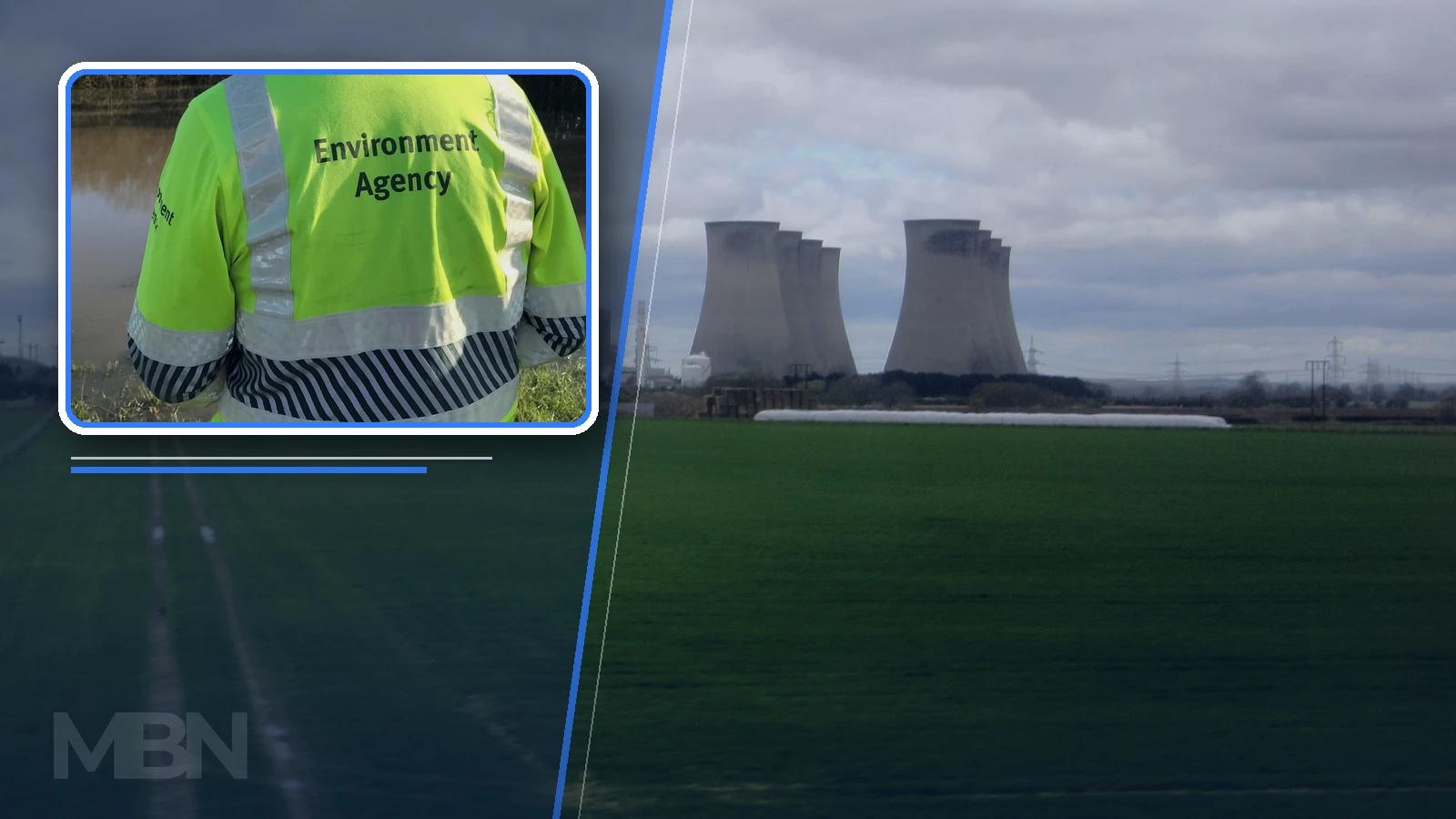
The Environment Agency has granted Drax a permit variation for two proposed carbon-capture units at its power station near Selby, but the regulator’s decision says operation still depends on government funding.
The variation, numbered EPR/VP3530LS/V022, was determined on 5 August 2026 and announced by the Environment Agency on 14 August.
It allows Drax Power Limited to add post-combustion carbon capture to generating Units 1 and 2, subject to the conditions in the revised permit. The plans also cover solvent treatment, carbon dioxide compression, a new effluent-treatment plant and hydrogen production for conditioning the captured gas.
Drax’s application was formally accepted in May 2023. The Environment Agency held three public consultations and requested a more detailed air-emissions assessment after deciding that the original submission did not contain enough information.
Ian Foster, an Environment Agency area manager, said: “We have reviewed the comments and evidence from the consultation and are satisfied that robust levels of environmental protection are met.”
The permit puts the 95% capture claim to a test
The 89-page permit uses 95% as the plant’s design capture specification during normal operating conditions. This is not treated as an assumed result.
Within 15 months of completing the commissioning of each capture unit, Drax must report its average capture efficiency over a full year of operation. If the result is below 95%, the company must analyse the reasons and either propose remedial work or persuade the regulator that the rate is not reasonably achievable.
Drax must also submit a fresh air-emissions risk assessment based on actual monitoring during the first year. If measured pollutants create risks above the relevant assessment levels, the permit requires proposals to reduce them.
These conditions provide a useful distinction. The permit approves an operating framework, while the capture rate and emissions profile would still have to be demonstrated after commissioning.
Permission does not provide the money
The Environment Agency’s 163-page decision document states that operation of the capture plant is contingent on government funding decisions.
It says Drax will retain generating Units 5 and 6 and their associated infrastructure until those decisions are made and it is clear that carbon capture can proceed. The document also separates the Drax site permit from the proposed pipeline and permanent storage beneath the North Sea, which fall outside this Environment Agency decision.
The project already received development consent in January 2024. The latest permit therefore clears another regulatory hurdle, but it is not a funding award, construction announcement or evidence that the equipment has achieved the proposed capture rate.
The distinction matters because carbon-capture projects require both physical infrastructure and a dependable revenue arrangement. The Department for Energy Security and Net Zero is still publishing and revising the UK’s commercial frameworks for carbon capture, transport and storage.
Government backing for Drax has also faced scrutiny. A Public Accounts Committee report said in 2025 that Drax had received £6.5 billion of government support since 2002 and questioned whether the proposed transitional biomass agreement for 2027 to 2031 represented good value for consumers.
The new permit answers a narrower question: whether the proposed equipment can operate under enforceable environmental conditions. Whether it is financed and built remains a separate decision.
