
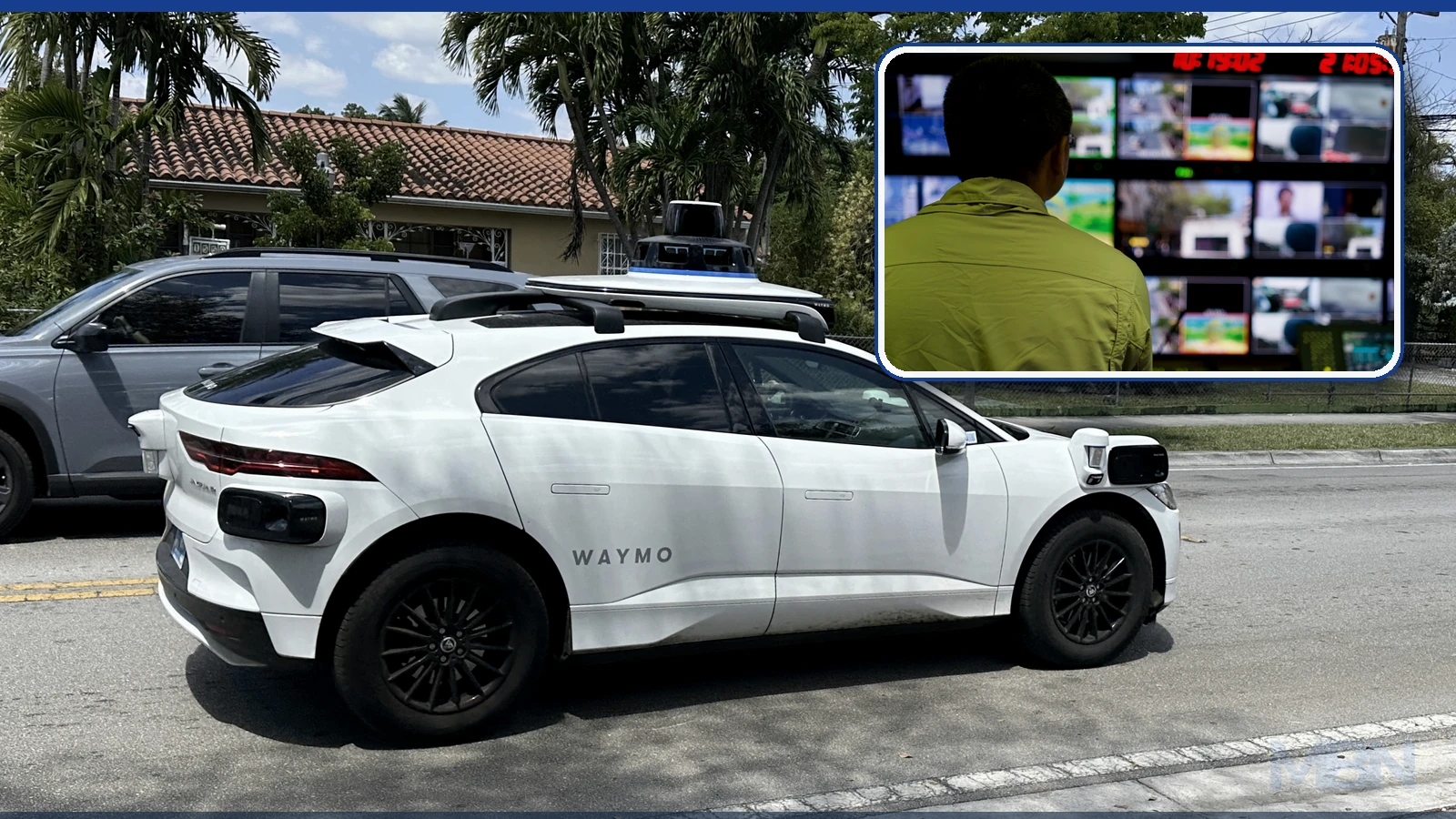
Robotaxis may remove the driver from the vehicle, but they do not remove people from the business. New research suggests that autonomous taxi services redistribute work across a different set of roles, with consequences for costs, skills and employment.
The global commercial robotaxi fleet more than doubled during 2025 to about 8,000 vehicles in roughly 20 cities, according to the International Energy Agency. By March 2026, paid services without a safety driver were available in more than 20 cities.
Most commercial activity is concentrated in China and the United States. Expansion is continuing: in July, the US National Highway Traffic Safety Administration granted Zoox a temporary exemption allowing the commercial deployment of up to 2,500 robotaxis a year for two years, subject to enhanced oversight.
The exemption is permission, not a forecast that Zoox will deploy the maximum number. It nevertheless shows that the sector is moving beyond small trials towards services whose operating economics will matter.
Automation reorganises the work
A 2026 study in Systems Engineering examined taxi automation as an entire work system rather than looking only at the driving task.
George Washington University researchers Leah Kaplan, Zoe Szajnfarber and John Paul Helveston drew on government occupation data, direct observations, interviews and archival material. They found that artificial intelligence caused tasks to be redistributed and regrouped across the service.
The researchers describe three broad patterns. Some tasks are distributed among several roles, others are consolidated into a new or expanded job, and additional roles are created to support the automated system. In practical terms, robotaxi fleets can still require remote assistance, field response, maintenance, cleaning and customer support.
One employee may support several vehicles rather than spending a shift inside one taxi. That is where much of the potential labour saving arises. It also means that counting the drivers removed gives an incomplete picture of the workforce that remains.
The study does not estimate how many people the industry will employ. It explains how the structure of work changes when driving is automated. Actual staffing will depend on fleet design, the reliability of the technology and how many vehicles each worker can support.
A related 2024 study in Transport Policy, by Kaplan, Lola Nurullaeva and Helveston, provides a more detailed cost estimate. It used observations of commercial services, company and regulatory documents, and interviews with 27 operational and regulatory experts.
Its models suggested that replacing traditional taxi services with robotaxis could reduce the number of frontline jobs by between 57% and 76%, while shifting the remaining wage distribution upwards.
That range is a modelled scenario, not a record of jobs already lost and not a prediction for every city. The result depends on assumptions about staffing ratios and how the services operate.
Utilisation could matter more than the empty driver’s seat
The 2024 cost model found that labour remained a significant expense, even though estimated robotaxi operating costs were below those of traditional taxis. Vehicle utilisation and annual mileage were the most important factors affecting competitiveness.
Utilisation is the proportion of time that an asset is productively used. For a robotaxi, a costly vehicle that spends much of the day parked or travelling without a passenger has fewer paid miles over which to spread the cost of its sensors, computers, maintenance and support operation.
A heavily used fleet can produce a different result. More passenger journeys allow the operator to distribute those fixed and semi-fixed costs across more revenue.
The IEA says robotaxi rides remain more expensive than conventional ride-hailing services in the United States and China, although the gap has narrowed. A conventional taxi’s driver can account for more than half of its total cost. Robotaxis avoid that direct expense but require more costly hardware, additional maintenance and vehicle control centres.
This makes the worker-to-vehicle ratio commercially important. If one remote or field employee can support many vehicles without reducing safety or service quality, labour costs per journey can fall. If fleets need frequent human intervention, part of the expected saving disappears.
The employment consequences are equally uneven. Traditional driving jobs could contract, while demand grows for technicians and support staff. Those positions may require different skills and may not be located where displaced drivers live. A new job somewhere in the system does not automatically provide a practical route for the person whose old job has gone.
Robotaxis are therefore testing more than whether a car can travel safely without somebody at the wheel. Operators must show that the entire service, including its less visible workforce, can carry enough paying passengers at a competitive cost.
The empty driver’s seat is the most visible sign of automation. The ratio of paid miles to idle miles, and of vehicles to support workers, may provide a better indication of whether the business can make money.
