

In the Bank of England’s latest evaluation of the economy, Governor Mark Carney told British families to make the best of declining inflation, low food and petrol (US: gasoline) prices, record-low interest rates, and urged employers to raise wages.
When the annual inflation rate veers too far from the BoE’s target, the Governor has to explain why to Chancellor George Osborne and spell out what measures, if any, will be taken. In today’s report, Mr. Carney included a letter.
Inflation has fallen significantly over the past three months.
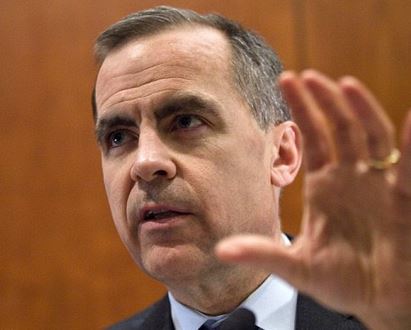
While most of his message today was upbeat, Mr. Carney reminded people that the current situation is temporary.
Regarding the letter, Mr. Carney said:
“As a consequence (if inflation veering too far from target), I have written the first open letter from a Governor to the Chancellor explaining why inflation is so low and what the MPC is going to do about it. And I will likely write a few more before the year is out.”
Mr. Carney predicts that real net income will increase by 3.5% in 2015. This will be the first time in five years that pay has managed to exceed the annual inflation rate.
In November, the BoE had forecast wages would rise by 1.25%. If Mr. Carney’s expectation comes true, 2015 will see the greatest hike in real income since 2001.
As a result of higher growth expectations and lower unemployment forecasts, the UK’s central bank believes it is on course for an interest rate hike in 2016.
Mr. Carney believes inflation will go into negative figures in the months to come, driven by the collapse in the price of crude oil, which has declined by more than 60% since June 2014.
0.5% inflation forecast for 2015
The report forecasts a 0.5% increase in the CPI (Consumer Price Index) for this year, the lowest rate since the index began twenty-six years ago.
UK consumers and households are in an excellent position, particularly regarding food and petrol, and should take advantage of this bounty and purchase more goods, Mr. Carney said.
In an interview with the Telegraph, Mr. Carney, however, warned:
“This is temporary. It’s an important point, two thirds of this…has been from falls in food and energy prices. Enjoy it while it lasts, because this will go away over the course of the next year.”
He believes lower petrol prices are here to stay for a while, given that OPEC opted not to lower production, despite falling prices and weak global demand “A sharp retrenchment in supply, all things being equal, is less likely in the near term, which would limit the recovery in the oil price,” he added.
This short period of declining prices should not discourage employers from sharing the benefits of the UK’s economic recovery with their workers. Along with Prime Minister David Cameron, Mr. Carney urged businesses to implement pay hikes this year.
UK’s outlook driven by stronger underlying dynamics
Today’s headlines mask stronger underlying dynamics which will decide Britain’s output and inflation tomorrow, Mr. Carney said in an Inflation Report conference on Thursday. Growth in the world economy was slightly stronger in 2014 than the central bank had expected in November.
Since November’s forecast, the outlook for Britain’s trading partners is virtually unchanged. Despite renewed headwinds from deleveraging and geopolitics, the BoE expects global growth to continue, reflecting three factors:
1. Oil Prices: over the past six months oil prices have more than halved. As these declines are more likely to reflect changes to the current and potential supply of crude than falling demand for it, this development is clearly good news for the global economy.
2. Stimulus by Central Banks: Central banks globally have provided further stimulus, most notably the European Central Bank (ECB). The ECB’s move should provide a much needed boost to activity in the UK’s largest trading partner (the Eurozone).
3. Interest Rates: Partly as a consequence of falling crude oil prices, global real interest rates have dropped further. And, despite increases in market volatility, financial conditions on balance have improved. In the UK, output growth remains solid while domestic demand continues expanding strongly.
Unemployment in the UK has continued falling, reaching its lowest level for over six years. In the past year, half a million new jobs were created.
Mr. Carney said:
“The margin of slack in the economy has narrowed further as expected. And as the labour market has tightened, growth rates of wages and unit labour costs are beginning to pick up.”
Regarding inflation veering so much from target, Mr. Carney said he believes annual price rises will reach the 2% BoE objective within the next two years.
Mr. Carney said:
“It takes time for monetary policy to affect the economy – its peak effect is generally estimated between 18 and 24 months – so the MPC can do little to offset the effects of recent falls in energy and food prices on headline inflation. With the effects of these large, one-off falls in prices likely to dissipate in around a year, we will look through them. With inflation below target and unemployment above its long-run sustainable rate, there is no immediate trade-off between returning inflation to target and supporting economic activity.”
“In fact, to return inflation to target it is necessary to eliminate the remaining degree of economic slack. This makes it appropriate to return inflation to the target as quickly as possible after the effects of energy and food price movements have abated. In the MPC’s judgment, the appropriate time horizon to do that is within the next two years.”
Citation: “Inflation Report – February 2015,” Bank of England (PDF).
