
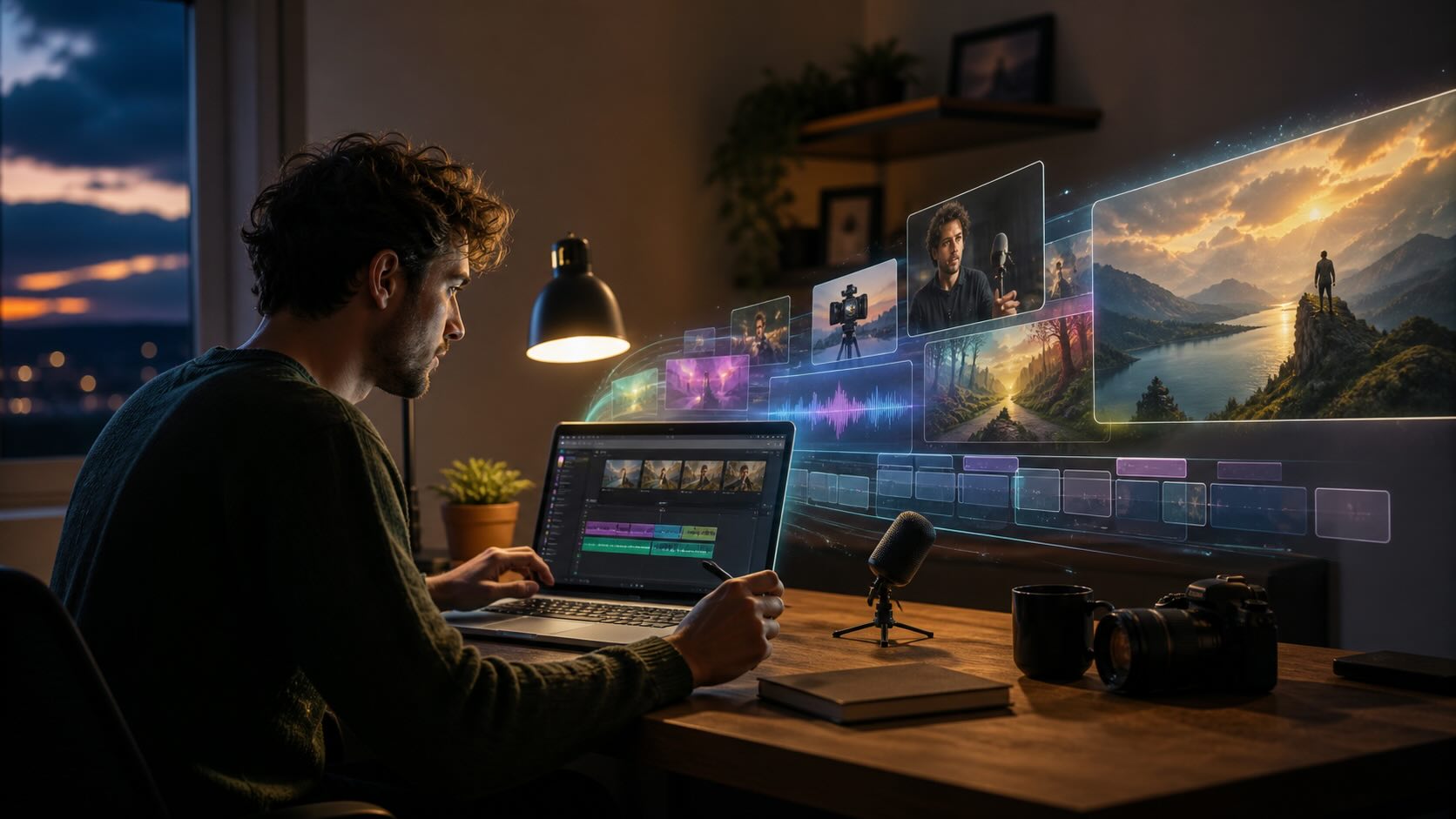
A few years ago, producing a polished video meant a camera, decent lighting, editing software with a real learning curve, and usually more time than most people had to spare. That barrier has quietly collapsed. Text-to-video tools, AI avatars, and automated editing pipelines have turned video production into something a single person can do from a laptop in an afternoon, and the technology behind that shift keeps improving faster than most people are tracking.
From Script to Screen Without a Camera
The most obvious change is in who can actually make a video. Traditionally, producing anything that looked professional required either genuine filmmaking skills or a budget to hire someone who had them. AI-driven video tools have flattened that requirement considerably. A written script, or even a rough idea typed into a prompt box, can now be turned into a fully paced video complete with visuals, voiceover, and background music, without anyone touching a camera or a traditional editing timeline.
This matters most for people and small businesses who previously had no realistic path into video content at all. A solo creator explaining a product, a small business owner putting together a marketing clip, or a student building a class presentation can now produce something that would have required a production team a decade ago.
Avatars Are Doing More Than Novelty Work
Digital avatars used to feel like a gimmick, interesting to look at, not particularly useful for real content. That’s shifted. Modern avatar systems can be customised enough to represent a specific brand voice or personal style, and some tools now let creators clone their own likeness from a short video clip, generating new content in their own voice and appearance without needing to film each time again.
This has real practical value for anyone producing frequent content who doesn’t want to be on camera every single time, or who needs multilingual versions of the same video without re-recording from scratch. It’s also changed how quickly a piece of educational or explainer content can go from idea to finished product, since the same avatar and voice can be reused across dozens of scripts with minimal manual work.
Templates Are Solving the Blank-Page Problem
One of the more underrated shifts in AI video tools isn’t the generation technology itself, but the structure wrapped around it. Ready-made templates covering specific formats news-style updates, educational explainers, promotional clips give people without any editing background a working structure to build from rather than starting with an empty timeline and no sense of pacing. Tools like Seedance 2.5 AI video generator lean into this heavily, pairing text-to-video generation with dozens of pre-built templates so a creator can go from a rough script to a finished, properly paced video without needing to understand editing fundamentals like shot timing or transitions.
That combination of generation plus structure tends to matter more for actual output quality than raw generation power alone. A technically impressive AI video with no sense of pacing or narrative structure still reads as amateur, while a well-templated video built around a clear format tends to look intentional even when it was assembled quickly.
Where the Technology Still Has Limits
None of this means AI video tools have fully replaced human judgment in the process. Automated tools are still better at producing short-form, structured content than long-form narrative work requiring nuanced pacing or emotional performance. Generated visuals can still misinterpret a prompt in ways that require manual correction, and voice or avatar output, while considerably improved, isn’t always indistinguishable from a real recording under close inspection.
The realistic use case right now sits somewhere in the middle: AI handles the heavy lifting of assembly, scripting assistance, and visual generation, while a human still reviews, adjusts, and makes the final creative calls before something ships. Treating these tools as a full replacement for judgment, rather than an accelerant for it, tends to produce weaker results than treating them as exactly what they are: a much faster starting point.
What This Means Going Forward
The broader trend here isn’t really about any single tool; it’s about video production becoming accessible to people who never had the resources or technical background to attempt it before. As generation quality improves and the gap between “AI-assisted” and “professionally produced” keeps narrowing, the competitive edge is shifting away from who has access to expensive equipment and toward who has a genuinely clear idea and the judgment to guide the tool effectively.
That’s arguably the more interesting shift underneath all of this. The technical barrier to making video content is disappearing. What’s left, and what increasingly separates good content from forgettable content, is the same thing it’s always been: a clear idea, executed with some editorial judgment about pacing, tone, and what’s actually worth saying.
