
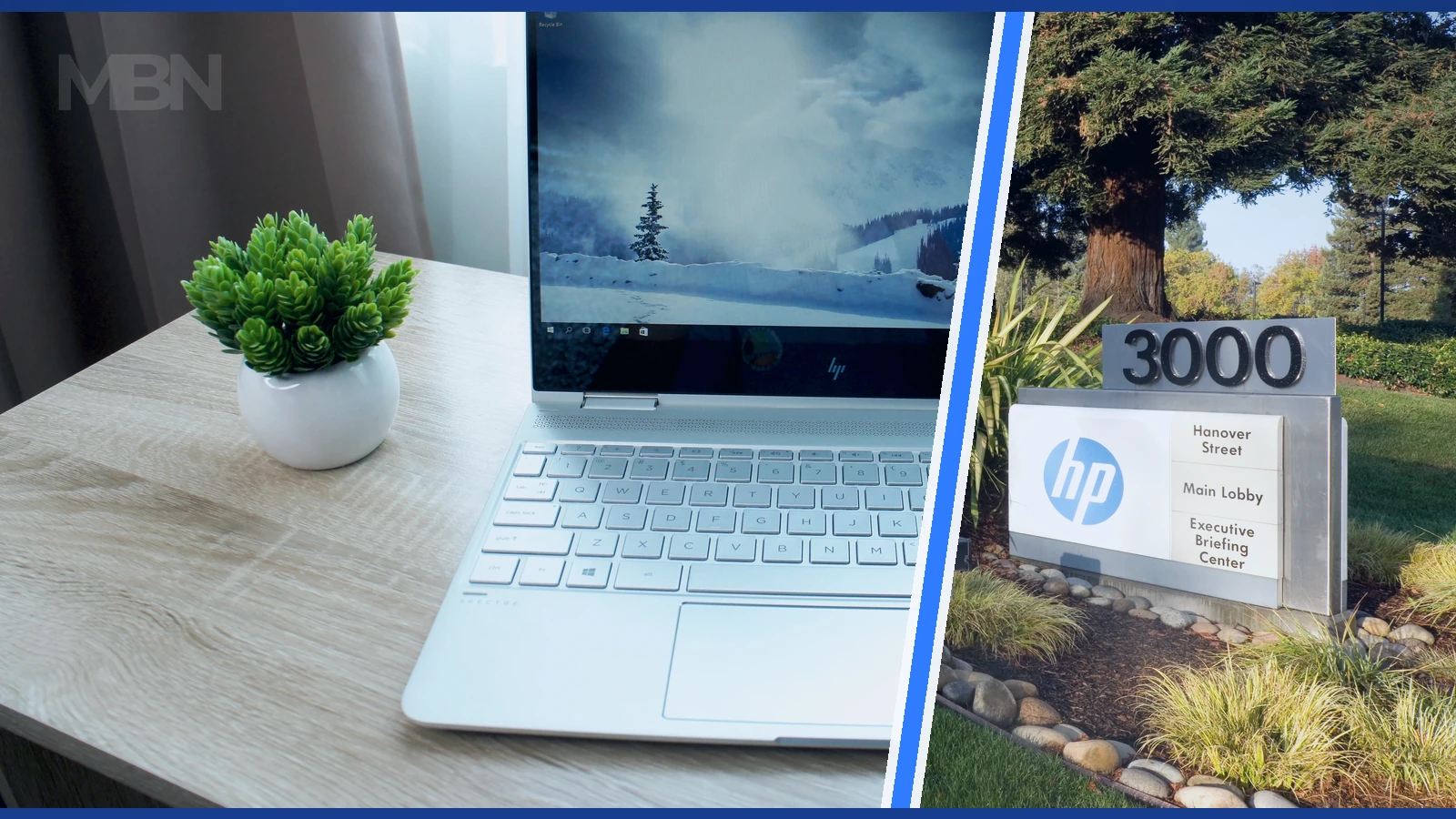
HP raised its full-year earnings and cash-flow forecasts after quarterly revenue increased 12.5% to $15.7 billion, even though the company sold fewer PCs and printers.
The computer maker’s fiscal third quarter ended on July 31, 2026. Net revenue increased from $13.9 billion a year earlier, according to HP’s earnings release.
GAAP diluted earnings fell to $0.71 per share from $0.80, partly because the prior-year quarter included one-time tax and litigation benefits. Adjusted earnings rose to $0.83 from $0.75 per share. Both figures included an $0.11 benefit from tariff refunds.
Interim Chief Executive Bruce Broussard said HP increased sales and market share in premium products while improving memory availability and order fulfillment.
Higher prices offset fewer PCs
Personal Systems, HP’s division for PCs and workstations, generated $11.8 billion in revenue. That was 18% higher than a year earlier, although total PC unit volume fell 16%.
The company’s quarterly filing with the US Securities and Exchange Commission provides a clearer explanation. The average selling price, or ASP, of its PCs increased 40.8%, while unit volume declined 15.8%.
HP attributed the higher ASP to pricing actions intended to offset rising component costs, favorable currency movements and a greater concentration of higher-value products. This means the revenue increase came primarily from what HP charged and sold, rather than from a broad increase in the number of computers purchased.
Commercial PC revenue rose 21.9%, supported by a 41.1% increase in average selling prices. Commercial unit volume fell 13.6%. Consumer PC revenue increased 10.1%, even as unit volume dropped 19.4%.
As we reported following Best Buy’s latest results, computing products have also supported sales at a major US electronics retailer. HP’s figures add an important qualification: revenue can rise while fewer devices are sold.
Pricing did not fully protect profitability. Personal Systems produced an operating margin of 4.6%, down 0.8 percentage points from the prior-year quarter. HP said higher memory and storage costs outweighed some of the benefit from price increases, currency movements and tariff refunds.
Printing revenue continues to decline
HP’s Printing division reported revenue of $3.9 billion, down 2.2% from a year earlier. Printer unit volume fell 6.8%, while supplies revenue declined 2.8%.
The company cited weaker demand, particularly in China, and competitive pressure. Consumer printer units fell 9.1%, compared with a 2.4% decline in commercial units.
Printing remained considerably more profitable than PCs. Its operating margin increased from 17.0% to 18.1%, helped by pricing actions and tariff refunds.
Tariff refunds contribute to higher guidance
HP raised its full-year adjusted earnings forecast to between $3.19 and $3.29 per share, up from its previous range of $2.90 to $3.10. The new forecast includes an estimated $0.19-per-share benefit from tariff refunds.
The company also increased its GAAP earnings forecast to between $2.52 and $2.62 per share, from $2.15 to $2.45. Expected free cash flow rose to between $3.0 billion and $3.2 billion, compared with the previous range of $2.8 billion to $3.0 billion.
Free cash flow is the cash generated by a business after specified investment spending. HP produced $1.6 billion during the quarter and returned about $600 million to shareholders through dividends and share repurchases.
HP said in its filing that inflation in memory and storage costs, along with supply constraints, is expected to continue. That leaves the company balancing higher prices and premium products against lower unit demand and pressure on PC margins in the final quarter of its fiscal year.
