
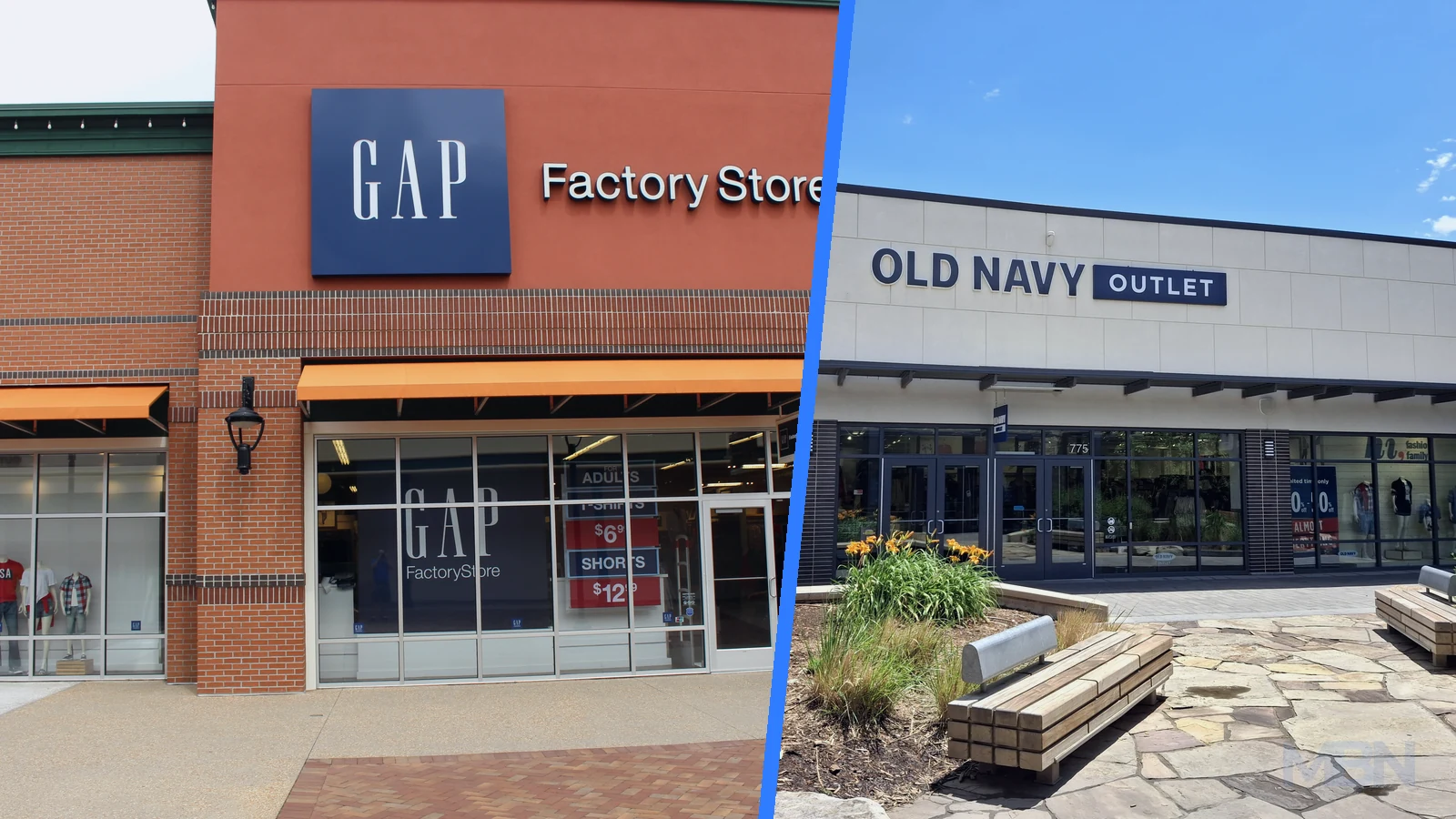
Gap Inc. raised its full-year adjusted earnings forecast after second-quarter profit exceeded expectations, even as net sales fell 2% and comparable sales declined 1%. The results showed a sharp divide between the growing Gap brand and weaker performances at Old Navy and Athleta.
Gap reported net sales of $3.7 billion for the quarter ended August 1, 2026. Store sales declined 3%, while online sales fell 1% and accounted for 35% of the total.
Adjusted diluted earnings were $0.52 per share, excluding a tariff-related recovery and associated interest income. Reported diluted earnings, which included that benefit, were $1.38 per share.
Gap shares were about 13% higher in late trading on August 28 after investors responded to the earnings forecast and a leadership change at Old Navy.
Gap brand growth could not fully offset Old Navy
Comparable sales, a closely watched measure of demand at established stores and online channels, rose 10% at the Gap brand. Its net sales increased 9% to $844 million, helped by denim, fleece, and clothing for children and babies.
Old Navy moved in the opposite direction. Net sales and comparable sales at the company’s largest brand both fell 4%. Gap attributed the decline to weakness in seasonal women’s clothing and an unexpected slowdown in customer traffic.
“We have work to do at Old Navy,” Gap Inc. President and CEO Richard Dickson said. He added that the company was taking targeted action following the weaker quarter.
Banana Republic produced a smaller gain, with comparable sales up 3%. Athleta remained the weakest part of the portfolio, recording a 12% decline in both net sales and comparable sales.
The mixed performance matters because a strong quarter at one brand does not automatically produce companywide sales growth. Old Navy generated $2.1 billion of quarterly net sales, more than twice the Gap brand’s total, so a decline there carries considerable weight.
Tariff recovery lifted reported earnings
Gap’s reported results included a $417 million reduction in cost of goods sold connected to the expected recovery of tariffs imposed under the International Emergency Economic Powers Act. The company received $95 million in refunds and $5 million in related interest income during the quarter, with the remaining amounts expected in the third quarter.
This produced an unusually large difference between the reported and adjusted figures.
Reported gross margin reached 52.8%, up 11.6 percentage points from a year earlier. Excluding the tariff recovery, adjusted gross margin was 41.4%, an increase of 0.2 percentage points.
Gap said average selling prices increased across all four brands. Its adjusted merchandise margin, which measures the share of product sales left after merchandise costs, rose 0.8 percentage points. That improvement was partly offset by higher promotional activity at Old Navy.
The distinction is important for readers comparing Gap with other retailers. The reported $501 million net income includes the tariff effect, while adjusted net income of $190 million is intended to show performance without it.
Profit forecast rises while sales range narrows
Gap lifted its fiscal 2026 adjusted earnings forecast to between $2.35 and $2.45 per share, up from its previous range of $2.30 to $2.40.
However, the company narrowed its expected full-year sales growth range to 1% to 1.5%, from 1% to 2%. The revised outlook assumes Old Navy comparable sales will be flat to down 1% for the year. Gap brand comparable sales are expected to grow by a high-single-digit to low-double-digit percentage.
The combination of a higher profit target and a narrower sales forecast indicates that pricing, merchandise margins, and cost control are doing more of the work while demand remains uneven.
Other recent US retail results have shown similarly different paths. DICK’S Sporting Goods cut its profit forecast as Foot Locker and promotions weighed on margins, while BJ’s Wholesale Club raised its earnings outlook following higher membership and gasoline sales.
Gap also appointed Michael Francis as president and CEO of Old Navy, effective November 2. Francis joined the group in March as Old Navy’s chief customer officer and head of shared marketing services. He will succeed Haio Barbeito, who is moving into an advisory position.
The appointment puts an experienced retail executive in charge of the company’s largest brand. Gap’s next test is whether Old Navy’s fall clothing range and new leadership can restore sales without giving back the margin gains that lifted the latest profit forecast.
