
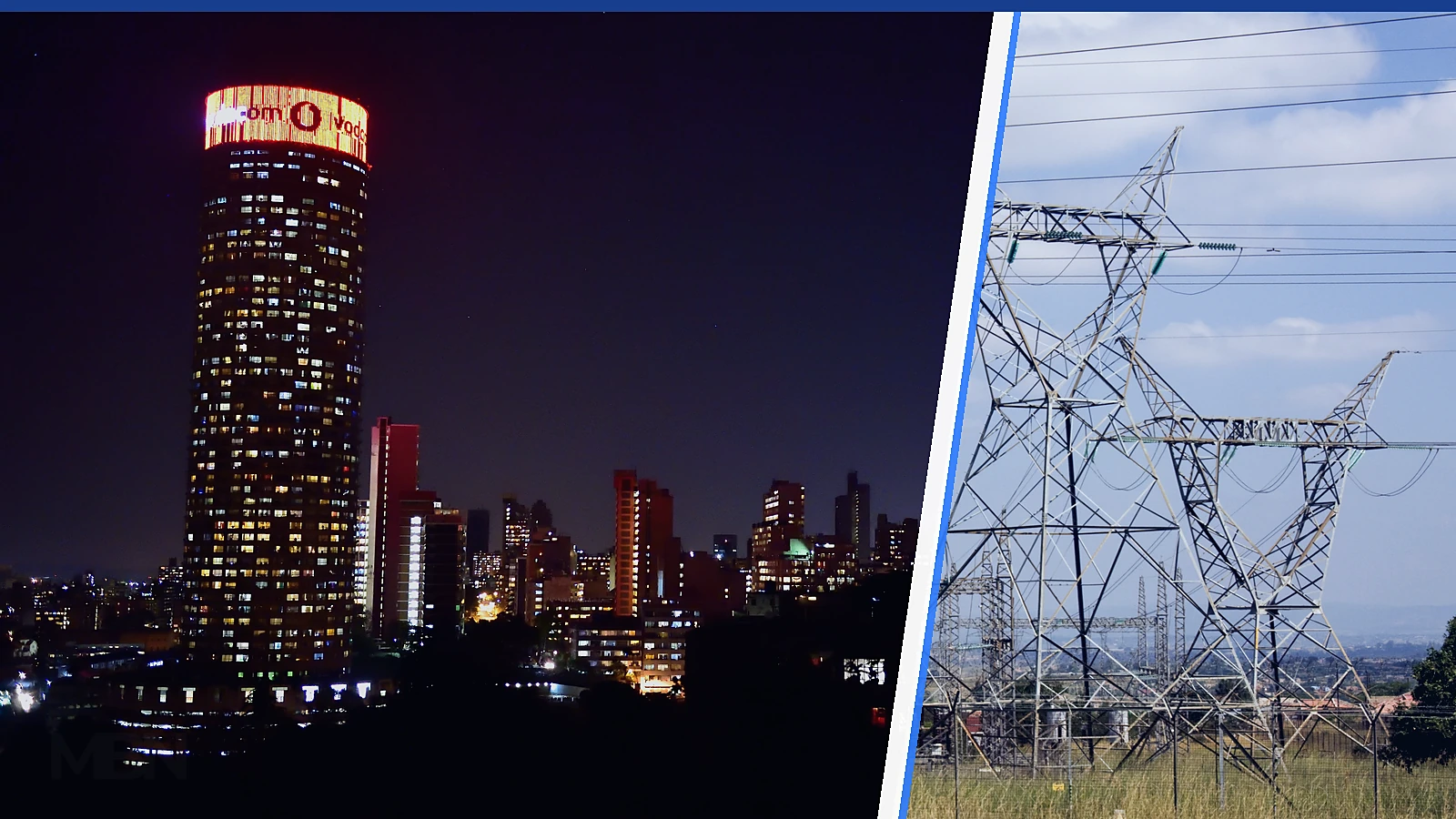
South Africa has expanded its government-business partnership with a goal of lifting annual economic growth above 3% and helping to create one million additional jobs by 2030.
President Cyril Ramaphosa launched the third phase of the partnership on 20 August. The programme now moves beyond its original concentration on electricity, freight logistics and crime to include mining, tourism, infrastructure, agriculture and agro-processing.
The figures are goals rather than forecasts. Detailed delivery plans and performance measures are due in the fourth quarter of 2026, according to the joint statement issued by the Presidency and Business for South Africa.
The economy is growing, but not fast enough to absorb jobseekers
South Africa’s real gross domestic product grew by 1.1% in 2025, up from 0.5% in 2024. GDP measures the value of the goods and services produced by the economy after adjusting for inflation.
Finance, real estate and business services made the largest contribution to growth last year. Agriculture also rebounded strongly, while manufacturing, construction and the electricity, gas and water industry contracted, according to Statistics South Africa.
The labour market remains much weaker. The official unemployment rate rose from 32.7% in the first quarter of 2026 to 33.6% in the second quarter. The number of unemployed people increased by 345,000 to 8.5 million, while employment fell by 16,000 to 16.7 million.
Those figures explain why the new phase puts jobs at the centre of the programme. The partnership estimates that roughly 300,000 net new work-seekers enter the labour force each year. At the moment, economic growth is not creating enough positions to keep pace.
The gap between the goal and current expectations is considerable. In its April 2026 regional outlook, the World Bank projected South African growth of 1.0% in 2026, followed by a gradual rise to 1.7% by 2028. Reaching more than 3% would therefore require a much faster expansion than that forecast assumes.
Electricity and freight remain the foundation
The government-business partnership was established in 2023 when power cuts, weak freight performance and crime were placing heavy costs on companies and households.
The Presidency says South Africa has now gone more than 400 days without load shedding, the scheduled power cuts used when electricity supply cannot meet demand. It attributes the improvement to better performance at state power company Eskom, additional private generation and progress towards a competitive electricity market.
Phase Three does not treat that work as finished. Its first pillar includes completing Eskom’s separation into distinct businesses, constructing transmission lines, making a wholesale electricity market fully operational and allowing more private train operations on the national rail network.
This matters because a mine, farm or factory gains little from stronger demand if it cannot obtain reliable power or move products efficiently to a port. Electricity and freight are therefore not separate infrastructure stories. They set the practical limit on how quickly several other industries can grow.
Four industries move to the foreground
The second pillar concentrates on mining, tourism, infrastructure, and agriculture and agro-processing. They were selected because they can attract investment, expand exports and employ large numbers of workers in both urban and rural areas.
Planned work includes introducing a new mining cadastre, which is a digital register of mineral rights and exploration applications, and simplifying visa systems for international visitors. The partnership also wants to expand agricultural export markets and increase public-private infrastructure investment.
The change in emphasis is noteworthy. The first two phases were largely about stabilising systems that were restricting economic activity. Phase Three is supposed to convert that stability into new production and employment.
However, better coordination does not guarantee private investment. Companies will still consider electricity costs, transport reliability, policy certainty, access to finance and expected demand before committing money. The partnership has not announced a single funding package that automatically delivers its employment target.
Implementation will decide whether the target is credible
The third pillar covers crime, corruption, municipal services and specialised forensic capacity for cases involving organised syndicates. These may look less directly connected to GDP, but unreliable local services and weak enforcement raise the cost and risk of doing business.
Ramaphosa described the partnership in his weekly letter on 24 August as a way to combine the state’s regulatory authority with private-sector investment, skills and implementation capacity.
The next test will be more concrete. The delivery plans promised for the fourth quarter should show which agency or business group is responsible for each project, how progress will be measured and what happens when deadlines are missed.
For now, the 3% figure is best understood as the partnership’s dividing line between modest recovery and growth that could begin to reduce unemployment. Whether South Africa can cross it will depend less on the announcement than on power lines, trains, permits and projects delivered over the next four years.
