
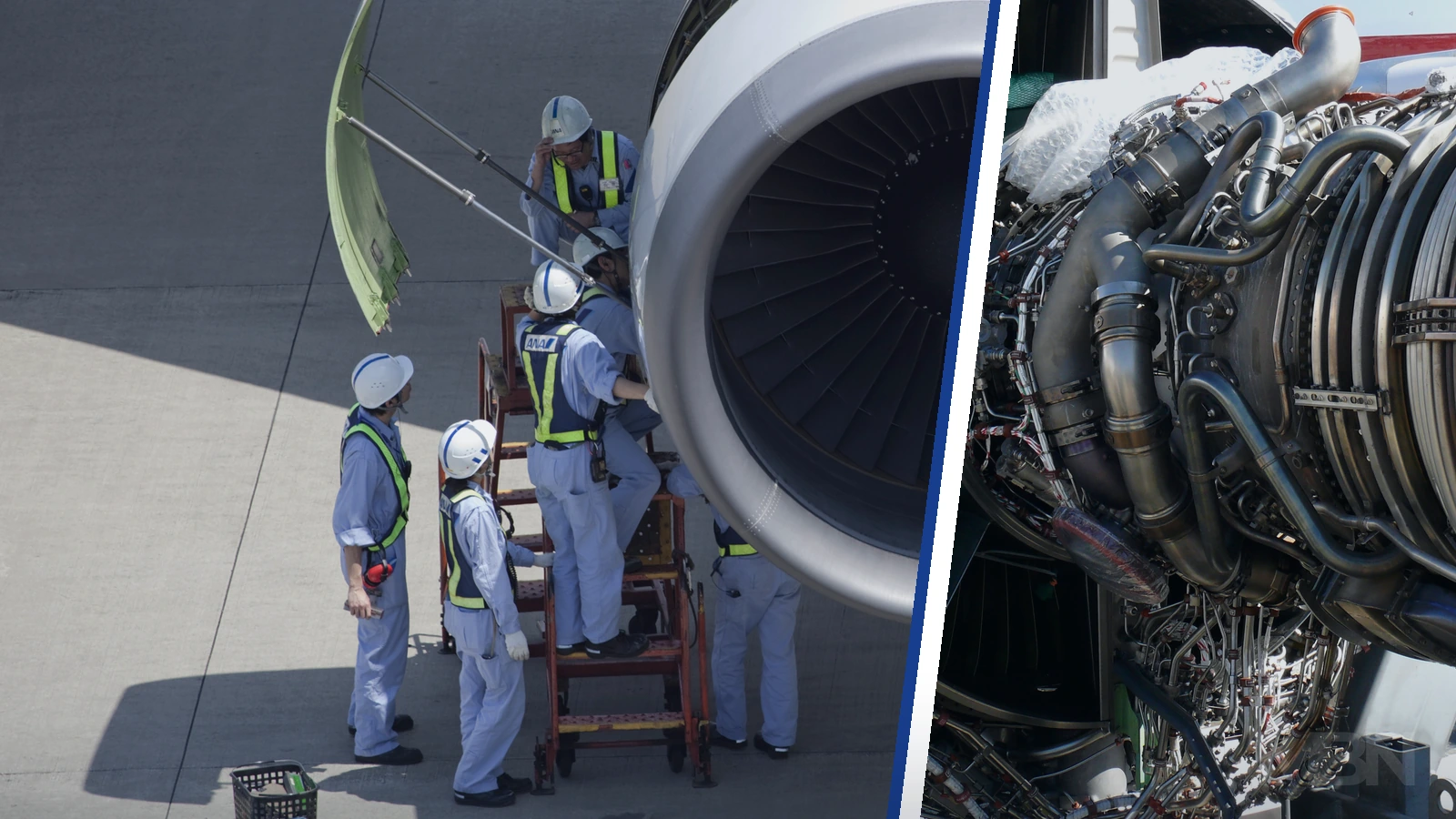
Airlines are relying on leased spare engines as maintenance delays keep more of their own equipment in workshops. An industry report estimated that extending an engine-overhaul turnaround time from an assumed 60 days to 90 days could add $2.6 billion in costs, partly because carriers need more backup engines to keep aircraft flying.
When a jet engine is removed for major maintenance, the aircraft does not always wait for it. The airline can fit another compatible engine and return the plane to service.
That replacement may come from the airline’s own stock. It may also belong to a specialist leasing company. The arrangement allows the airline to obtain an expensive engine for the period in which it is needed, without buying another one outright.
Why longer repairs create demand for more engines
Jet engines require scheduled inspections and overhauls. They can also be removed unexpectedly after a mechanical problem, a manufacturer’s recommendation or an airworthiness directive from a regulator.
Removed engines are often sent to a maintenance, repair and overhaul provider, known in aviation as an MRO. The workshop may dismantle the engine, replace worn parts, carry out tests and return it with the records needed for continued service.
The time spent in the workshop is called turnaround time. If the same number of engines enters maintenance each month but every visit takes longer, more engines remain unavailable at any one time. Airlines then need a larger pool of spares.
An October 2025 report from the International Air Transport Association and Oliver Wyman modelled the cost of that delay. Against a 60-day overhaul baseline, it estimated an industry cost of $2.6 billion at 90 days and $5 billion at 120 days. The calculation included the extra requirement for spare and leased engines.
These were modelled scenarios rather than bills collected from every airline. For carriers, the immediate problem is operational: without a replacement engine, an otherwise serviceable aircraft can remain grounded while the workshop finishes its work.
What an airline gets from an engine lease
Buying a large stock of spare engines gives an airline control, but it also ties up money in machinery that may sit unused between maintenance peaks. Leasing allows the carrier to match at least part of its spare capacity to a shorter or less predictable requirement.
One common structure is an operating lease. The lessor retains ownership of the engine and rents it to the airline for an agreed period. It also carries the residual-value risk, which is the risk that the engine will be worth less than expected when the lease ends.
The airline still has substantial responsibilities. Willis Lease Finance Corporation’s 2025 annual filing says its operating leases were generally “triple-net”. Under that structure, the customer paid rent as well as costs linked to using the equipment, including maintenance, insurance and applicable taxes.
Many contracts also require maintenance-reserve payments. These are regular amounts based on engine use and estimated future maintenance costs. Depending on the agreement, the lessor may reimburse qualifying work from the reserve or settle the balance when the engine is returned.
Technical records matter as much as the metal. A lessor needs proof that inspections, repairs and parts replacements were completed correctly. Missing records can reduce an engine’s resale value and delay its next lease.
Who finances the engine and carries the risk
An engine lessor has to finance the purchase, judge future demand for each model and monitor the asset throughout the lease. It then needs to place the engine with another customer, sell it or use its parts when the first agreement ends.
Willis reported $2.80 billion of equipment in its operating-lease portfolio at the end of 2025, including 363 engines and 20 aircraft. Its customers were spread across 37 countries, and it recorded $291.6 million of lease-rent revenue during 2025. These are the figures of one provider, but they show the amount of money tied up in a specialist portfolio.
Large investment firms can help finance that equipment. In January 2026, Willis and Blackstone Credit & Insurance announced a partnership that planned to deploy more than $1 billion over two years into engines and selected aircraft. That was a future investment plan, not confirmation that the full amount had already been spent.
Leasing reduces the airline’s initial cash requirement and gives it more freedom to adjust its spare pool. The trade-off is an ongoing rent bill and a contract that can include strict maintenance and return conditions.
The lessor faces a different set of risks. An airline customer may miss payments. A particular engine model may lose demand as fleets change. Maintenance can cost more than expected, while an engine sitting without a customer produces no rent.
There is no single answer for every carrier. An airline with a large, stable fleet may prefer to own many of its spares. A smaller carrier, a fast-growing operator or an airline facing an unusually long shop visit may find a lease more practical.
For an airline, the relevant comparison is not rent against the purchase price alone. It is rent against two other costs: owning an engine that may sit idle, or grounding an aircraft when a shop visit overruns. Longer, less predictable repairs make temporary access to someone else’s engine more attractive.
