
Robotic platforms are adding better sensing, software and artificial intelligence, while researchers have shown that a robot can complete a complex surgical procedure on experimental tissue. In hospitals today, surgeons still control the operation. The next question is which individual tasks machines will safely take on first.
Intuitive said on September 8 that its da Vinci 5 system had received European clearance for force-feedback instruments. The feature is designed to let a surgeon feel pushing and pulling forces through the console controls. The company also said its latest platform has more than 10,000 times the computing power of the earlier da Vinci Xi system.
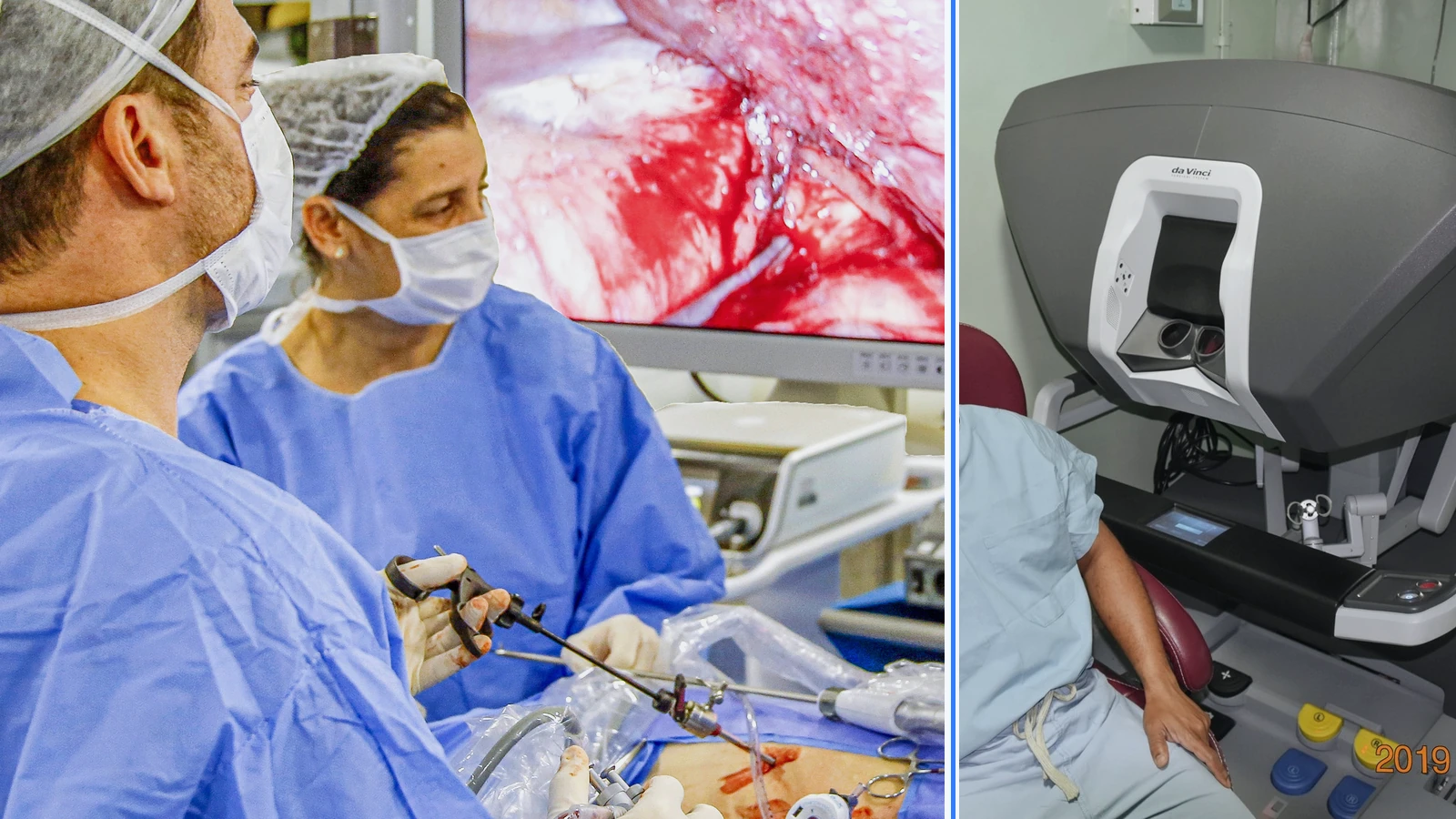
Those upgrades make the machine a more capable surgical tool. They do not make it an independent operator. On da Vinci systems, a surgeon controls the camera and instruments from a console and remains responsible for the procedure.
The line between assistance and autonomy is becoming more relevant as AI is added to surgical systems. A machine might first recognize anatomy in a video feed or warn that an instrument is nearing vulnerable tissue. Later versions could take responsibility for a tightly defined step after a clinician gives approval.
A laboratory result raised the stakes
In 2025, Johns Hopkins researchers reported that their Surgical Robot Transformer-Hierarchy, or SRT-H, completed a gallbladder-removal procedure across eight ex-vivo gallbladders with a 100% success rate. Ex vivo means the tissue was outside a living body. The work appeared in Science Robotics.
The system learned from videos of surgeons and completed a sequence of 17 tasks, including identifying ducts and arteries, placing clips and cutting tissue. It also handled deliberate changes to its starting position and to the appearance of the tissue, according to Johns Hopkins’ research record.
That result should not be confused with autonomous surgery on patients. Living surgery brings bleeding, tissue movement, anatomical variation, anesthesia, complications and a team responding to events around the operating field. The experiment was a notable technical result, but it remains preclinical.
Assistive software will arrive before independent operations
A May review in Nature Reviews Urology places the near-term opportunity in assistance: anatomy recognition, navigation, early error detection, skills feedback and guidance during a procedure. The review says autonomous soft-tissue surgery remains at an early stage, while more advanced demonstrations are confined to ex-vivo or preclinical animal models.
That sequence has commercial consequences. Hospital buyers can assess a system that improves visualization, records usable data or reduces a specific source of error without waiting for a robot that independently plans an operation. Developers also face a narrower validation problem when the software has a defined task and a surgeon retains direct control.
The same pattern appears elsewhere in healthcare AI. In our recent coverage of AI in pharmaceutical development, models were most credible when they narrowed decisions or monitored processes while specialists remained responsible for the evidence. Surgery raises the threshold further because an error can cause immediate physical harm.
What could change for surgeons?
Robots may reduce some manual work without eliminating the surgeon’s role. A surgeon could increasingly set the plan, supervise the machine, decide when a patient’s anatomy falls outside the expected range and take over during a complication. That shift would make judgment, escalation and systems oversight more central to the job.
Whether this reduces demand for surgeons is anybody’s guess. Automation could allow a specialist team to complete more procedures, yet greater capacity may also bring treatment to patients who currently wait or cannot access specialist care. Equipment costs, training requirements and operating-room workflow will shape the economics as much as the software itself.
Training presents a related problem. Surgeons traditionally build confidence through repeated hands-on work, including routine steps that may be the first candidates for automation. Residency programs will need to preserve the ability to intervene when a system fails, while teaching clinicians how to supervise technology that carries out part of the procedure.
Liability will need clearer answers
Today’s surgeon-controlled platforms leave responsibility centered on clinicians and healthcare providers. The picture becomes more complicated when software begins recognizing anatomy, recommending a next step or acting with limited autonomy.
A 2026 SAGES white paper on AI liability in surgery identifies clinicians, healthcare systems and AI developers as parties to whom responsibility may be allocated. It calls for clearer standards around validation, informed consent, monitoring and the use of performance data.
That work will take time, as will regulatory review and clinical trials that measure patient outcomes rather than laboratory success. The operating room may look very different in 20 years, but the more immediate story is incremental: surgical robots are becoming better assistants, and surgeons will decide how far they are allowed to go.
