
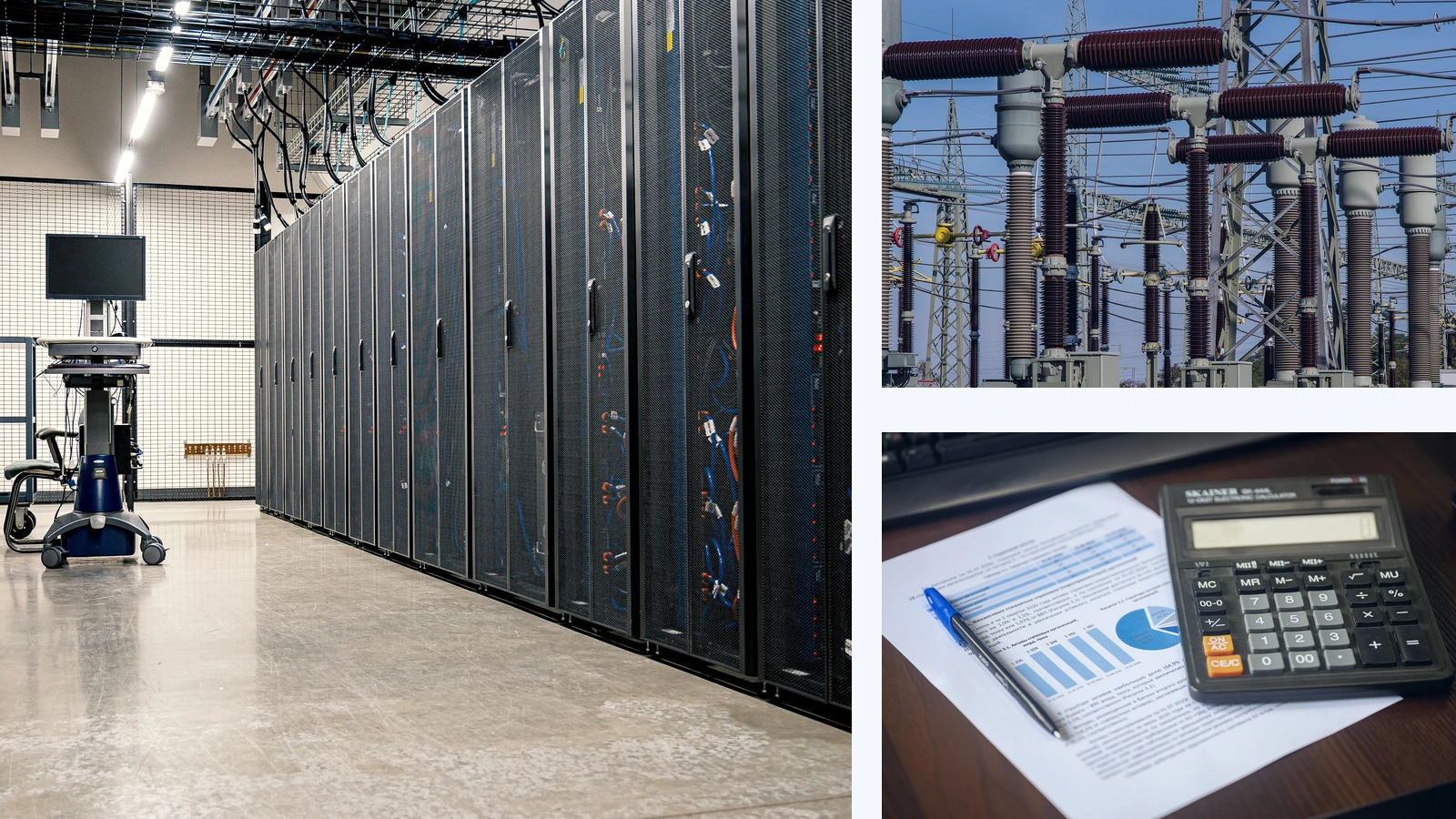
Artificial intelligence is often sold as software, but the industry is now spending on something much more physical: data centers, chips, power connections, cooling equipment and networks. The bills are being paid first by large technology companies, then by lenders, landlords and infrastructure investors. Over time, they must be paid back by customers.
Microsoft said capital expenditures reached $41 billion in its fiscal fourth quarter ended June 2026. Meta reported $31.08 billion of capital expenditure, including finance-lease principal payments, for the June quarter. Those two figures alone show why AI is becoming a capital-allocation story as much as a software story.
Neither number is a measure of AI spending alone. Both companies operate large cloud and digital businesses with wider infrastructure needs. But each company has made AI capacity central to its expansion plans.
Big Tech supplies the first dollars
The largest platforms can fund a substantial part of the build-out from their existing operations. Advertising, cloud computing, enterprise software and e-commerce produce cash that can be reinvested in servers and data centers.
Microsoft reported $55.4 billion in operating cash flow in its fiscal fourth quarter, alongside $19.6 billion in free cash flow after capital expenditures. It said roughly two-thirds of its $41 billion quarterly capex was for shorter-lived assets, primarily CPUs and GPUs. The remainder was for longer-lived assets, such as data-center infrastructure.
Meta generated $31.86 billion in operating cash flow in the June quarter, but its free cash flow after capital expenditure was $784 million. Its 2026 capital-expenditure outlook is $130 billion to $145 billion, including principal payments on finance leases.
These are not signs that either business lacks cash. They show how quickly a physical expansion can absorb cash even at companies with unusually profitable core operations.
Leases spread the construction bill
A technology company does not always buy a data center outright. It can sign a long-term agreement for capacity from a specialist developer. The developer raises the money for land, construction and equipment, then receives lease payments as the facility becomes available.
This changes who supplies the initial capital. It does not eliminate the commercial commitment. Microsoft, for example, said it recorded $5.6 billion of finance leases in its latest fiscal quarter, primarily for large data-center sites. The company also explained that a change to the estimated useful lives of its data centers would move more future leases from finance to operating leases, affecting how spending appears in its capex measure.
That accounting distinction matters to investors. A finance lease is generally included in a company’s capital-expenditure reporting, while an operating lease usually is not. Both can represent substantial future payments, so looking only at a single capex line can understate the scale of a company’s infrastructure commitments.
Chips and buildings have different economic lives
Data-center financing combines assets with very different replacement cycles. Land, buildings and grid connections can be useful for decades. Processors, memory and networking gear can lose their economic advantage much sooner as new generations arrive.
That makes the financing decision more complicated than a conventional property project. A lender may be comfortable with a building and a long customer contract, but the economics still depend on how long the installed computing equipment remains competitive and how reliably the customer uses the capacity.
Specialist data-center owners, private-credit funds and infrastructure investors can therefore participate alongside the technology companies. Their return depends on contracts, financing costs, power availability and the continued value of the computing capacity inside the building.
The grid is also part of the investment
Servers cannot produce a service without electricity. New AI capacity can require substations, transformers, transmission upgrades and new generation, costs that may sit with a utility, a developer, a data-center tenant or a combination of them.
The International Energy Agency projects that data-center electricity consumption could rise from about 485 terawatt-hours in 2025 to 950 terawatt-hours in 2030. A terawatt-hour measures electricity used over time. It is different from the maximum power a facility needs at a single moment.
Our earlier report on why data centers can wait years for a grid connection explains why a project with funding and servers can still be delayed by local transmission and substation constraints.
Customers are the final test
Capital expenditure, leases and external financing only begin the story. The lasting source of repayment is expected to be revenue from cloud capacity, AI software, usage-based services and products that use the new infrastructure.
Microsoft said demand for its cloud infrastructure continued to exceed available capacity in its fiscal fourth quarter. That is a company statement, not a guarantee that every new site will earn an attractive return. Demand can change, equipment prices can move and an expensive facility can take time to fill.
The central question for investors is return on capital. If customers continue to pay for enough computing and AI services, the build-out can support itself through revenue. If demand grows more slowly than capacity, companies may still face depreciation, lease payments and power costs from investments made years earlier.
The AI boom is therefore not being funded by a single payer. It is a chain: platform companies deploy cash, developers and lenders finance physical capacity, utilities invest in connections, and customers must eventually pay for services that make the system economic.
Microsoft’s figures are from its fiscal 2026 fourth-quarter earnings call. Meta’s figures are from its second-quarter 2026 results. The electricity projection is from the International Energy Agency’s Energy and AI analysis.
