

Consumer prices in the United States fell in June, largely because of a sharp decline in energy costs.
The Consumer Price Index decreased by 0.4% from May on a seasonally adjusted basis, according to the U.S. Bureau of Labor Statistics. Prices were still 3.5% higher than a year earlier.
It was the largest monthly fall since April 2020.
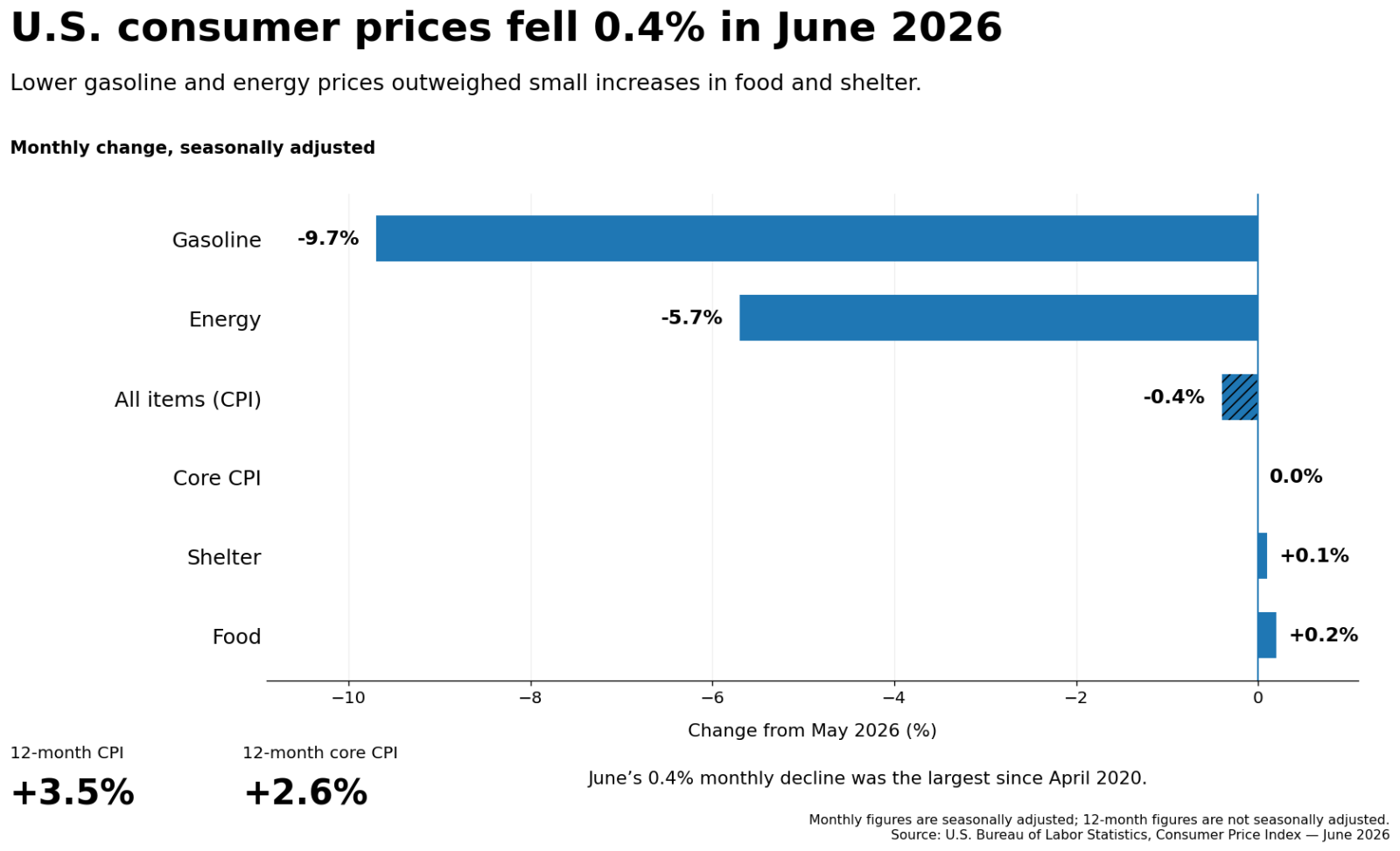
Energy costs fell by 5.7% during June and were the main reason for the overall monthly decline. Gasoline prices dropped by 9.7%, while electricity prices fell by 1%.
Despite the monthly decrease, energy prices remained 15.7% higher than they were in June 2025.
Food prices moved in the opposite direction, rising by 0.2% during the month. Prices for groceries and meals eaten outside the home both increased by 0.2%.
Core inflation, which removes food and energy prices from the calculation, was unchanged from May. Over the previous 12 months, core prices increased by 2.6%.
Some household costs continued to rise. Shelter prices increased by 0.1% in June and were 3.3% higher than a year earlier.
Several categories became cheaper during the month. Motor vehicle insurance prices fell by 2%, apparel prices declined by 0.6%, and used car and truck prices decreased by 0.2%.
However, recreation prices rose by 0.5%, while household furnishings and personal care costs each increased by 0.2%.
The figures show that lower fuel and energy prices provided consumers with some relief in June. However, the annual inflation rate remained above the Federal Reserve’s long-term target of 2%.
