
The apprenticeship levy is to go ahead next year as planned. The UK government made the announcement on Friday as they called for comments on new plans for paying into and out of the apprenticeship programme.
There has been a mixed reaction to the news. Some business groups say the government should delay the new plans while others say it will help meet skills shortages and give young people more ways to enter good careers.
The government say 2.9 million people have already benefited from the apprenticeship programme, which was launched in 2010.
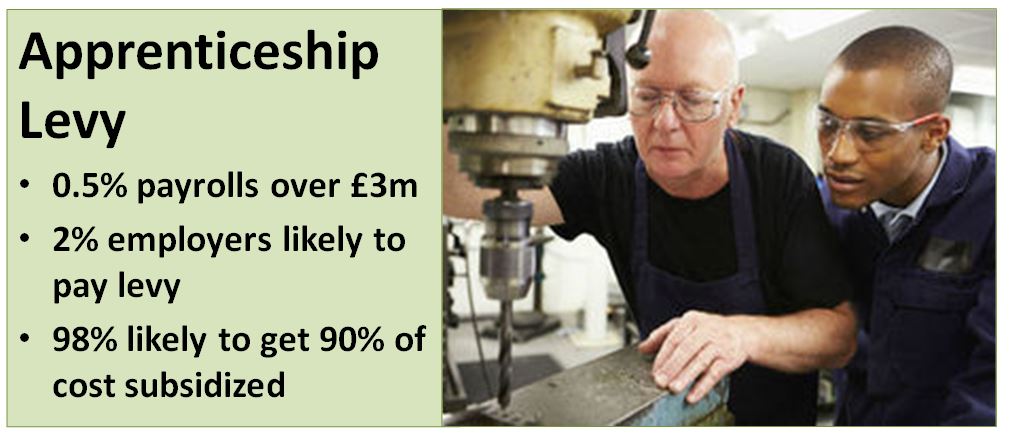
The new funding model they are seeking views on includes an apprenticeship levy to be paid by all UK employers in both the private and public sectors whose annual payroll amounts to more than £3 million.
 The UK government are seeking views on new plans for funding apprenticeships – including an apprenticeship levy – that will come into force next year.
In England, large employers who fall into this category will be required to pay 0.5 percent of their payroll.
However, small employers – whose annual payroll is less than £3 million – will not pay the levy but will receive 90 percent of the training costs of apprenticeships.
The government estimate that under the new plans, around 2 percent of employers will be paying in, and 98 percent will receive subsidies.
In addition, there will be extra support – worth £2,000 per trainee – for firms and training providers that take on apprentices aged 16-18 or young care leavers.
Robert Halfon, government minister for apprenticeships and skills says:
“The apprenticeship levy will help create millions of opportunities for individuals and employers. This will give our young people the chance they deserve in life and to build a highly-skilled future workforce that the UK needs.”
Mixed reactions
However, some groups have expressed concern about the apprenticeship levy. The CBI say that while they welcome the government’s commitment to increasing investment in apprenticeships, they should delay the introduction of the levy.
CBI Director-General Carolyn Fairbairn says that in its current form, the apprenticeship levy “risks turning the clock back on recent progress through poor design and rushed timescales.”
“Without a radical rethink it could damage not raise training quality,” she adds, explaining that this really matters because of the need to close the skills gap and improve UK’s lagging productivity.
The CIPD would also prefer the government to defer the launch of the apprenticeship levy. While a survey they published in June 2016 found that a third of employers support the idea of an apprenticeship levy, the human resource professionals’ group say it is irresponsible to continue with the apprenticeship programme in its current form.
The apprenticeship programme needs “radical reform” if it is to be seen as a genuine alternative to a university education, say the CIPD. Currently, 60 percent of apprenticeships are at Level 2 – equivalent to just five GCSE passes, they note.
Ben Willmott, head of public policy at the CIPD, says:
“The ‘one size fits all’ approach will damage attempts to improve the UK’s workplace productivity and will not address the downward trend in employer investment in training in recent years.”
Other groups have also reacted to the proposals. TUC General Secretary Frances O’Grady says after the referendum vote to leave the EU, the UK needs serious investment in skills. She urges:
“The levy must be implemented on schedule by April 2017. Decent apprenticeships boost productivity and ensure that Britain is ready for the jobs of tomorrow.”
The TUC particularly welcomes the fact employers will be able to use the levy to support apprenticeships in their supply chains as well as in their own workforce.
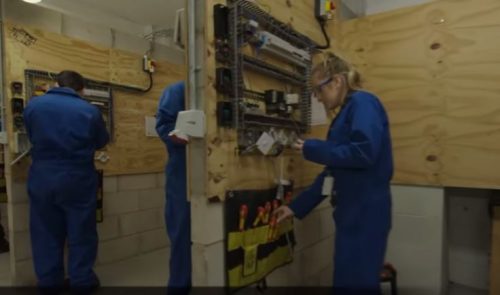
The EEF want the government to delay launching the apprenticeship levy because “question marks still remain” over its design. Image: EEF.
EEF, the manufacturing organization, welcome some of the changes the government are proposing – for instance “the uplift of funding for STEM [science, technology, engineering and mathematics] apprenticeships.”
However, they also urge the government to delay the launch date for the apprenticeship levy. Terry Scuoler, Chief Executive of EEF, says “question marks still remain over the design of the new levy system.”
He says employers will want to see the government is committed to evolving the scheme to meet employers’ needs not just in the lead up to the launch but also afterwards. He concludes:
“Delaying the introduction of the levy would buy the government some much-needed additional time to work closely with industry to iron out some of the major wrinkles. This will be vital if the levy is to support the creation of more high quality apprenticeships.”
The Department for Education have published guides on how the apprenticeship levy will work. These include details of which employers will be affected, how much they will pay, and what happens once they’ve paid the money.
Video – what is an apprenticeship?
The following video from the EEF explains what an apprenticeship is and includes comments from two young apprentices.
