
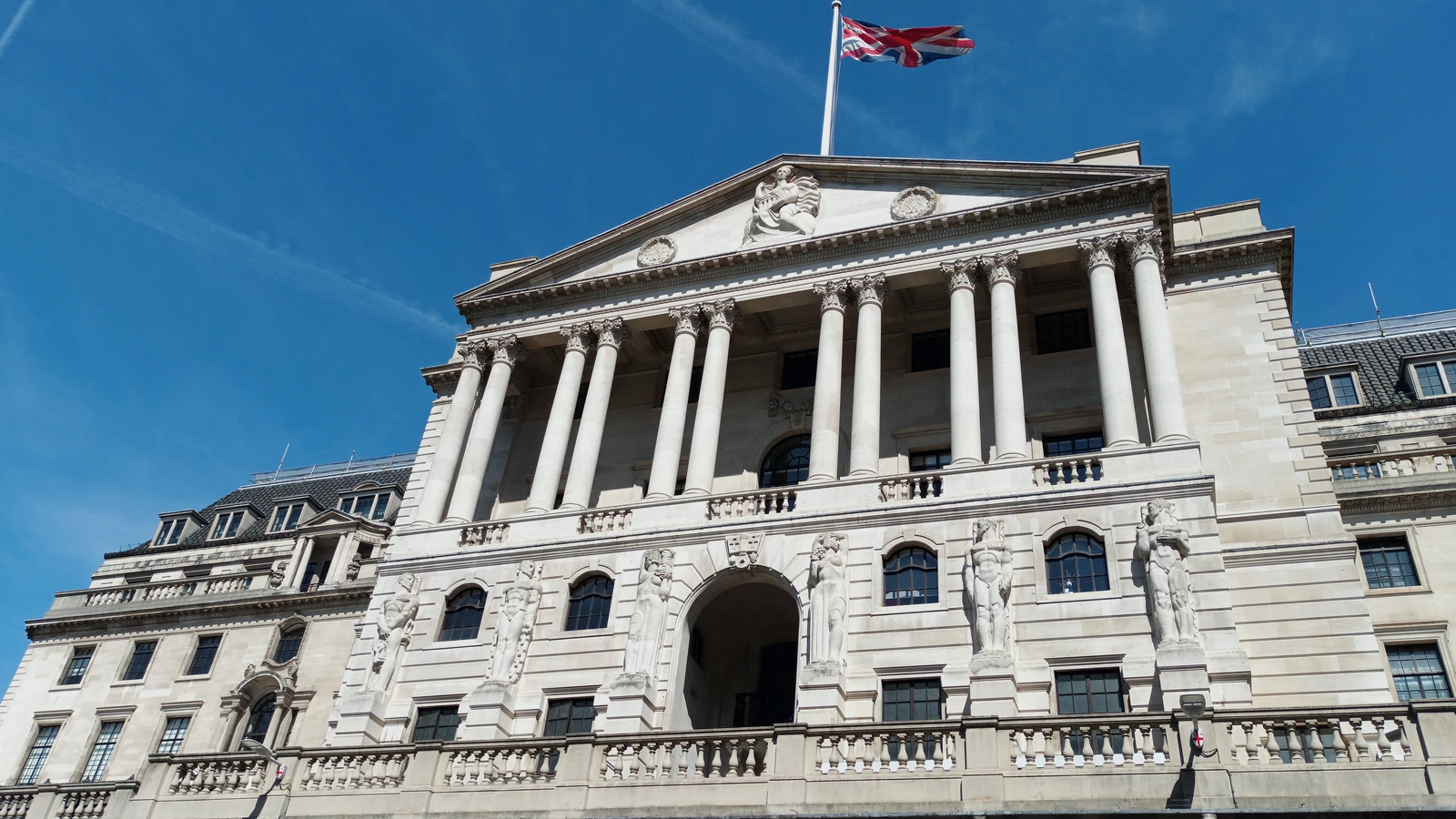
The Bank of England kept Bank Rate at 3.75% in a 6 to 3 vote, despite warning that higher energy prices could push UK inflation above 4% in early 2027. Three members backed an immediate quarter-point increase.
The decision leaves the policy rate unchanged, but the split vote and the Bank’s revised assessment point to a more difficult inflation outlook. The Monetary Policy Committee said the risks to inflation were more tilted to the upside than in July as the Middle East conflict kept oil, gas and refined-product prices elevated.
Bank Rate influences the interest rates charged on many loans and paid on deposits. It cannot lower global energy prices, but the Bank uses it to reduce the risk that an external price shock becomes embedded in wages and wider business pricing.
Inflation is being lifted by energy
UK CPI inflation rose to 3.1% in August, with the Bank estimating that direct energy effects accounted for about 0.7 percentage points of the 1.1-point gap above its 2% target. It said a mechanical update to its near-term forecast suggested inflation could reach slightly above 4% in early 2027.
That is a forecast conditioned on energy-price assumptions, not a certainty. The Bank said there was little evidence so far of material second-round effects, which occur when a temporary cost shock changes wage demands or broader price-setting. But it judged that risk would rise if higher energy prices remained in place for longer.
As our recent report on global food prices showed, food and energy markets can affect household budgets rapidly even before all costs feed through to the wider economy.
The vote shows a divided committee
Most members preferred to wait for more evidence on how the energy shock would pass through to domestic inflation. They said weaker demand, a softer labour market and higher market borrowing costs were already restraining price pressure.
The three members who preferred a rise to 4% argued that the combination of high energy and food prices before next year’s wage settlements increased the risk of inflation becoming more persistent. Their position did not carry the vote, but it signals that a future increase is possible if the data worsen.
Bond holdings will be reduced to zero
The committee also voted unanimously to reduce the stock of government bonds bought for monetary-policy purposes to zero through a multi-year plan. The remaining holdings will be unwound at an average pace of £46 billion a year by the end of 2034, including £20 billion of annual bond sales and the effect of maturing bonds.
This quantitative tightening is separate from Bank Rate. It reduces the central bank’s balance sheet over time, while the policy rate remains the main short-term signal for borrowing costs. For households and businesses, the immediate result is no change in Bank Rate. The larger question is whether energy prices stay high long enough to change domestic inflation behaviour.
