
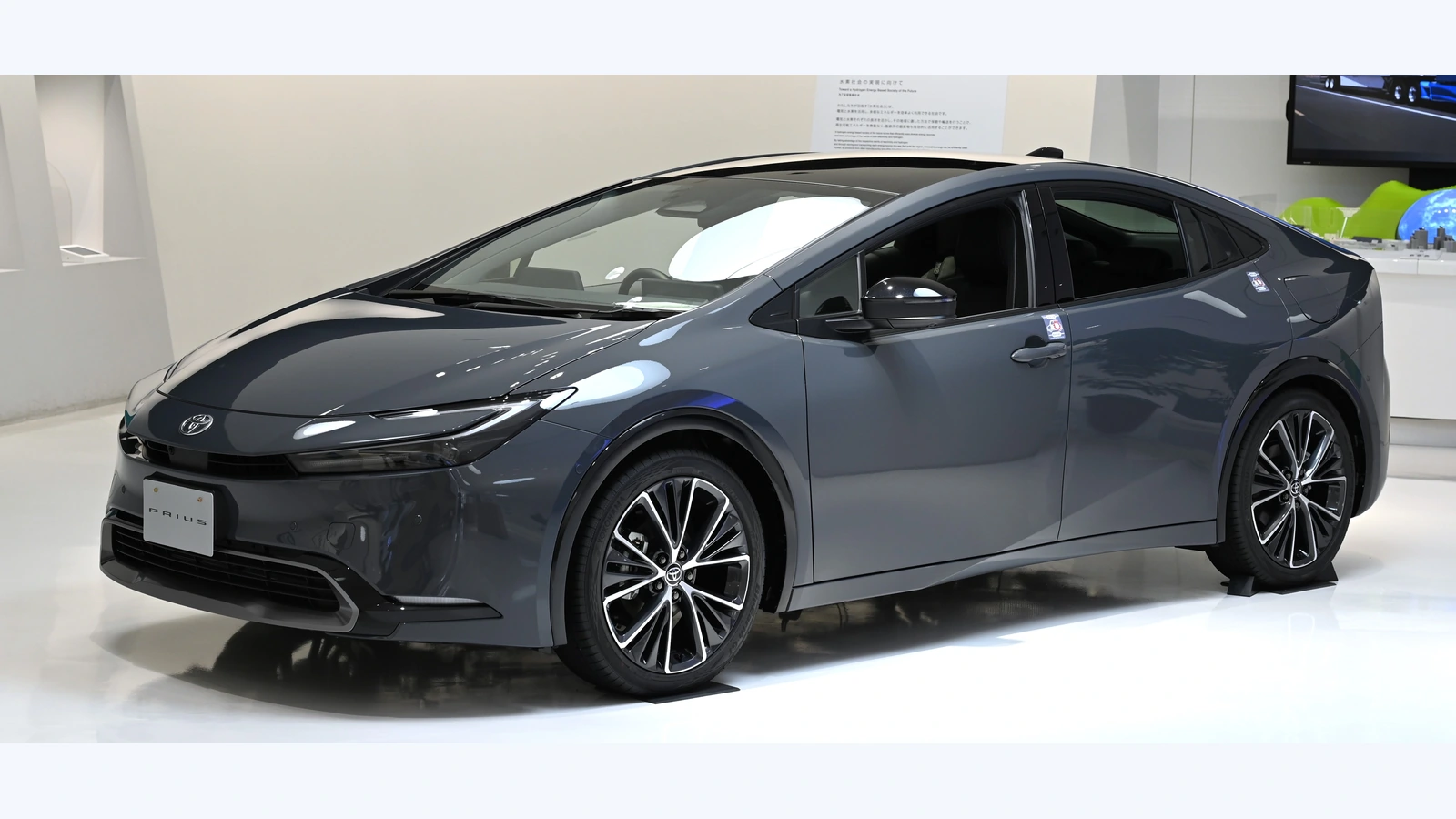
Honda plans to launch 15 next-generation hybrid models by March 2030 and redirect production resources toward them, showing how demand for cars with both engines and electric motors is changing manufacturers’ spending decisions.
The Japanese automaker’s strategy responds to uneven demand for fully electric vehicles. Hybrids give customers another way to reduce fuel use, while allowing manufacturers to retain a market for combustion-engine technology.
The shift is taking place alongside rising battery-electric sales in Europe. Carmakers serving several regions face different purchasing habits, charging networks and policies, making a single worldwide production timetable difficult to follow.
What are hybrid vehicles?
A full hybrid combines an internal combustion engine with an electric motor. Its battery receives energy from the engine and regenerative braking, which recovers some energy normally lost when slowing down. It does not need an external charger.
Plug-in hybrids have batteries that can also be charged from an electricity supply and generally offer more electric-only driving. Mild hybrids provide electrical assistance but cannot drive on electricity alone.
Hybrids still use fuel and produce exhaust emissions. Their fuel savings depend on vehicle design and driving conditions; plug-in models also depend on how regularly owners charge them.
Honda is changing factories as well as models
In its May 14 business briefing, Honda said the first vehicles using its new hybrid system and platform would arrive in 2027. North America is the main focus of the planned model expansion.
The company targets a hybrid-system cost reduction of more than 30% against its 2023 system. That is a manufacturing target, not a promised reduction in customers’ vehicle prices.
Honda intends to make every North American automobile plant capable of producing hybrids. It also plans to use excess Ohio capacity for gasoline and hybrid vehicles, and convert part of its battery joint venture with LG Energy Solution to hybrid production.
These are announced plans. Their financial benefit depends on execution, component costs and how many vehicles customers buy. A plant operating below capacity has fewer sales over which to spread its fixed expenses.
Ford offers evidence of an established market. Its 2026 integrated report says global hybrid retail sales reached a record 444,000 in 2025, nearly 25% above the previous year. Sales volumes alone do not establish that hybrids have higher profit margins.
Europe is buying both hybrids and fully electric cars
ACEA’s January-August 2026 figures put non-plug-in hybrids at 36.6% of new EU car registrations. The category includes full and mild hybrids.
Battery-electric cars accounted for 21.7%, up from 15.8% a year earlier, while plug-in hybrids held another 10%. Europe’s figures show several types of electrification expanding together.
The International Energy Agency’s 2026 outlook estimated that global electric car sales fell 8% year over year in the first quarter, largely following policy changes in China and the United States. European sales rose close to 30%.
The agency still projected 23 million electric car sales for the full year. Its definition includes battery-electric cars and plug-in hybrids, excluding conventional hybrids.
Honda continues researching future EV platforms and solid-state batteries. Expanding hybrids buys it additional product choices, but also leaves it financing several technologies until demand determines which factories and models earn their keep.
