

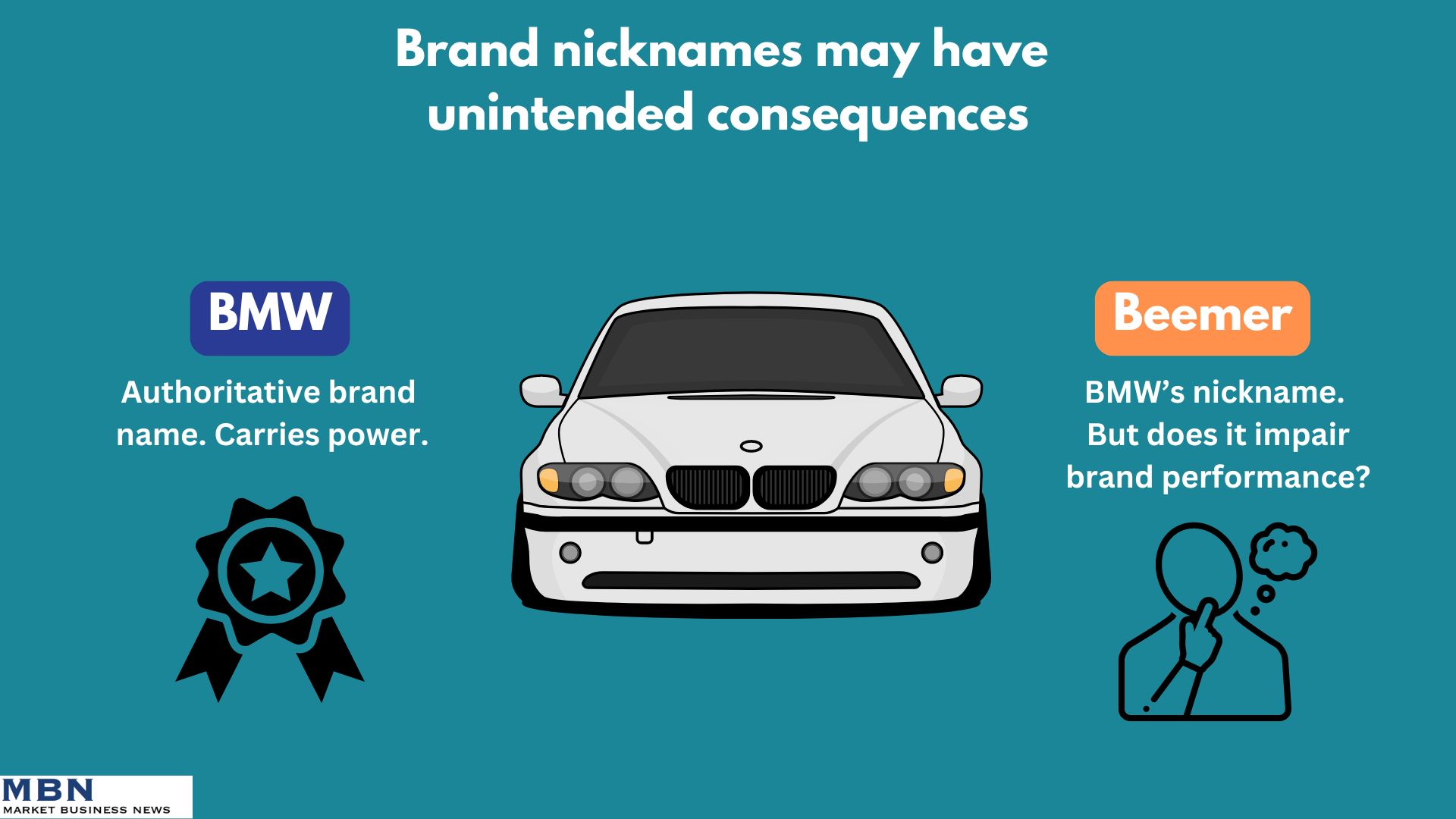
A recent study published in The Journal of Marketing reveals that the increasingly popular strategy of using brand nicknames may have unintended consequences.
Titled “BMW Is Powerful, Beemer Is Not: Nickname Branding Impairs Brand Performance,” the study explores how adopting informal consumer-created names, like “Beemer” for BMW or “Bloomie’s” for Bloomingdale’s, can undermine a brand’s strength and reduce consumer engagement.
Through a series of controlled experiments and field studies, the research presents a counterintuitive finding: while companies expect that embracing these informal nicknames will make them more relatable, it often diminishes consumer perceptions of the brand’s power, ultimately hurting its performance.
A Closer Look at the Data
The research team—Zhe Zhang, Ning Ye, and Matthew Thomson—used multiple approaches to examine the effects of nickname branding, combining historical social media data with field experiments involving thousands of participants. The study is one of the first to systematically investigate how nickname branding affects various performance metrics, including social media engagement, willingness to pay, and purchase intentions.
In one of the field experiments, researchers analyzed the impact of Chevrolet’s nickname, “Chevy,” in social media posts on X (formerly Twitter). Over a dataset of 361 posts using the nickname and 42 posts using the formal name, they found that posts with the nickname received significantly fewer likes and shares. Specifically, posts with “Chevy” garnered an average of 143 likes compared to 422 for posts with the full brand name Chevrolet. Shares also dropped, with “Chevy” posts generating an average of 29 shares compared to 118 for the formal brand name. This drop in engagement supports the study’s assertion that adopting a nickname reduces consumer perceptions of brand power.
Facebook and TikTok Ad Experiments
In another field study, researchers tested the impact of nickname branding on click-through rates (CTR) using Facebook ads. They created two versions of an ad for Target—one using its full name and another using its nickname “Tarzhay.” Both ads were shown to more than 38,000 users. The results were striking: the CTR for the ad using the formal “Target” name was 0.09%, significantly higher than the 0.03% CTR for the “Tarzhay” ad. This difference suggests that using a nickname in marketing content can directly reduce consumer interaction with a brand.
The research was further expanded to TikTok ads, where they compared the performance of ads for UPS using its nickname “Big Brown.” With over 101,000 impressions, the results showed a marginally lower CTR of 0.34% for the nickname compared to 0.41% for the formal “UPS” name, suggesting that the nickname still had a negative, albeit smaller, impact on engagement.
Controlled Experiments on Purchase Intentions
Beyond real-world data, the study included several controlled experiments to examine how nickname branding affects consumer behavior in different contexts. In one such experiment, participants were presented with a simulated online shopping scenario for Christian Louboutin shoes. One group saw the brand referred to by its full name, while another saw the shoes labeled with the nickname “Loubi.” Out of 190 participants, those who saw the nickname were 21.5% less likely to choose the shoes compared to 58.8% who chose the formally named product. This significant drop in choice illustrates how nickname branding can harm consumer decision-making.
A similar experiment was conducted with IBM and its nickname “Big Blue.” Here, researchers measured participants’ purchase intentions. Participants were less likely to purchase when presented with the nickname (scoring an average purchase intention of 3.76 on a 7-point scale) compared to the full brand name (4.32 on the same scale). This experiment highlights how the use of informal names can weaken the brand’s appeal, especially for companies that rely on an image of competence and authority.
When Nicknames Aren’t So Bad: The Role of Warmth and Message Type
While the data consistently showed negative outcomes for nickname branding, not all brands are affected equally. The study found that brands perceived as “warm” and approachable suffer less from using nicknames compared to brands that are seen as competent and authoritative. For example, Starbucks—often seen as a friendly and community-oriented brand—saw less of a drop in purchase intentions when using the nickname “Starbies.”
The researchers also found that the type of message in which the nickname is used can moderate the negative effects. In a test with Starbucks ads, participants responded more favorably when the nickname was used in communal-oriented messages, such as promoting inclusivity or social good. In contrast, when the nickname was used in transactional, product-focused messages, the negative impact was much greater. This suggests that the context in which a nickname is used plays an important role in how consumers perceive the brand.
Key Takeaways for Marketers
The findings of this study are a wake-up call for marketers considering the use of nickname branding. While it might seem like a good way to build a more personal connection with consumers, the data suggests otherwise. For brands that rely on projecting power and competence—such as luxury or tech companies—using an informal name can erode their image and weaken their performance.
For brands perceived as warm and approachable, nickname branding is less damaging, but marketers still need to be careful. The study shows that using nicknames in the wrong context, especially in commercial messaging, can harm engagement and consumer perceptions.
Future Directions for Research
This study raises several questions for future research. For example, would the negative effects of nickname branding diminish over time with consistent use? Could the involvement of third-party influencers or employees soften the blow, making it less harmful for brands to adopt consumer-created names?
For now, the message to marketers is clear: while nicknames may feel like a friendly, engaging approach, they carry risks. Understanding the impact of these informal names on consumer perceptions of power and competence is critical to making informed branding decisions.
Reference:
Zhe Zhang, Ning Ye, and Matthew Thomson, “BMW is Powerful, Beemer is Not: Nickname Branding Impairs Brand Performance,” Journal of Marketing.
