
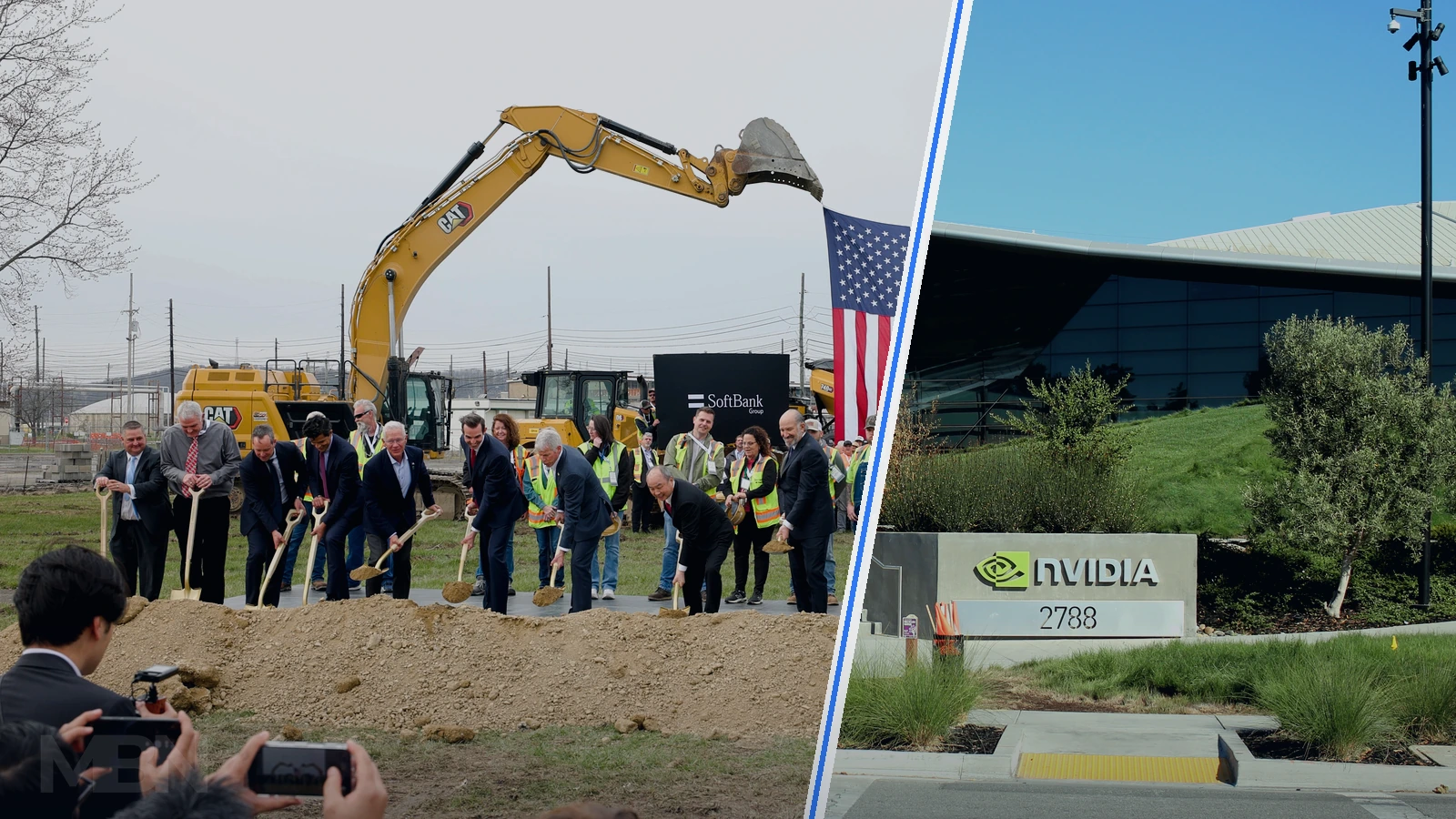
Nvidia has agreed to provide guarantees capped at a cumulative $105 billion for the first 4.25 gigawatts of computing capacity that OpenAI plans to lease at a new data centre campus in Ohio. The figure is a conditional ceiling, not a payment Nvidia is making now.
The chipmaker disclosed the agreements on August 17, 2026, in a Form 8-K filed with the US Securities and Exchange Commission. The filing gives Nvidia a much larger financial role in a project that is expected to become a major customer for its processors, networking equipment and software.
According to the joint announcement filed with the SEC, SB Energy plans to build, own and operate the PORTS Technology Campus in Pike County. An OpenAI affiliate will be the tenant under 20-year leases, while Nvidia will be the exclusive provider of the campus’s core AI computing infrastructure, subject to limited exceptions.
Nvidia is also making a separate $1.5 billion investment in SB Energy. That investment and the $105 billion guarantee cap are different commitments: the investment is capital going into the developer, while the guarantee would require payments only if specified conditions are met.
What Nvidia has actually guaranteed
The agreements are described as residual value guarantees. In ordinary terms, Nvidia is promising to cover part of the value left unpaid if OpenAI defaults on a qualifying lease and the owner cannot recover enough money by finding another tenant or selling the project.
A guarantee for each part of the campus generally becomes effective only when the relevant lease starts. Before that happens, the landlord must complete specified work and make the capacity ready for service. The first phases are expected to become available from 2028, but that remains a construction timetable rather than operating capacity.
The potential payment is not automatically the remaining rent. Nvidia said it would generally cover the difference between a guaranteed minimum lease value and the amount recovered through a replacement lease or sale. The guarantee could be triggered by an OpenAI insolvency that causes a lease default, or by a failure to pay rent.
If a trigger occurs, Nvidia could take over the lease, require the property to be offered to a new tenant, start a sale, permit the lease to be terminated or postpone those remedies for as long as a year while paying specified project costs.
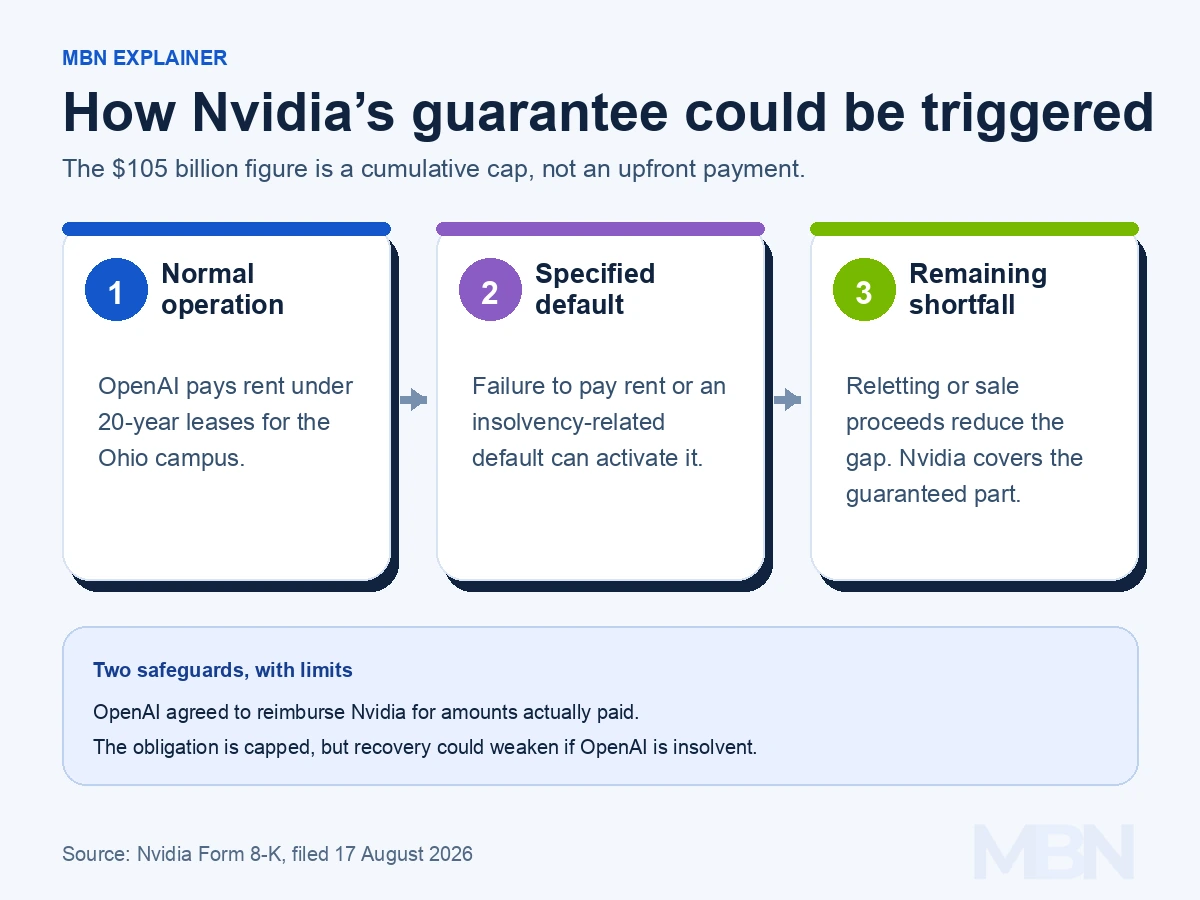
OpenAI has agreed to reimburse and indemnify Nvidia for amounts the chipmaker actually pays under the guarantees. That provides a contractual route for recovery, but it does not remove the exposure. If an OpenAI insolvency were the event that activated a guarantee, OpenAI’s ability to reimburse Nvidia could also be impaired.
The $105 billion figure is a cap, not a present bill
The maximum applies cumulatively to the initial 4.25 gigawatts of IT load. Nvidia can choose, at its sole discretion, whether to support approximately another 3.8 gigawatts. The filing does not extend the $105 billion cap to that optional capacity.
IT load means the electricity delivered to servers, processors, networking equipment and other computing hardware. It is not the same as the site’s total power demand. Cooling systems, power conversion, lighting and other facilities also consume electricity.
This distinction is sometimes expressed through power usage effectiveness, or PUE. The US Department of Energy defines PUE as a data centre’s total annual energy use divided by the energy used by its IT equipment. A PUE above 1 means the complete facility needs more power than the computing load alone.
The size of the guarantee cap is still substantial. At April 26, Nvidia reported $13.2 billion of cash and cash equivalents, $37.1 billion of marketable debt securities and $30.2 billion of marketable equity securities. Their combined carrying value was approximately $80.6 billion, according to an MBN calculation based on the company’s latest quarterly filing.
The $105 billion ceiling is therefore larger than those three balance-sheet categories combined. That comparison shows the scale of the legal commitment. It does not estimate Nvidia’s likely loss, because the guarantees are conditional, expected to take effect in phases and can remain in place for years.
Nvidia’s financial capacity is also growing quickly. It generated $50.3 billion of operating cash flow on revenue of $81.6 billion in its fiscal first quarter. Those are three-month results, not cash reserves set aside for the Ohio guarantees.
The Ohio project combines computing, property and power
The PORTS campus is planned for the former Portsmouth Gaseous Diffusion Plant, a federal site once used to enrich uranium. The Energy Department is leasing land to an SB Energy affiliate while environmental cleanup continues.
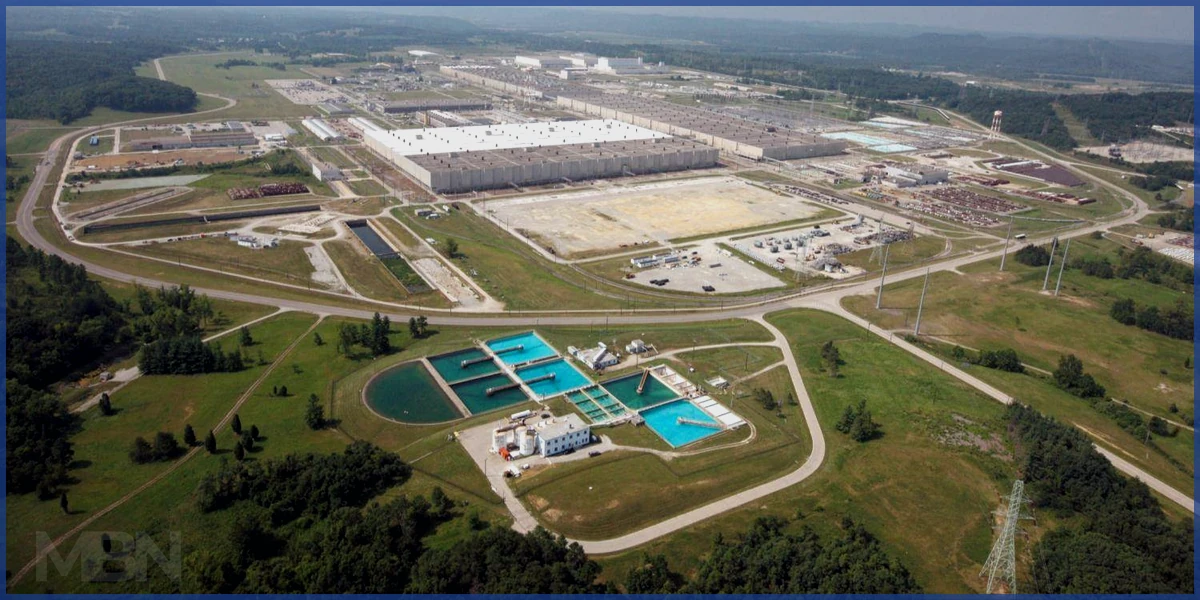
The project announcement calls for OpenAI to take eight gigawatts of IT capacity. SB Energy and SoftBank separately plan at least 10 gigawatts of new generation, including 9.2 gigawatts of natural gas generation, according to a Department of Energy fact sheet.
SB Energy and AEP Ohio also plan $4.2 billion of transmission work. The department says the developer has committed to fund that infrastructure. These are project plans and commitments, not proof that the generation, grid connections or data halls are complete.
The phrase “land, power and shell” in Nvidia’s announcement describes three of the inputs needed before AI hardware can be installed: a suitable site, a contracted electricity supply and the basic building that will contain the equipment. Servers are only one part of a large data centre’s construction cost and schedule.
The companies say the campus will use Nvidia’s DSX platform. DSX is the company’s design for combining its graphics processors, central processors, networking and software at data-centre scale. The announcement does not identify the exact processor generation that will be installed when the first capacity opens.
Nvidia is helping create demand for its own systems
The transaction shows how the limiting factors in AI infrastructure have moved beyond the supply of chips. Nvidia’s own quarterly report identifies access to data centres, energy and customer financing as risks that can affect future revenue.
In Ohio, the company is addressing those constraints directly. It is investing in the developer, supporting the leases and securing long-lived capacity that is expected to use Nvidia equipment. That can make it easier for SB Energy to finance construction and for OpenAI to obtain space at the required scale.
It also changes the allocation of risk. Nvidia remains a supplier, but it is now exposed to the tenant’s ability to pay and to the value that the facilities would retain if OpenAI defaulted. In effect, some risk attached to future demand for Nvidia systems has moved onto Nvidia’s own balance sheet.
This does not mean the company will record a $105 billion expense. It means that future Nvidia revenue from the project is linked to a structure in which Nvidia has agreed to absorb a defined portion of a severe downside scenario.
Important contract details are still missing
Nvidia said the guarantees can end upon events that include the 20th anniversary of a lease’s commencement, a valid termination by OpenAI or OpenAI obtaining a satisfactory credit rating. The filing does not disclose that rating threshold.
It also does not provide the guaranteed minimum value for each lease, the timing of every phase or the formula used to allocate the cumulative cap. Nvidia plans to file the forms of the guarantees with its quarterly report for the period ending July 26, 2026.
Those documents should make the risk easier to assess. Until then, the accurate reading is narrower than the headline number may suggest: Nvidia has not promised an immediate $105 billion payment, but it has accepted an unusually large contingent obligation to help turn OpenAI’s planned Ohio capacity into a financeable project and a future market for Nvidia computing systems.
