
What are the benefits and the future potential of stevia, a sweetener that comes from the leaves of Stevia rebaudiana? Specifically, it comes from the plant’s leaf. Hence, its nicknames sugarleaf, sweetleaf, and candyleaf. It is also a sugar substitute.
People in South America have been using the plant for its sweet properties for centuries.
Several eminent scientists have published an article in the Journal of Nutrition (citation below). The article details the sweetener’s current state. The authors also write about its safety, potential health benefits, and future potential.
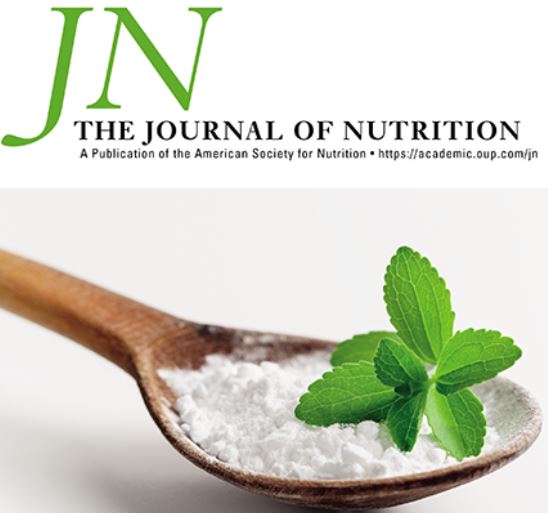
Stevia popularity and interest
Over the past few years, a growing number of beverage makers have included stevia in their products. An increasing number of sellers of food products have also added it to their goods.
Subsequently, consumers, healthcare professionals, scientists, and nutritionists have become interested in the sugar substitute, especially its safety and science.
In the article, the authors covered the following topics:
– Impact on insulin concentrations and blood glucose.
– Metabolism.
– Dietary exposure.
– Safety.
– Weight management.
– Naturality and processing.
– Consumer insights.
– Regulatory status.
– Taste and sensory properties.
– Market trends.
Lead author, Dr. Priscilla Samuel, Director of the PureCircle Stevia Institute (PCSI), said:
“Given the rising global concerns around obesity and diabetes continuing, stevia serves as an excellent tool for sugar and energy reduction, and an alternative for those looking for a plant-based solution.”
“PCSI’s mission is to advance the science of stevia and educate all stakeholder communities globally. This publication is an important milestone for furthering this mission.”
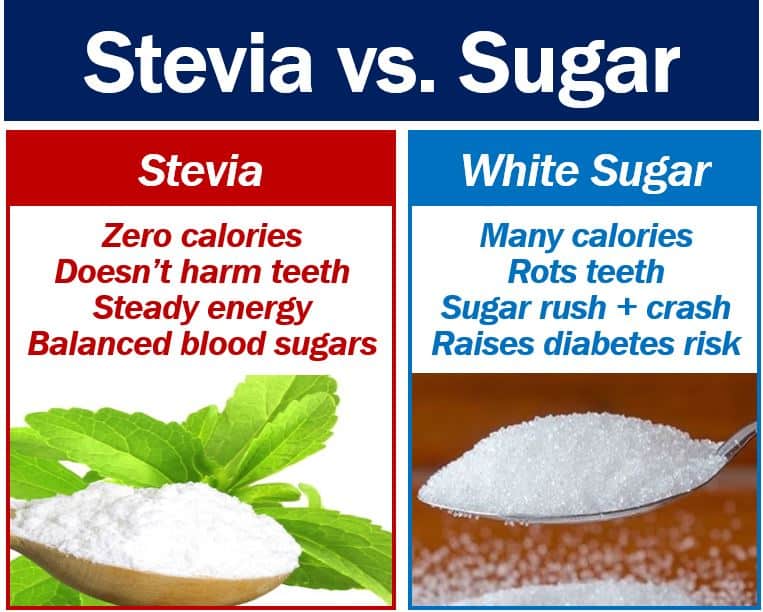
Some science
The sweetener’s active compounds are steviol glycosides; mainly rebaudioside (Reb-A) and stevioside. These compounds are up to one-hundred-and-fifty times sweeter than sugar.
They are pH-stable, not fermentable, and heat-stable. Heat stable or thermostable means that heat does not readily destroy or alter it.
The sweetener has a longer onset than sugar. It also has a longer duration than sugar. Some of its extracts may have a licorice-like aftertaste, especially when concentrations are high. High concentrations may also produce a bitter aftertaste.
In 2014, PepsiCo Inc. released a new soda it called Pepsi True. The new drink had neither artificial sweeteners nor syrup and contained sixty calories per 7.5-ounce can, the company announced.
PepsiCo said that the new drink contained natural sugar and stevia, “both natural ingredients.”
Initially, in 1999, the European Commission was keen on banning the sweetener’s use in food in the EU. However, after further research by the World Health Organization, scientists said they could find no adverse effects.
Citation:
‘Stevia Leaf to Stevia Sweetener: Exploring Its Science, Benefits, and Future Potential,’ Priscilla Samuel, Keith T Ayoob, Bernadene A Magnuson, Ursula Wölwer-Rieck, Per Bendix Jeppesen, Peter J Rogers, Ian Rowland, and Rebecca Mathews. The Journal of Nutrition, Volume 148, Issue 7, 1 July 2018, Pages 1186S–1205S, DOI: https://doi.org/10.1093/jn/nxy102.
