
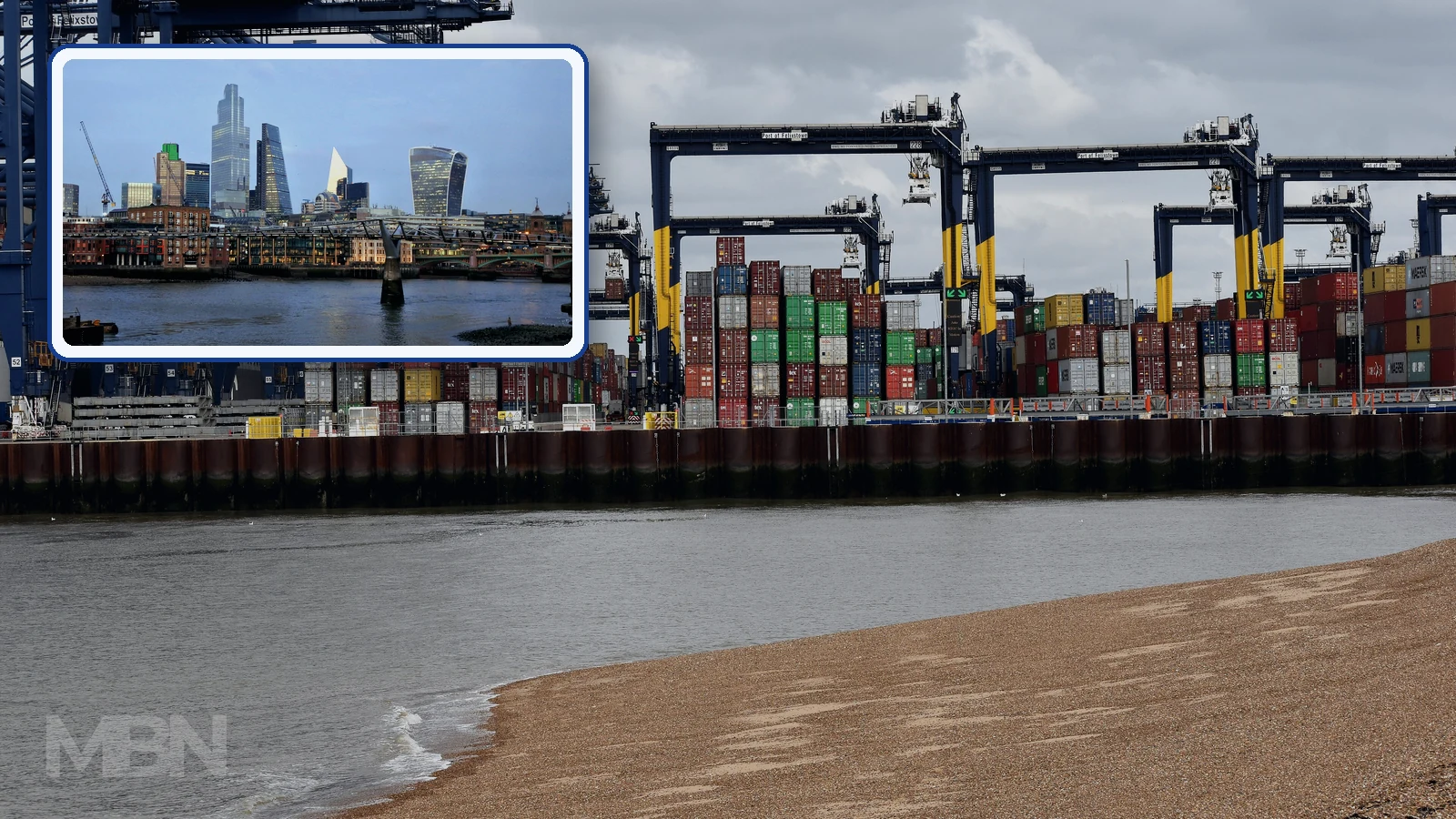
UK goods exports fell by £2.2 billion to £33.0 billion in June, a 6.3% monthly decline, as sales to both EU and non-EU markets weakened.
Goods imports fell by a smaller £0.4 billion to £54.0 billion. The monthly goods deficit therefore widened by £1.9 billion to £21.0 billion.
The figures are seasonally adjusted, measured at current prices and exclude non-monetary gold and other precious metals. They were published by the Office for National Statistics on 13 August.
Exports fell in both major markets
Goods exports to the EU dropped by £1.3 billion, or 7.4%, to £15.9 billion. Exports to countries outside the EU fell by £1.0 billion, or 5.4%, to £17.1 billion. Percentage changes are calculated from unrounded data, which is why the rounded regional figures do not add precisely to the total.
The EU decline included lower exports of fuels and chemicals. The ONS cited reduced crude-oil exports to Germany and Poland and lower medicinal and pharmaceutical sales to Germany.
Outside the EU, the largest movement was a £0.7 billion fall in machinery and transport equipment exports. The ONS linked this partly to fewer car exports to China and fewer mechanical power generators sent to the United Arab Emirates.
The decline was not simply the result of changing prices. After adjusting for inflation, goods export volumes fell by £1.5 billion, or 4.7%, in June. EU export volumes were down 5.6% and non-EU volumes fell 3.8%.
June was nevertheless a sharp monthly reversal rather than a decline across the quarter as a whole. Goods exports rose by 5.7% in value during the second quarter compared with the first. Much of that increase came from fuels and machinery shipments, while a separate ONS volume estimate showed goods exports growing by only 0.1% over the quarter.
That gap between values and volumes matters. It shows that the 5.7% quarterly rise should not be treated as a comparable increase in the amount of goods shipped abroad.
Services offset an estimated 87% of the goods deficit
The second-quarter figures also show how much the UK’s overall trade position depends on services. The country recorded a £60.7 billion goods deficit and an estimated £52.7 billion services surplus, leaving a total trade deficit of £8.0 billion, excluding precious metals.
An MBN calculation from the ONS quarterly totals shows that the services surplus offset about 87% of the goods deficit. The calculation is £52.7 billion divided by £60.7 billion.
This is consistent with the UK’s services-heavy export base. Department for Business and Trade figures show that services accounted for £558.0 billion of £946.6 billion in total exports during the 12 months to May 2026. That is about 59%, based on an MBN calculation. Unlike the quarterly ONS totals above, this broader rolling-year measure includes precious metals.
The two official datasets support a useful distinction: a 6.3% monthly fall in goods exports is not a 6.3% fall in total UK exports. They also expose the imbalance beneath the headline total, with a large services surplus carrying most of the goods deficit.
The services figures for the second quarter are provisional. They include forecast survey data and are due to be updated when the ONS publishes the quarterly national accounts on 30 September.
Exporters report higher costs and weaker orders
Businesses were reporting pressure before the trade figures were released. An ONS business survey found that 39% of trading businesses with at least 10 employees that had exported in the previous 12 months said their exporting costs were higher in June than a year earlier.
The survey was voluntary and had a 26% response rate. It does not establish that higher costs caused the June fall in exports.
A separate British Chambers of Commerce survey of more than 2,400 exporters found that 26% reported lower export orders in the second quarter, while 16% reported an increase. The organisation called for more practical export support and simpler digital trade procedures.
The UK’s Trade Strategy, published in June 2025 and updated the following month, sets out a digital-first approach to export support, the integration of services for smaller exporters into the Business Growth Service and a £20 billion increase in UK Export Finance capacity to £80 billion. The June fall gives those measures an immediate benchmark, but one month cannot show whether the strategy is working. The ONS is due to publish its July trade estimate on 11 September.
