
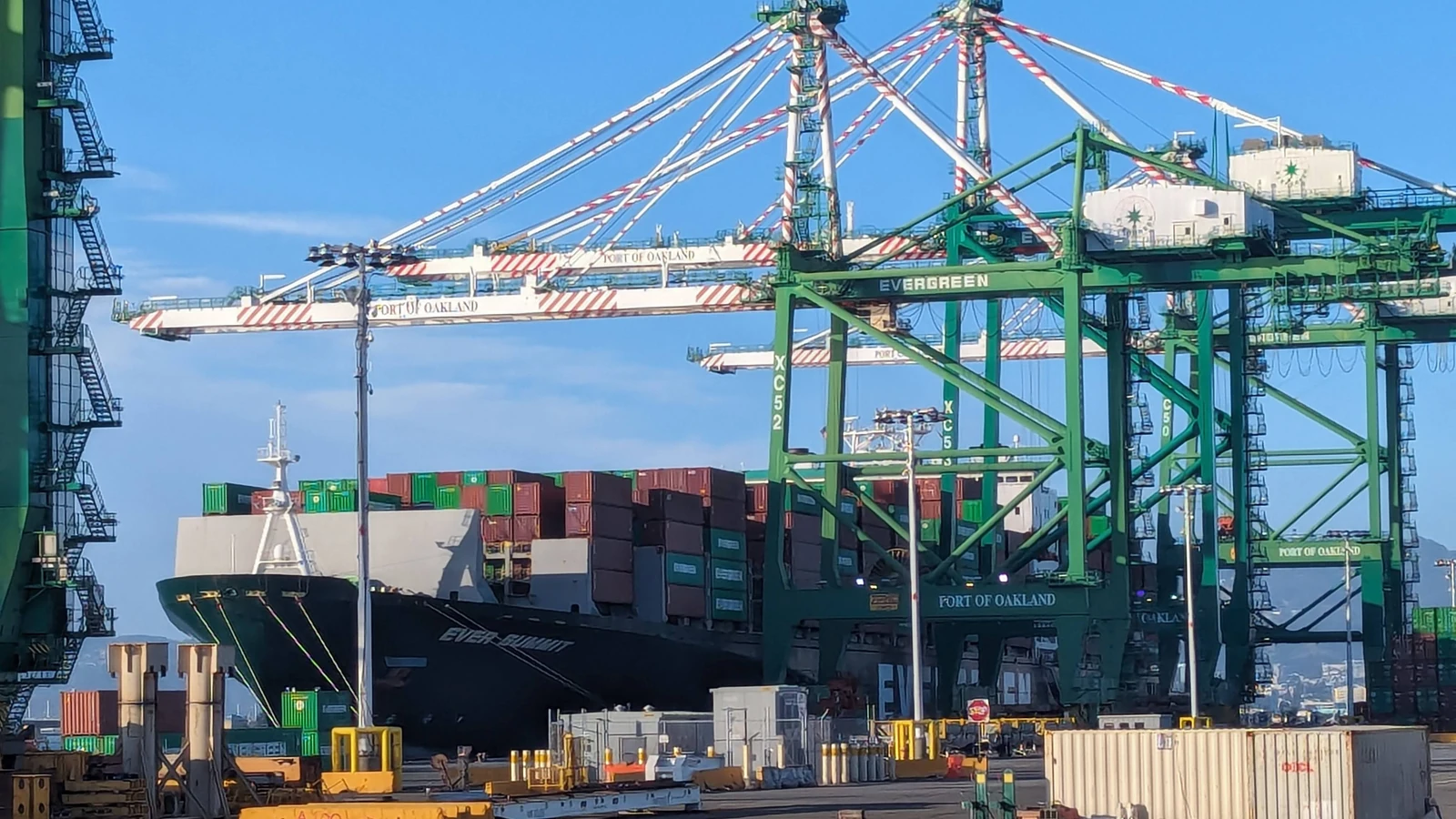
US tariffs do not normally change across all products at once. New research suggests that this uneven timing can shape both the average import duty and businesses’ decisions about when to buy goods.
Economists Stephanie Schmitt-Grohé and Martín Uribe examined quarterly US import data from 1990 through the first quarter of 2026. Their October working paper for the National Bureau of Economic Research combines that historical evidence with an economic model of how tariff changes work their way through trade.
The paper is research circulated for discussion, not a forecast of the next tariff change. Its central point is that the timing and coverage of individual product duties matter alongside the headline level of protection.
Most product rates in the study did not change in a typical quarter
Among the product lines subject to duties in the researchers’ data, roughly 60% had no change in their measured tariff in a typical quarter. In the remainder, increases and decreases were roughly balanced.
The authors calculate an average tariff spell of approximately four quarters. A spell is the period for which the measured duty on a product remains unchanged, not a promise that a particular tariff will last a year.
Their full paper examines imports and duties at the six-digit level of the Harmonized System, an internationally used classification of goods. A category can contain many related products, so the measured rate is an aggregate rather than the exact duty paid on every shipment.
The historical averages also cover periods with very different trade policies. They do not describe the current rate on any particular import.
What staggered tariffs mean
A tariff is a tax on an imported product. The amount owed can depend on the product’s classification, country of origin, applicable exemptions and the rules in force when it enters the country.
Staggering means that duties on different goods adjust at different times. If a new measure affects one category today and another later, the average cost across a company’s purchases may change gradually even though a specific supplier faces an immediate increase.
Consider a hypothetical manufacturer that imports two components. A duty on the first rises in January, while a duty on the second changes in July. Its purchasing team must work with two implementation dates and two sets of orders, rather than a single company-wide tariff date.
That example illustrates the practical issue. It is not a case measured by the researchers.
Expectations can affect orders before a duty changes
In the authors’ model, expectations of future tariff increases can encourage imports to move forward in time. If a business expects an input to become more expensive, ordering earlier may look attractive.
Bringing purchases forward also has costs. Extra stock ties up cash and warehouse space, and a business can be left holding goods it no longer needs. Delivery schedules, financing costs and uncertainty over whether a proposed tariff will take effect all matter.
The model helps explain a possible response. It does not establish that individual importers in the historical data bought early for this reason, or that every business would benefit from doing so.
Average prices can hide different exposures
A company may report one overall import cost, yet its products can have different classifications, origins and supplier contracts. A change affecting one input might be absorbed by a supplier, passed to a customer or shared between them.
Previous MBN reporting on supply-chain networks and business risk showed why a firm’s position among suppliers and customers matters. For tariffs, that means tracing a critical input beyond the immediate invoice as well as checking the duty on the finished product.
Businesses can compare order dates, expected arrival dates and the rules applicable to each product, while allowing for shipping delays and the cost of carrying inventory. Classification and legal requirements can be complex, so companies should verify their own circumstances with qualified customs advisers and the relevant authorities.
The research does not make tariff uncertainty disappear. It offers a more precise question for a purchasing plan: which goods face a change, when does it apply, and what will moving an order actually cost?
