
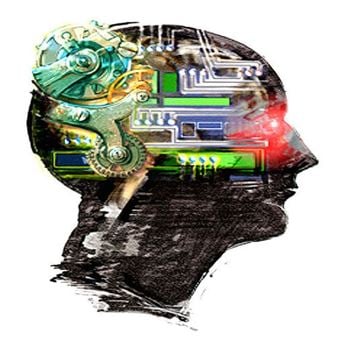
An artificial intelligence centre is being launched by the University of Cambridge to explore the challenges and opportunities to humanity, thanks to a generous grant of £10 million from the Leverhulme Trust, a large national grant-making foundation in the United Kingdom, established in 1925 under the will of William Lever, 1st Viscount Leverhulme.
Human-level intelligence is familiar in biological warfare, the University says – it occurs within our skulls. Science and technology are now converging on a possible future where computers can create similar intelligence.
Nobody can know for certain when human-level artificial intelligence (AI) will be created. Many scientists believe it will occur before the end of this century.
 What will happen to humans when artificial intelligence overtakes us and leaves us behind?
AI could rapidly overtake humans
Free of biological constraints, such ultra-intelligent machines could very rapidly become more intelligent than human beings.
If this happened, what would this mean for us? Stuart Russel, a renowned AI researcher at the University of California at Berkeley, and collaborator on the project, believes this could be “the biggest event in human history.”
Eminent English theoretical physicist, cosmologist, author and Director of Research at the Centre for Theoretical Cosmology within the University of Cambridge, Professor Stephen Hawking, agrees, saying that “when it eventually does occur, it’s likely to be either the best or worst thing ever to happen to humanity, so there’s huge value in getting it right.”
The Leverhulme Centre for the Future of Intelligence
Now, thanks the Leverhulme Trust’s £10 million grant, the University of Cambridge will set up a new interdisciplinary research centre – The Leverhulme Centre for the Future of Intelligence. Its aim will be to explore the challenges and opportunities of this potential epoch-making technological development, over both the short and long term.
The Centre will bring together philosophers, social scientists, computer scientists, and other experts to examine the practical, technical and philosophical questions AI raises for humankind in the century to come.
 Professor Stephen Hawking believes AI will be either the best or worst thing that ever happened to us.
The Bertrand Russell Professor of Philosophy at Cambridge and Director of the Centre, Huw Price, commented:
“Machine intelligence will be one of the defining themes of our century, and the challenges of ensuring that we make good use of its opportunities are ones we all face together.”
Humans have barely begun to consider its ramifications – good or bad. The Centre is a response to the Leverhulme Trust’s call for “bold, disruptive thinking, capable of creating a step-change in our understanding.”
The Leverhulme Trust awarded the grant to the University of Cambridge for a proposal developed with Dr Seán Ó hÉigeartaigh, Executive Director of the University’s Centre for the Study of Existential Risk (CSER).
CSER studies the emerging risks to humankind’s future, including warfare, disease, climate change, and technological revolutions.
What risks does high-level AI pose?
Dr. Ó hÉigeartaigh said:
“The Centre is intended to build on CSER’s pioneering work on the risks posed by high-level AI and place those concerns in a broader context, looking at themes such as different kinds of intelligence, responsible development of technology and issues surrounding autonomous weapons and drones.”
The Leverhulme Centre for the Future of Intelligence spans disciplines as well as institutions. It is a collaboration, led by the University of Cambridge, which links the University of California, Berkeley, Imperial College London, and the Oxford Martin School at the University of Oxford.
It is supported by CRASSH (Cambridge’s Centre for Research in the Arts, Social Sciences and Humanities).
Regarding the proposal, Prof. Price said:
“A proposal this ambitious, combining some of the best minds across four universities and many disciplines, could not have been achieved without CRASSH’s vision and expertise.”
Prof. Zoubin Ghahramani, Deputy Director and a Fellow of St John’s College, Cambridge, said:
“The field of machine learning continues to advance at a tremendous pace, and machines can now achieve near-human abilities at many cognitive tasks—from recognising images to translating between languages and driving cars.”
“We need to understand where this is all leading, and ensure that research in machine intelligence continues to benefit humanity. The Leverhulme Centre for the Future of Intelligence will bring together researchers from a number of disciplines, from philosophers to social scientists, cognitive scientists and computer scientists, to help guide the future of this technology and study its implications.”
The Centre aims to be leader in the worldwide discussions about the challenges and opportunities to humanity that lie ahead in the future of artificial intelligence.
Professor Price added:
“With far-sighted alumni such as Charles Babbage, Alan Turing, and Margaret Boden, Cambridge has an enviable record of leadership in this field, and I am delighted that it will be home to the new Leverhulme Centre.
