
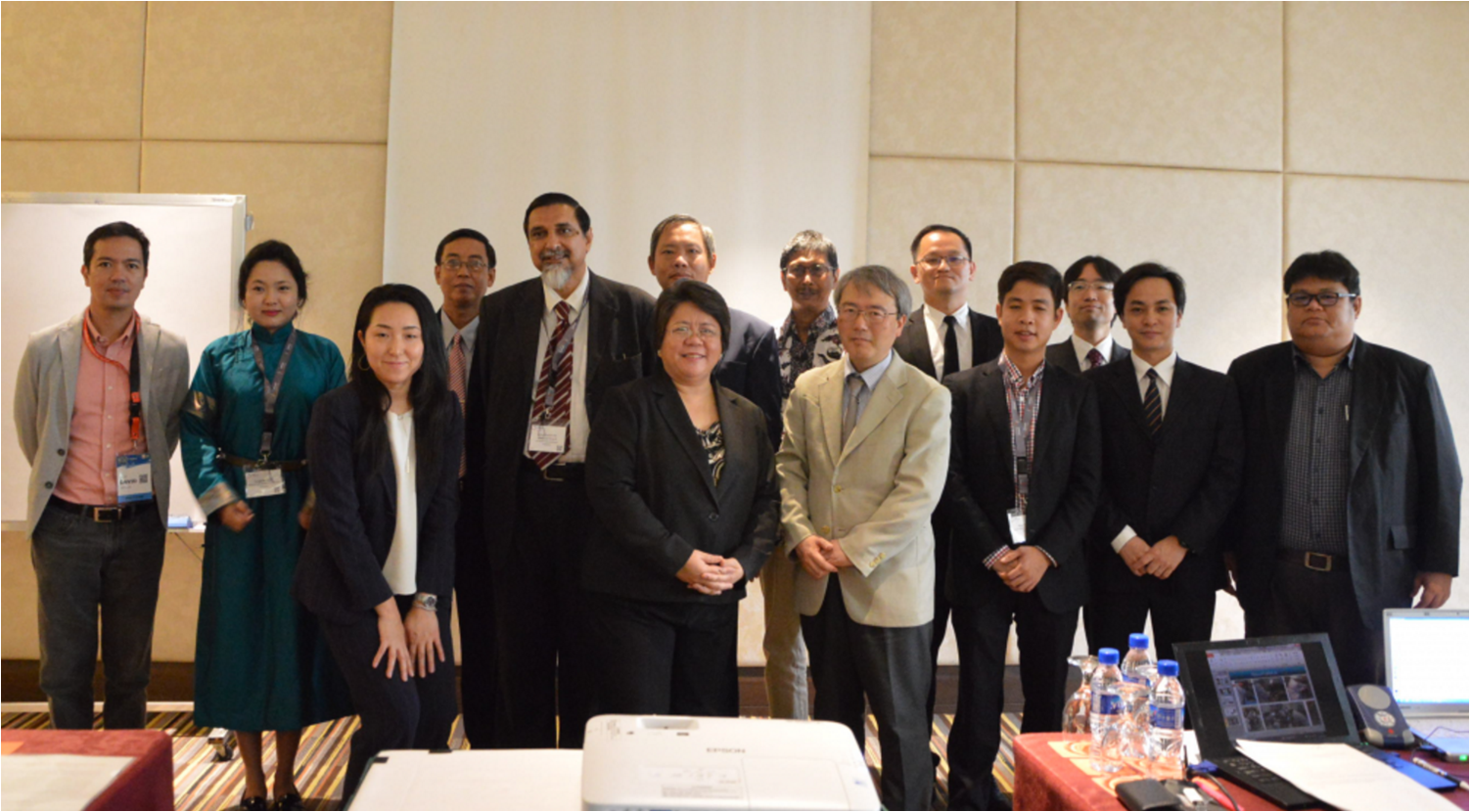
The Asian micro-satellite consortium was officially formed on Friday in Manila, when 16 space agencies and universities from nine countries in the region – including Japan – signed a memorandum of understanding.
The unprecedented step establishes a regional regime for the development and use of microsatellites – from technology creation to sharing of data collected.
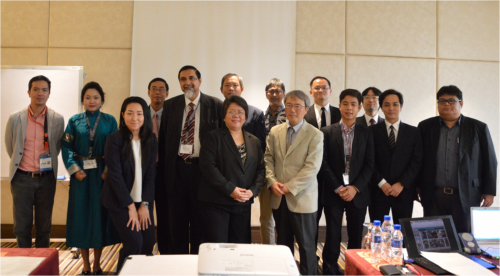 Members of the Asian micro-satellite consortium at the signing ceremony, Manila, 18 November 2016. Photo: Hokkaido University
While the terminology is not consistently used, the term microsatellite typically refers to a range size of small satellite – what NASA describe as the “next big thing.”
Ranging in size from a loaf of bread to a small washing machine, small satellites weigh from 1 kg to around 200 kg – with microsatellites generally weighing in at 100 kg or less.
Small satellites set to ‘revolutionize space exploitation’
Unlike large satellites, small satellites are cheaper and faster to make. They typically take a few years to make, as opposed to the 10 years or more that some larger satellites take to develop, and they cost one hundred times less to build.
Small satellites are also cheaper to launch – as they can hitch a ride into space on another mission’s rocket.
Japan’s Hokkaido University, a member of the new Asian micro-satellite consortium, suggest small satellites could spur a revolution in space exploitation like the one that followed the Soviet Union’s launch nearly 50 years ago of Sputnik-1 – the first artificial Earth satellite.
The other members of the Asian micro-satellite consortium include Tohoku University in Japan and 14 other space agencies, government institutes, and top-rate universities in Bangladesh, Indonesia, Malaysia, Mongolia, Myanmar, Philippines, Thailand, and Vietnam.
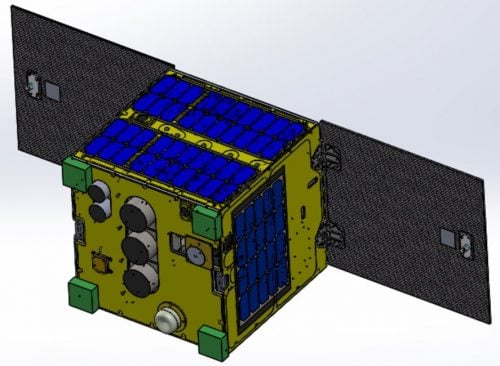 VNSC’s MicroDragon satellite – launching in 2018 – will observe ocean colour and cloud cover.
Image: VNSC
Regional framework for microsatellite technology and data sharing
The purpose of the consortium is for Japan and the other Asian countries to have an effective regional framework for developing state-of-the-art satellite body and sensing technologies, and for sharing and using the satellite data collected.
The consortium is planning to share and use data from around 50 microsatellites that the member nations are planning to launch. These will allow them to monitor any given location on the planet 24/7.
The data could be used in a range of fields. Natural disasters is high on the list of priorities, as many of the participating countries are in disaster-prone areas. Another important application is monitoring of environmental destruction.
Combining the satellite data with data verified on the ground will help researchers produce more accurate estimates.
These could vastly improve efforts in many fields, including disaster preparedness and mitigation; global environment change; promotion and management of agriculture, forestry, fisheries, and mining; and monitoring of measures to counteract atmospheric and marine pollution.
Examples of small satellites
One example of a microsatellite that a consortium member – the Vietnam National Satellite Center (VNSC) – is planning to launch is the MicroDragon. The 50 kg satellite was developed by VNSC engineers with the support of professors from leading Japanese universities and is scheduled for launch in 2018.
Among other things, the MicroDragon will be used for observing ocean colour (which can be used to assess water quality), detecting cloud cover, and monitoring aerosol characteristics.
Meanwhile, next month, NASA is set to launch its first Earth science small satellite constellation for improving hurricane and cyclone tracking and forecasting.
Video – how small satellites are changing the space industry
In the following video, Craig Clark, satellite builder and CEO of Clyde Space Ltd. in Glasgow, United Kingdom, talks about the changing nature of the space industry and the role small satellites are playing in its transformation. He also gives examples of their applications.
