
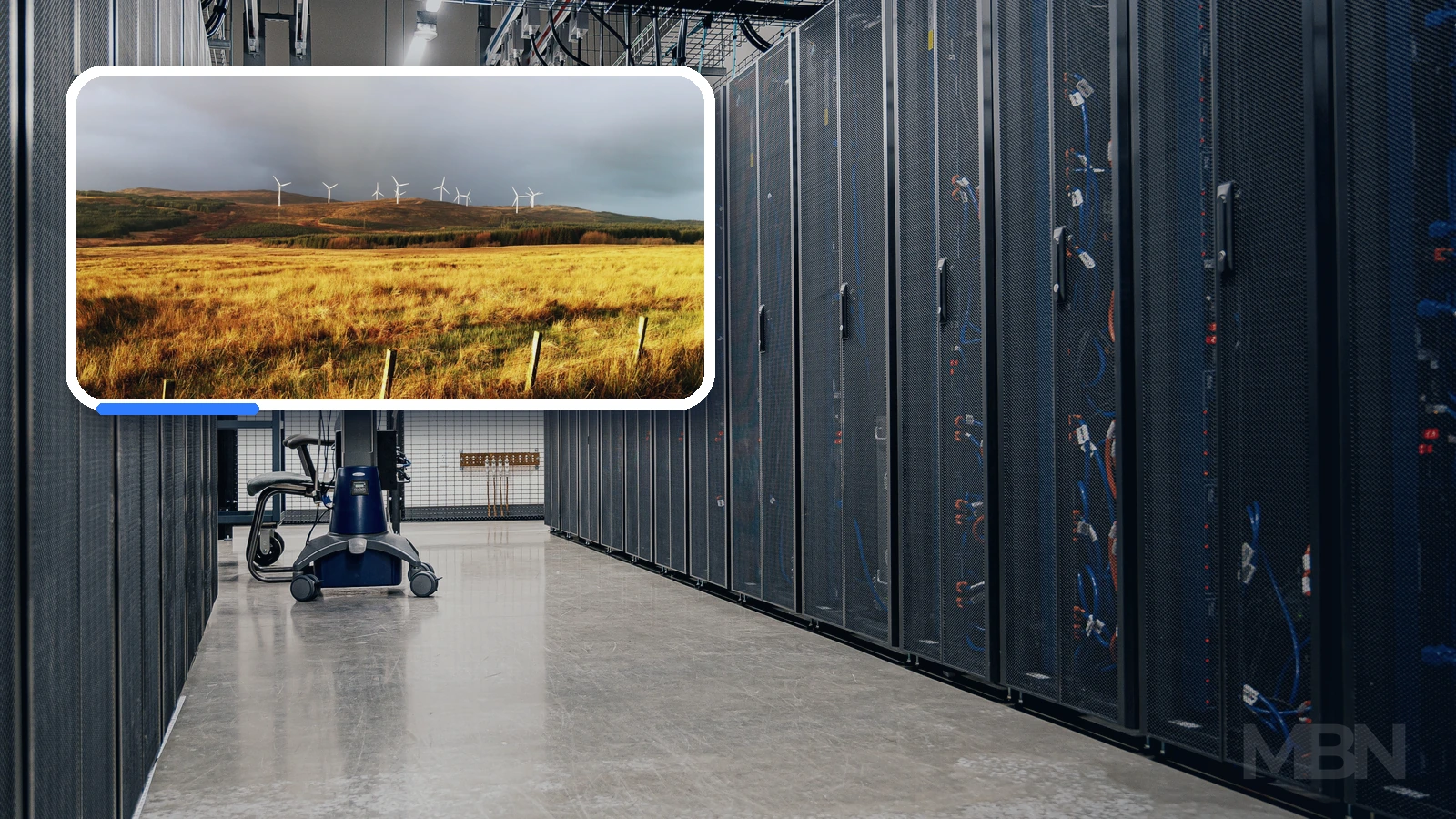
A £202 million National Wealth Fund guarantee will cover 80% of a £252.5 million bank-lending tranche for DataVita’s Lanarkshire data-centre expansion. Dell Technologies is also moving its Scottish team to the site, although no Dell investment figure or new-job total has been disclosed.
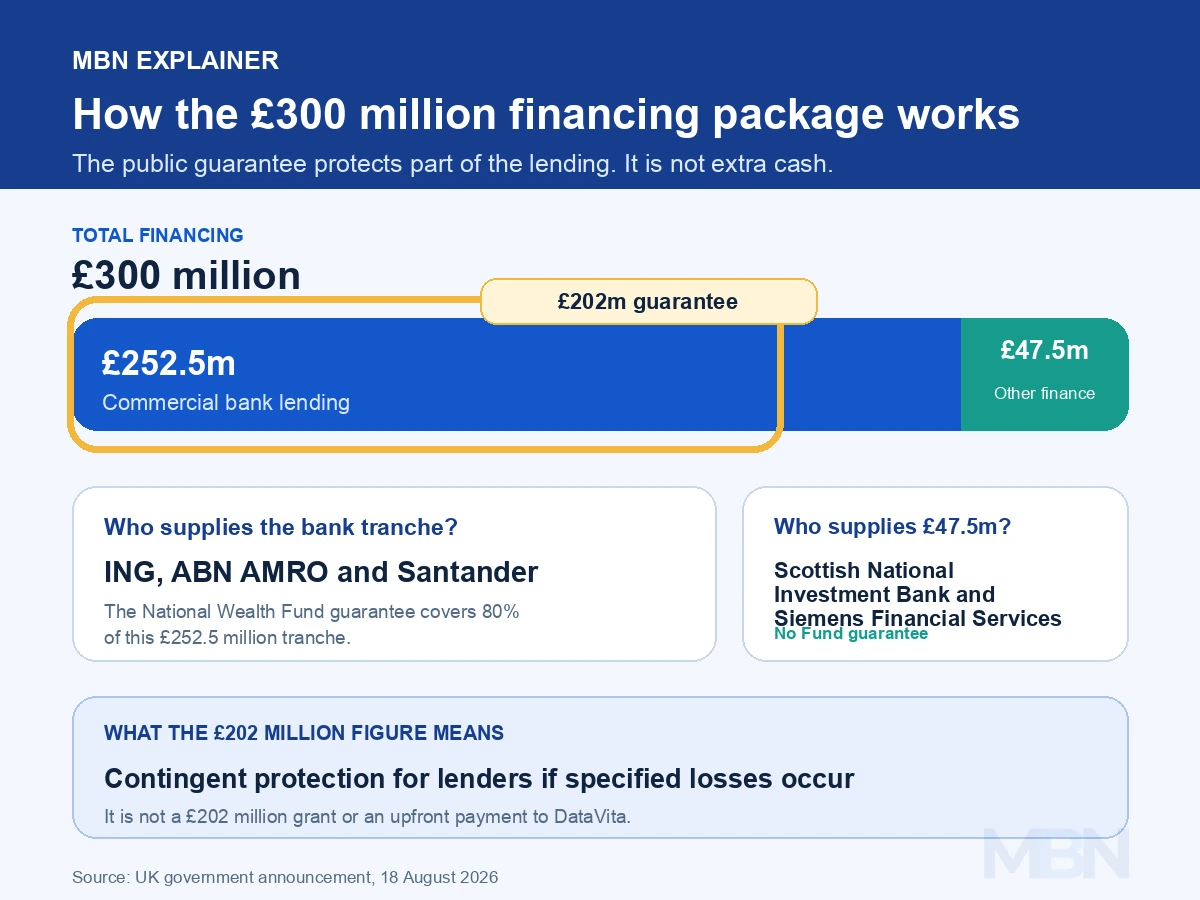
The bank lending forms most of a £300 million financing package announced on August 18. ING, ABN AMRO and Santander are providing the £252.5 million tranche. The Scottish National Investment Bank and Siemens Financial Services are supplying the remaining £47.5 million without cover from the National Wealth Fund.
DataVita will use the money to expand its existing DV1 data centre and build a second facility in the Lanarkshire AI Growth Zone, according to the UK government announcement.
The guarantee is not a £202 million grant
A financial guarantee is a promise to compensate lenders for specified losses if a borrower fails to repay. It differs from a grant because the guarantor does not normally hand over the full amount when the financing is agreed.
The National Wealth Fund says its guarantees are backed by a Sovereign Infrastructure Guarantee from the Treasury. This gives qualifying guarantees financial backing equivalent to that of the UK government.
In the DataVita transaction, the £202 million guarantee is equal to about 67% of the entire £300 million package, according to an MBN calculation. That makes the public backing substantial, even though it is contingent rather than an immediate cash payment.
The announcement does not publish the loan maturity, guarantee fee or detailed loss-sharing terms. It says only that the guarantee covers 80% of the £252.5 million supplied by the three commercial banks.
National Wealth Fund chief executive Oliver Holbourn said “private finance can be difficult to secure for emerging infrastructure at this scale”. He said the guarantee gave lenders greater confidence to finance additional computing capacity.
Dell’s move has no published headcount
Dell Technologies will move its Scottish team to Mercury House in the Lanarkshire AI Innovation Park. The government described the decision as creating skilled jobs, but neither the announcement nor Dell’s quoted statement gave a headcount, opening date or value for the move.
It would therefore be misleading to attribute the wider project’s employment forecast to Dell alone. The government says the complete Lanarkshire AI Growth Zone could provide more than 3,400 jobs and attract more than £8 billion of private investment over several years.
Those are forecasts for the wider zone, not results produced by the £300 million financing package. The government’s original January announcement said its jobs and investment figures had been supplied by DataVita as part of the developer’s proposal.
DataVita managing director Danny Quinn said construction was well advanced, every megawatt in the first facility had been contracted and completion was due this year. The company did not identify the customers or state how much capacity those contracts cover.
The power claim has become more cautious
Data centres require large and reliable electricity supplies for processors, networking equipment and cooling. A megawatt measures electrical power rather than computing performance, so the proposed capacity and the source of its electricity affect both the construction timetable and operating costs.
When the Lanarkshire zone was announced in January, the government said the site could provide up to 500 megawatts of computing capacity and draw on on-site renewable energy.
A Guardian investigation published in July questioned whether enough on-site renewable generation could be built by 2030. The newspaper reported that DataVita and the government had acknowledged that the site would connect to the electricity grid.
The latest government announcement uses narrower wording. It says the site’s electricity will be supplied “overwhelmingly” from renewables because Scotland has a low-carbon power mix. It does not repeat a promise that the data centres will run entirely on renewable generation built at the site.
The £300 million package gives DataVita funding for a defined expansion and places Dell’s Scottish team inside the planned technology park. The broader claims of £8 billion in investment, 3,400 jobs and 500 megawatts of computing capacity remain forecasts. The next measurable step is DataVita’s stated target to complete the first facility before the end of 2026.
