
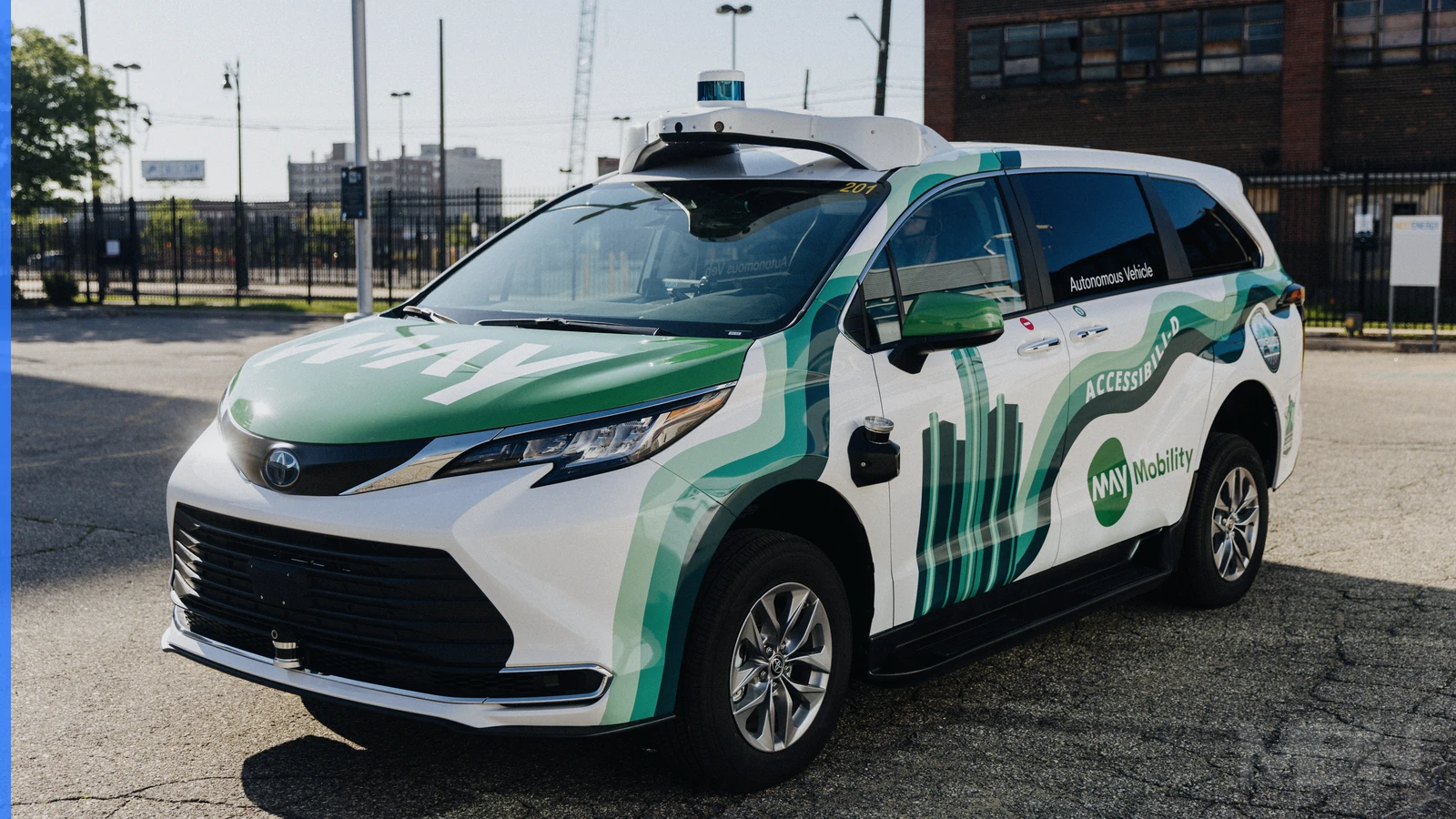
May Mobility has agreed to combine with ACP Holdings Acquisition Corp. in a proposed transaction that implies a pro forma enterprise value of about $1.4 billion. The autonomous-vehicle company would become publicly listed only if the deal closes, bringing a comparatively asset-light robotaxi strategy into the public market.
The companies said the transaction could provide up to $337 million in gross proceeds. That figure includes up to $217 million held in ACP’s trust account, which can be reduced if shareholders redeem their shares, and a fully committed $120 million private investment in public equity, or PIPE. The boards of both companies have approved the agreement, but shareholders, regulators and Nasdaq still have to clear the path to closing.
May expects the combined company to trade on Nasdaq under the proposed ticker MAY by the end of 2026. That timetable is an expectation, not a completed listing. In its transaction announcement, the company said its current commercial services have completed more than 550,000 rides and 1.1 million miles.
A public-market test for a different operating model
May is trying to separate the autonomy business from the capital-heavy work of owning a large vehicle fleet. It describes the model as Autonomy-as-a-Service: partners take responsibility for vehicles, depots and routine maintenance, while May supplies the driving technology and operates the autonomous service.
That distinction is central to the investment case. A robotaxi operator that buys, stores and maintains every vehicle must fund more assets before it can earn a fare. May’s approach aims to place more of that burden with local partners. It does not remove the hard parts of running a passenger service, including vehicle cleaning, roadside support, insurance, customer service and the need to keep vehicles working for enough paid hours each day.
Those practical costs help explain why the economics of driverless services remain unsettled. Our earlier report on robotaxi operations examined the continuing work in fleet support and maintenance after the human driver leaves the vehicle. May’s model shifts some responsibilities to partners, but the cost of doing that work still affects the price and availability of rides.
Commercial progress, but a large gap to profitability
May currently operates commercial autonomous services in three U.S. locations. The company said it has launched driver-out services in Grand Rapids, Michigan, and Eden Prairie, Minnesota, and it also works with Lyft in Atlanta. Its investor presentation points to a planned Uber service in Arlington, Texas, in the fourth quarter of 2026 or the first quarter of 2027. That launch remains a target and depends on the usual operational and regulatory steps.
The company reported roughly $10 million in revenue for 2025, a 27% gross margin and about $93 million of cash burn. Gross margin measures what remains after the direct cost of providing a service. It does not include all corporate costs, interest or taxes, so it is not the same as a profit.
May forecasts that a mature version of its model could deliver gross margin of as much as 70% and earnings before interest and taxes, or EBIT, of as much as 30%. Those are long-term company targets, rather than reported results, and depend on ride demand, operating costs, partner performance and the pace at which its technology can be deployed.
The gap between early commercial revenue and those targets is substantial. Axios reported that the planned combination gives May a capital-light alternative to robotaxi groups that own their fleets, while also putting its cash needs and path to scale under closer public-market scrutiny.
Driver-out is not the only autonomy milestone
May says its driver-out launches have no safety driver behind the wheel. That is a meaningful operational step, but it does not mean every announced service or market is at the same stage. Autonomous rides can range from testing with a trained driver ready to intervene to a commercial passenger trip without one.
That difference matters when comparing companies’ announcements. Uber and Wayve’s London service, for example, began with a safety driver able to take control. A supervised service can generate operating experience and customer feedback, but it has a different labor profile and regulatory position from a driver-out robotaxi service.
For May, the proposed listing would give investors a direct way to judge whether its partnership model can turn early rides into repeatable revenue. The immediate milestone is the signed merger agreement and its conditional financing. The harder test will come after closing, as May tries to add markets, maintain service quality and prove that the economics improve as the network grows.
