
The oldest color in the world is bright pink, says a team of scientists. They discovered our planet’s oldest color from rocks beneath the Sahara desert. Specifically, from bright pink pigments, i.e., natural coloring matter, that they extracted from the rocks.
The scientists, from Australia, Belgium, USA, and Japan, wrote about their study and findings in the journal PNAS. PNAS stands for Proceedings of the National Academy of Sciences.
Dr. Nur Gueneli, from the Australian National University (ANU), said that they extracted pigments from marine black shale. The shale was under what is now the Sahara desert in the Taoudeni Basin in Mauritania.
The authors wrote that the pigments were over half-a-billion years older than previous discoveries.
Dr. Gueneli said that she discovered the prehistoric molecules as part of her PhD studies.
Dr. Gueneli, who works at the ANU’s Research School of Earth Sciences, said:
“The bright pink pigments are the molecular fossils of chlorophyll that were produced by ancient photosynthetic organisms inhabiting an ancient ocean that has long since vanished.”
In their concentrated form, the fossils range from deep purple to blood red. When diluted, on the other hand, they are bright pink.
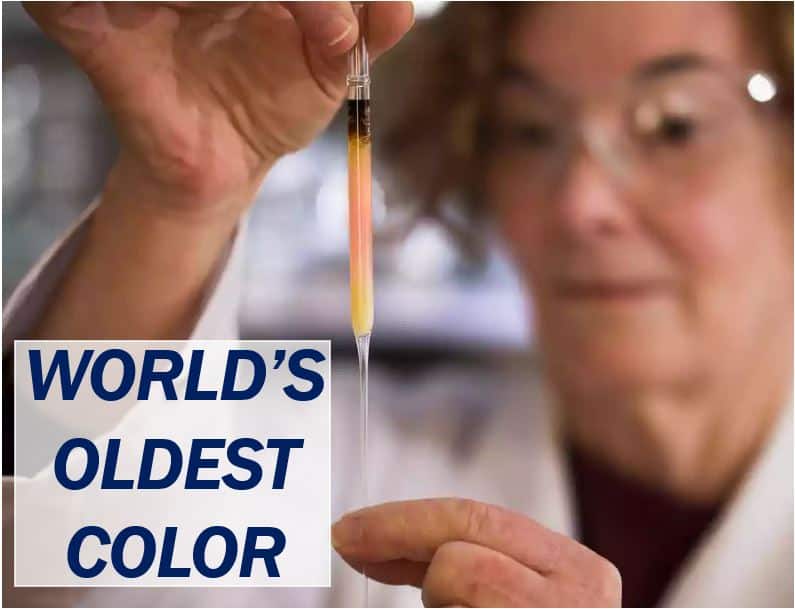
Oldest color – fossilized chlorophyll molecules
The pigments are fossilized chlorophyll molecules that sea organisms had produced 1.1 billion years ago.
The scientists crushed the ancient rocks into powder. They then extracted and analyzed molecules of ancient organisms from them.
Dr. Gueneli said:
“The precise analysis of the ancient pigments confirmed that tiny cyanobacteria dominated the base of the food chain in the oceans a billion years ago, which helps to explain why animals did not exist at the time.”
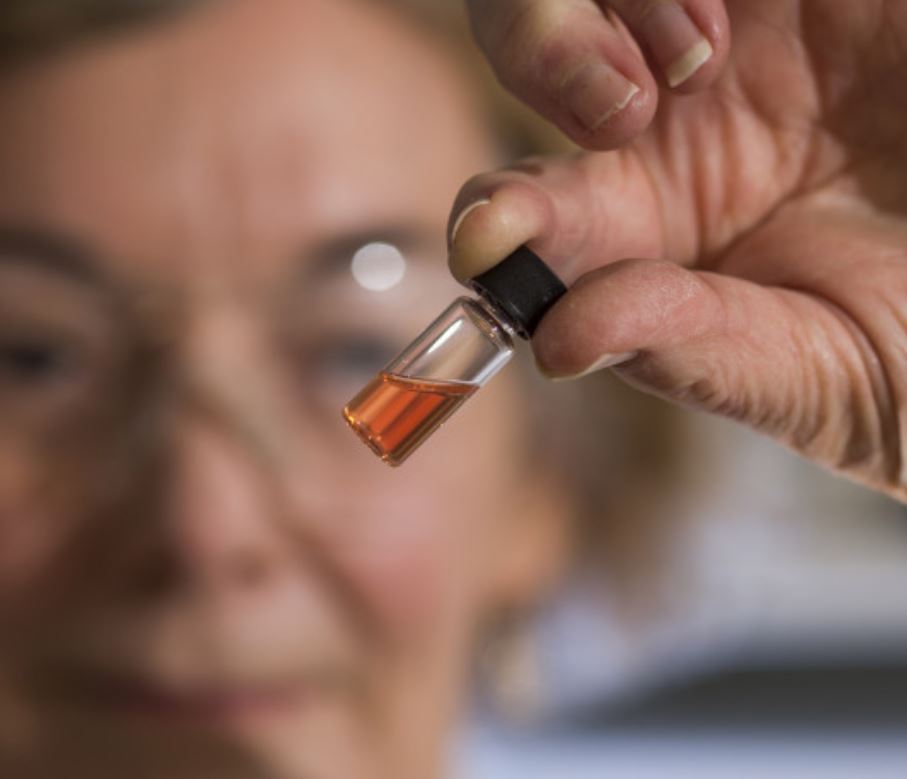
Organisms were tiny
Associate Professor Jochen Brocks, senior lead researcher, said that at the time there was a limited supply of larger food particles. Algae, for example, are larger food particles. This restrained the emergence of large, active organisms.
Colour us pink! @GeoscienceAus is proud to have supported scientists from ANU and overseas in their #discovery of the oldest colours in the #geological record, 1.1 billion-year-old bright #pink pigments extracted from rocks deep beneath the Sahara desert in #Africa. https://t.co/QynM1RQbaV
— Geoscience Australia (@GeoscienceAus) July 10, 2018
Dr. Brocks, also from the ANU Research School of Earth Sciences, said:
“Algae, although still microscopic, are a thousand times larger in volume than cyanobacteria, and are a much richer food source.”
“The cyanobacterial oceans started to vanish about 650 million years ago, when algae began to rapidly spread to provide the burst of energy needed for the evolution of complex ecosystems, where large animals, including humans, could thrive on Earth.”
Cyanobacteria are photosynthetic bacteria, i.e., they use sunlight to synthesize nutrients from carbon dioxide and water.
