
T-Mobile US had billed customers tens of millions of dollars’ worth of services they had never signed up for, and will now have to pay out at least $90 million under a settlement with the Federal Trade Commission (FTC).
On Friday, the FTC announced it had reached an agreement with T-Mobile regarding “cramming” – the billing of unauthorized charges.
Affected customers will receive refunds from the US’ fourth largest cellphone company. T-Mobile will also have to pay up $18 million and $4.5 million in fines to 50 states & the District of Columbia and the Federal Communications Commission respectively.
T-Mobile was sued by the FTC in July, which alleged it had been billing customers for several subscription services they had never authorized and did not want, such as celebrity gossips, love tips, and horoscopes at $9.99 per month
For every charge it made, T-Mobile received 35% to 40% commission.

Source: FTC
FTC Chairwoman Edith Ramirez, said:
“Mobile cramming is an issue that has affected millions of American consumers, and I’m pleased that this settlement will put money back in the hands of affected T-Mobile customers. Consumers should be able to trust that their mobile phone bills reflect the charges they authorized and nothing more.”
Under the terms of the settlement, T-Mobile will have to refund customers – the total payment must be at least $90 million.
Should the company fail to do this, whatever balance is left over must be paid to the FTC for additional customer redress, consumer education, or other uses, the FTC said.
T-Mobile must contact all its affected current and former customers, and tell them about the refund program and how they can make a claim. This needs to be done in a “clear and conspicuous way.”
Given the huge number of people who complained and asked for a refund, it was clear to T-Mobile that the charges were never authorized by customers, FTC said.
Bills set up to make refunds virtually impossible
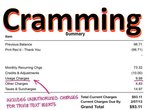
FTC July’s complaint alleged that T-Mobile’s phone bills were set up in such a way that it was nearly impossible for consumers to find and understand the third-party subscription charges.
In many cases, phone bills were fifty pages long, with unauthorized phone charges cleverly hidden within those pages.
The FTC has also told T-Mobile it must get consumers’ express informed consent before charging for third-party subscription services.
In recent months, the FTC has sued several mobile companies for cramming.
