
Carnival reported record booking levels and prices for 2027 in its September results, giving the cruise operator another reason to commit to ships that will sail for decades. Larger vessels offer room to spread costs across more passengers and sell more services, but those advantages depend on filling the cabins.
The company said on September 29 that its booked occupancy, the proportion of capacity already reserved, and pricing for next year were at record levels. Prices were compared at unchanged exchange rates to exclude currency movements. It also reported quarterly revenue of $8.4 billion, despite a spike in fuel prices.
Demand has grown across the industry. The Cruise Lines International Association (CLIA), an industry trade body, put worldwide oceangoing passenger numbers in 2025 at 37.2 million in its April 2026 report, compared with 34.6 million in 2024.
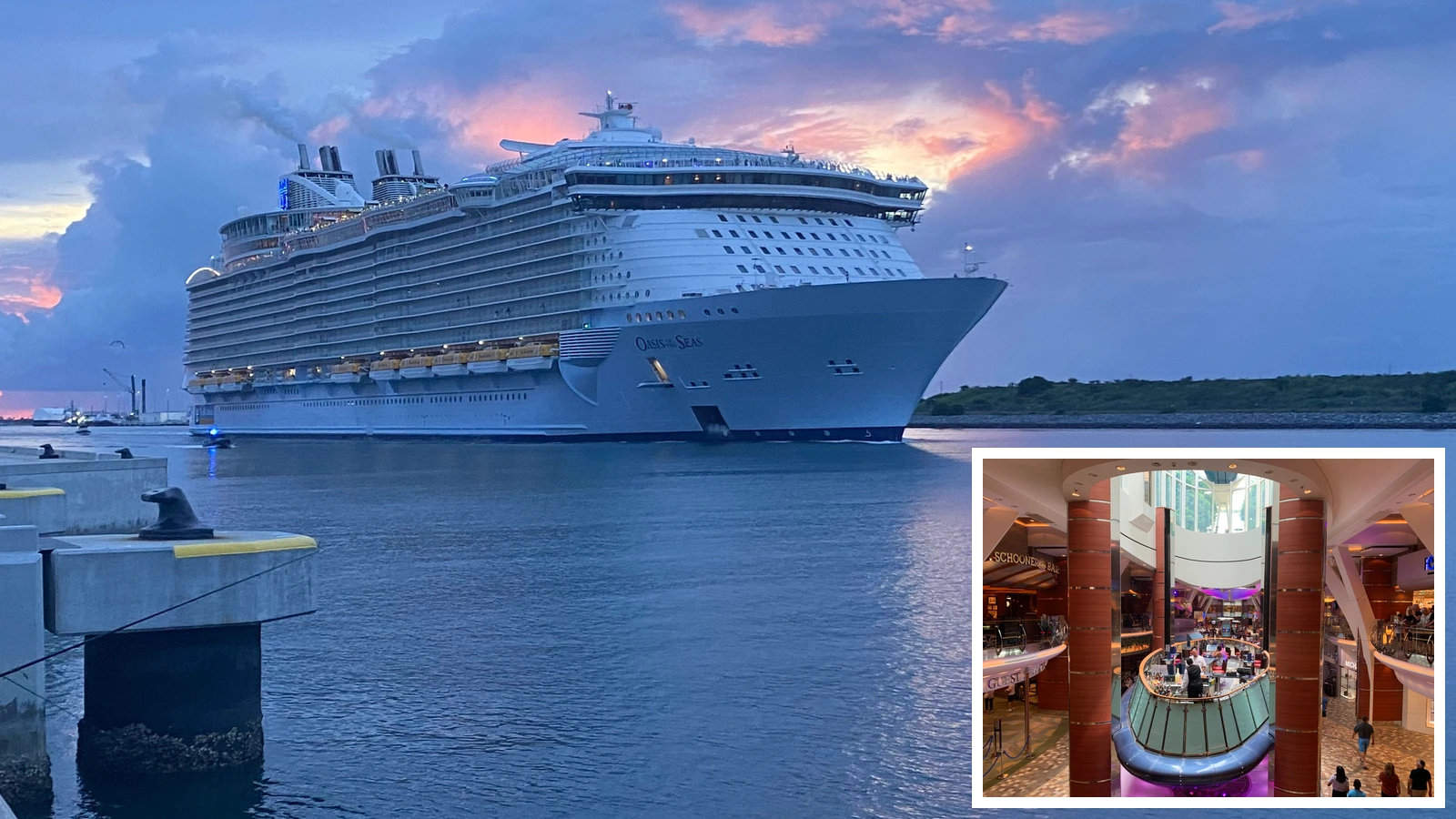
Strong bookings help explain operators’ willingness to invest. Ship size adds another incentive: a vessel carrying thousands of guests can combine transport, accommodation, dining and entertainment in a business that earns money throughout the vacation.
What are economies of scale?
Economies of scale occur when average costs fall as the amount of a product or service supplied increases.
On a cruise ship, some systems and overheads can serve more passengers without their costs rising in direct proportion. If a larger vessel carries substantially more paying guests while total costs increase more slowly, its cost per passenger falls.
Food, housekeeping and other passenger-related expenses still grow with guest numbers. A larger ship also costs more to build, equip and maintain. The relevant comparison includes financing and construction costs as well as the expense of operating each voyage.
Capacity alone produces no saving. Empty cabins leave fewer customers sharing those costs, while heavy discounting can fill a ship at prices that weaken its returns.
Ticket sales are only part of the revenue
Additional spending gives operators a second reason to build ships with more space. Specialty restaurants, drinks packages, shops, casinos and spas create sales opportunities beyond the fare. Some purchases take place before departure, and shore excursions also contribute.
Carnival’s 2025 annual filing reported $26.6 billion in revenue for the fiscal year ended November 30. Passenger tickets generated $17.4 billion; onboard and other revenue accounted for $9.2 billion, about 35% of the total.
Royal Caribbean Group reported a similar split for the year ended December 31, 2025. Its annual filing showed $17.9 billion in revenue, including $12.5 billion from passenger tickets and $5.4 billion from onboard and other activities.
These categories include more than purchases physically made aboard a ship. Revenue is also different from profit: providing meals, excursions and entertainment carries costs, and independent concession operators may keep part of the customer’s spending.
A larger passenger base can make a wider range of venues commercially viable. Those facilities may also influence which ship a traveler books. The ship becomes part of the attraction, alongside the ports it visits.
Orders extend well into the 2030s
Carnival’s year-end 2025 order schedule listed Carnival Festivale for April 2027 and Carnival Tropicale for March 2028, each with 5,360 lower berths. Lower-berth capacity generally assumes two passengers per cabin, rather than every possible occupant.
Three subsequent Carnival Cruise Line ships were scheduled for 2029, 2031 and 2033, each with 6,160 lower berths.
The commitments have since grown. In April 2026, Princess Cruises, another Carnival brand, announced agreements with Fincantieri for three Voyager-class vessels. It expects deliveries in late 2035, 2038 and 2039, with approximately 4,700 guests per ship.
Such schedules require management to make assumptions about future vacation spending, fuel, financing and passenger preferences many years ahead. Large ships cannot be added quickly when demand rises or easily removed from the balance sheet when it falls.
Expansion is also being paced. Travel Weekly’s coverage of Carnival’s June results reported that the group had ten ships on order and intended to introduce only one or two new vessels annually.
Smaller ships still have a market
Megaships receive considerable attention, but they do not represent the whole fleet. CLIA’s September 2026 fleet report classified about 72% of its member oceangoing ships as small or mid-sized.
Ships with more than 3,000 lower berths accounted for 28.3%. Based on the August order book, CLIA projected that share would reach 31.8% by 2039. These are percentages of ships, not percentages of passenger capacity.
Smaller vessels can reach ports that cannot accommodate megaships and serve customers who prefer quieter surroundings or more personal service. An operator selling a premium itinerary may have little reason to copy the economics of a mass-market floating resort.
Ports and fuel constrain the savings
A larger vessel needs suitable berths, channels and terminals. Thousands of people disembarking together also place demands on local transport and attractions. A ship’s commercial appeal depends partly on the destinations that can receive it.
Operators are investing ashore as well. Carnival said in its June results that a pier extension at Celebration Key in the Bahamas allowed four ships to dock simultaneously. A new pier at RelaxAway, Half Moon Cay could accommodate two.
Owning or operating destinations gives a cruise company more control over shore facilities and spending opportunities. It also adds infrastructure costs and responsibility for places whose economies and public services must accommodate the visitors.
Fuel can quickly absorb operating gains. Carnival’s latest quarterly filing recorded fuel expense of $1.607 billion for the nine months ended August 31, 2026, compared with $1.384 billion a year earlier.
Efficient hulls, engines and itineraries can reduce consumption per passenger, but a lower per-passenger figure does not establish lower total fuel use or emissions. In its September report, CLIA counted 30 member ships with newer multi-fuel engines. Their ability to use alternative fuels also depends on suitable fuel supplies and port infrastructure.
Full cabins must justify the investment
Economic uncertainty does not affect every route equally. Carnival said in June that the Middle East conflict had weakened booking trends for some European deployments, particularly in the Mediterranean, while reservations for later years remained strong.
A large ship adds a substantial amount of capacity in one delivery. If passenger demand disappoints, an operator may need to change itineraries, lower prices or accept empty cabins while continuing to pay for the vessel.
The economics ultimately depend on what remains after operating expenses, financing and the cost of the ship itself. More guests and more onboard sales can raise revenue without producing an adequate return on the capital invested.
Carnival Festivale’s scheduled arrival in 2027 will bring another 5,360 lower berths into that calculation. Today’s strong bookings provide reassurance, but the ships now on order will also have to earn their keep through weaker travel markets.
