
The Department of Transport, which says it aims to turn the UK into a world leader in driverless car technology, is looking into what needs changing in the Highway Code and MOT test. Half of all Brits, however, say they would not get into a car with no human driver.
To date, the scope for testing driverless vehicles has been limited, but on February 11, 2015, the Department of Transport (DoT) announced that the industry now has the green light for testing on public roads.
UK authorities believe driverless technology will significantly reduce the number of road accidents, and help traffic flow more smoothly.
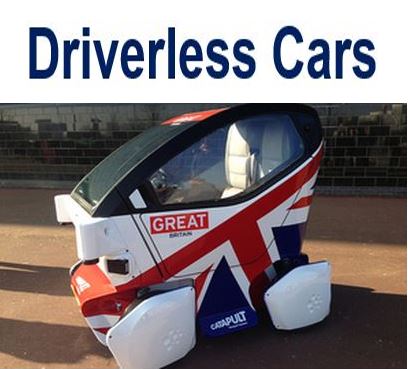
The Government wants the UK to lead the world in driverless car technology. (Photo: Department of Transport)
Transport Minister Claire Perry said:
“Driverless cars are the future. I want Britain to be at the forefront of this exciting new development, to embrace a technology that could transform our roads and open up a brand new route for global investment.”
“These are still early days but today is an important step. The trials present a fantastic opportunity for this country to take a lead internationally in the development of this new technology.”
Secretary of State for Business, Innovation and Skills, Vince Cable, said Britain is at the forefront of automotive technology – from the formula 1 expertise in the Midlands to the all-electric cars built in Sunderland.
Mr. Cable said:
“It’s important for jobs, growth and society that we keep at the forefront of innovation, that’s why I launched a competition to research and develop driverless cars.”
“The projects we are now funding in Greenwich, Bristol, Milton Keynes and Coventry will help to ensure we are world-leaders in this field and able to benefit from what is expected to be a £900 billion industry by 2025.”

Transport Minister Claire Perry believes self-driving cars are the future.
New technology will make roads safer
According to the DoT, advanced driver assistance systems are already breaking into the market, driving down insurance premium costs and improving car safety. It now wants to take this technology to the next level and “investigate how vehicles that can take greater control could improve our driving experience and increase safety further.”
The DoT has carried out a 6-month review and has determined that the safest and best way to test automated cars is with a human sitting inside and ready to take control if necessary. However, it is also looking further ahead to the implications of having trials with fully automated vehicles.
The Government says its next step is to introduce a code of practice that gives the industry a framework to trial cars in real-life scenarios, and to improve on the prototypes already in existence.
The code of practice will be published in spring 2015, with the first driverless vehicles supported by the prize funds hopefully being tested on roads by the summer.
Half of all Brits don’t trust driverless cars
Forty-eight percent of British people would not be willing to travel in a driverless car, according to research carried out by price comparison and switching service firm uSwitch.com.
UK consumers expressed alarm at the prospect of vehicles with no drivers being let loose on the roads.
Sixteen percent of those surveyed said they were “horrified” at the thought of self-driving cars roaming about on British roads.
The vast majority of respondents (92%) had no idea the Government was spending millions of pounds on the introduction of driverless cars.
