

US September inflation was still below the Federal Reserve’s target of 2% per year, for the 29th successive month. Subdued inflation is not only a US problem, the Eurozone’s 0.4% rate is even further from the European Central Banks target, which is also 2%.
The last time inflation hit 2% in the United States was in April 2012.
On Friday, Minneapolis Fed President Narayana Kocherlakota said the Fed should have either carried on with its bond-purchasing program or pegged the interest-rate outlook to the inflation outlook. He said those actions would have helped boost demand for goods. “Just as importantly, these actions would have communicated that the [Federal Open Market place] Committee is determined to do what it takes to push inflation back to two % as rapidly as is possible,” he added.
The Fed prefers to use the price index for personal consumption expenditures as a way to gauge inflation – this increased by 1.4% (annualized) in September, compared to 1.4% in August and 1.6% in July and June.
When volatile components such as energy and food are factored out, prices increased 1.5% annually, while core inflation was virtually unchanged for five months.
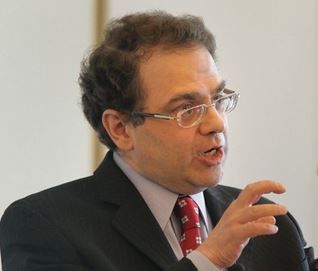
Narayana Kocherlakota disagreed with the termination of the Fed’s asset-purchasing program.
Economists say that prolonged ultra-low inflation may be a sign of an anemic economy which is at risk of sliding into deflation. The Eurozone and Japan are much closer to that situation than the US.
On Wednesday, the Fed predicted that inflation in the near term would probably stay low because of falling energy prices and some other factors. It added that price rises are less likely now to remain very low over the long term, compared to the outlook earlier this year.
Energy prices in September were 0.8% lower than in August and 0.9% below their September 2013 levels. Regular gasoline prices are about to fall below $3 per gallon – a four-year low.
Jeffrey Lacker, President of the Federal Reserve Bank of Richmond, says below-target inflation should not keep the Fed from raising interest rates. In an interview on Bloomberg Radio, he said “Our objective is to keep inflation under control, so keep it averaging 2 percent. So to my mind, that doesn’t mean it has to cross two” before the Fed raises rates.” Lacker does not vote on the FOMC this year, but will in 2015.
