
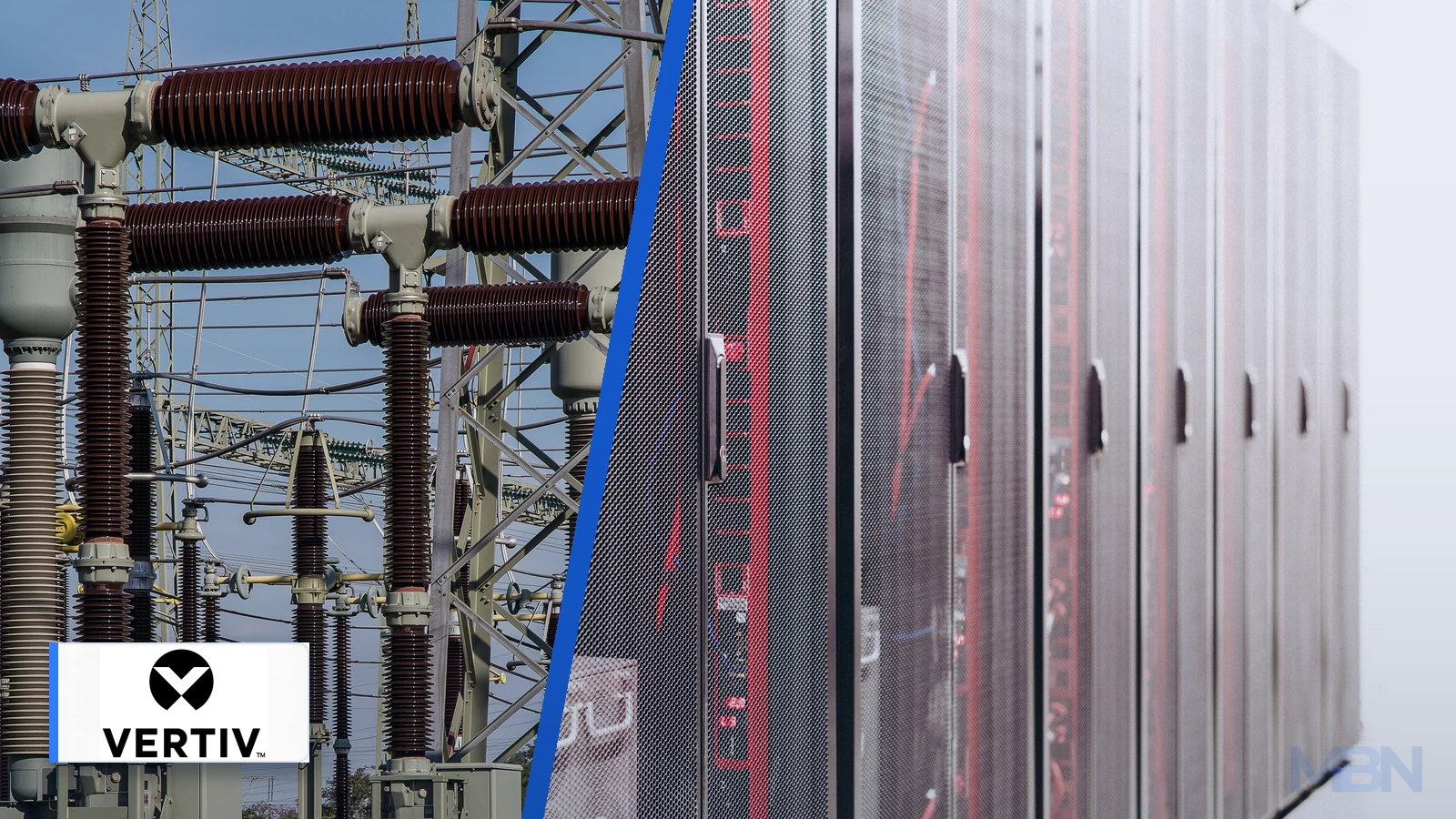
Vertiv has agreed to acquire UtilityInnovation Group for about $1.45 billion in cash, adding microgrid controls and onsite power expertise as AI data-center operators look for ways to reduce their dependence on lengthy utility connection schedules.
The agreement includes up to $1.15 billion in additional cash payments, taking the maximum possible consideration to approximately $2.6 billion. Those payments would be made in two tranches if the acquired business meets specified EBITDA targets over 12-month and 24-month periods, according to Vertiv’s filing with the US Securities and Exchange Commission.
EBITDA means earnings before interest, taxes, depreciation and amortization. Companies commonly use it to compare operating performance, although it is not the same as net income or cash flow. The additional payments are effectively an earnout, meaning part of the purchase price will be paid only if UIG reaches the agreed performance levels.
The $1.45 billion upfront price is about 13 times UIG’s expected 2027 EBITDA, Vertiv said. The company expects to fund the acquisition from existing resources and anticipates that it will increase adjusted earnings per share during the first year after completion. Both the earnings forecast and the expected benefits remain company projections.
The transaction requires regulatory clearance and other customary closing conditions. Vertiv expects it to close in the fourth quarter of 2026.
Power planning moves ahead of the servers
UIG designs microgrids, switchgear and control software that coordinate electricity from several sources. A microgrid is a local power system that can combine a utility connection with onsite generation and battery storage. Some can continue operating independently when the wider grid is unavailable.
UIG also works on “behind-the-meter” systems. The term refers to equipment installed on the customer’s side of the utility meter, where a data-center operator can manage its own generation, storage and electricity consumption.
Vertiv already supplies equipment that distributes power and removes heat inside data centers. Buying UIG would move it farther upstream, into decisions about how electricity reaches the site before racks, cooling systems and other internal equipment are selected.
UIG’s designs include grid-connected systems, temporary “bridge-to-grid” arrangements and islanded sites powered by onsite equipment. Its controls are intended to balance different power sources in real time. Vertiv says the approach is not tied to one generation technology or supplier.
“For AI data center operators, competitive advantage increasingly depends on how quickly they can move from site selection to first token,” Vertiv Chief Executive Gio Albertazzi said in the acquisition announcement.
“First token” is industry shorthand for the first usable output generated by an AI system. In this context, it describes the point at which a completed data center can begin doing commercial work.
Founded in 2020, UIG is based in Raleigh, North Carolina. It has a European headquarters in Dublin and manufacturing operations in North Carolina and New Jersey.
Grid delays are changing the supplier market
The acquisition is partly a response to a timing problem. Data centers can be built much faster than new transmission lines, substations and other utility infrastructure.
The International Energy Agency estimates that about 20% of planned data-center projects could be delayed by grid constraints unless the risks are addressed. It says new transmission lines can take four to eight years to build in advanced economies.
As we reported in our data-center grid explainer, electricity must be available in the place where a facility wants to operate, not simply somewhere on the wider network. Onsite generation can shorten part of the wait, but it still requires suitable generation or storage capacity, equipment, permits and an operating model that can meet reliability requirements.
Vertiv’s purchase suggests that the commercial value of data-center power is moving toward the earliest stages of site planning. A supplier involved before equipment is selected can influence the architecture used throughout the facility.
Other industrial companies are targeting different parts of the same buildout. We recently covered SLB’s agreement to buy cooling specialist Kelvion for $4.1 billion. Cooling and power solve separate physical constraints, but both must be settled before expensive computing equipment can operate at scale.
A large purchase with a substantial earnout
Vertiv enters the transaction after reporting strong growth. Second-quarter net sales increased 24.1% from a year earlier to $3.27 billion, including 18% organic growth, according to its latest results.
The company held $2.81 billion in cash and cash equivalents and $300 million in short-term investments at June 30. Its planned $1.45 billion closing payment is therefore a sizable use of available funds, even before any later performance payments.
Approximately 44% of the maximum $2.6 billion consideration is contingent on UIG’s performance. The structure gives UIG’s owners a route to a much higher total price while limiting Vertiv’s initial payment.
The acquisition is still subject to closing, and Vertiv warned investors that it may not realize the expected benefits. Integration, customer retention and UIG’s ability to meet the earnings targets will determine how much Vertiv ultimately pays.
If the deal closes, Vertiv will enter some data-center projects before the internal power and cooling equipment is chosen. The company would no longer be selling only what goes inside the facility. It would also help determine how the facility gets enough electricity to begin operating.
