
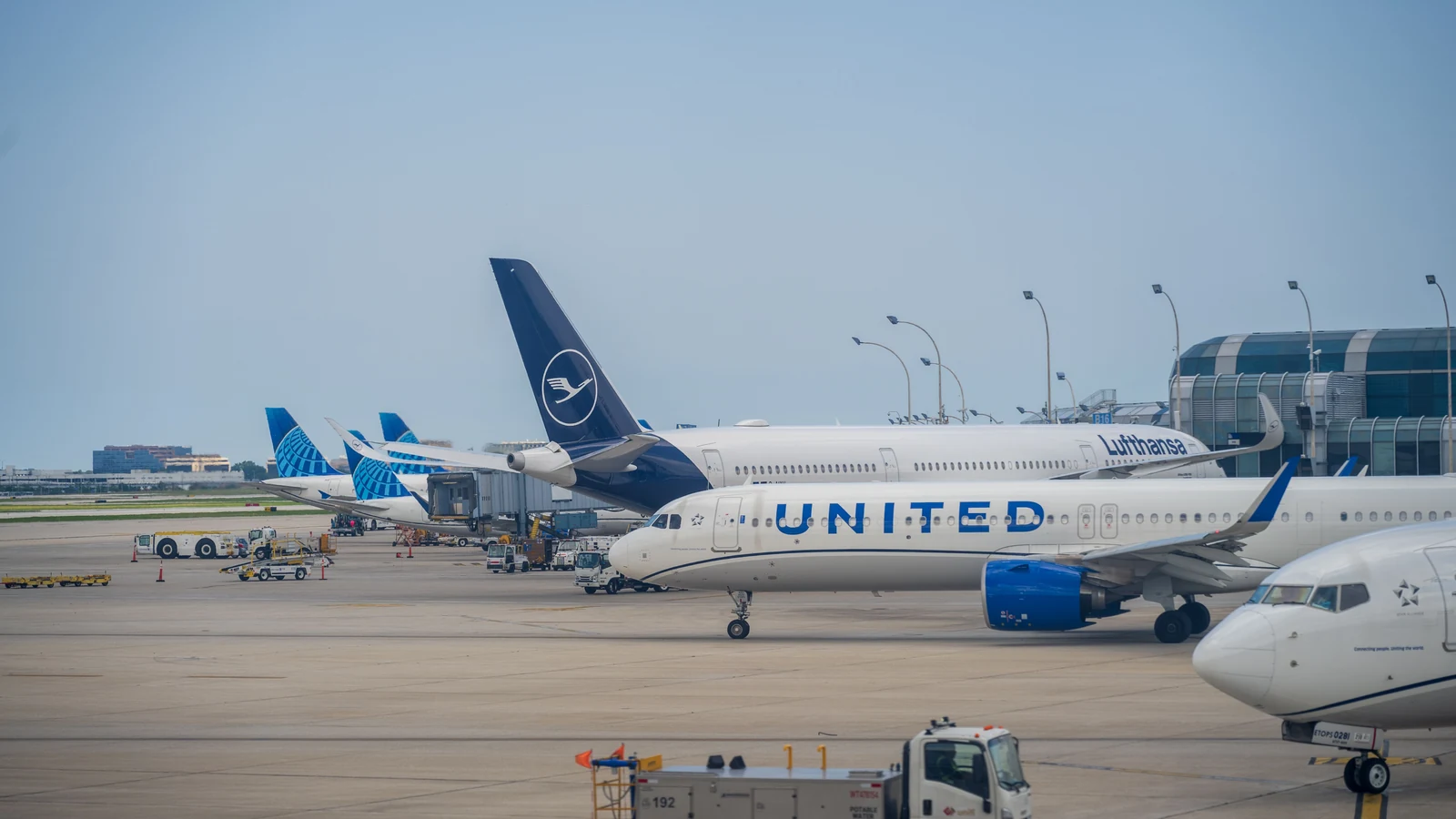
People tend to picture travel news as fare sales and delayed flights. The stories that explain those headlines usually start further back, on the apron at dawn or in a cargo shed where the pallets outnumber the passengers. A daily scan of travel industry news today is an easy way to follow those threads as they move, and few companies make a better case study than dnata, the Dubai-based group whose catering arm prepared 115.3 million meals annually, according to the company. Its businesses touch nearly every beat worth watching, so its operations work as a ready-made map for reading the industry.
1. Track ground handling at major airport hubs
Ground handlers are the people who tow aircraft, load bags, run check-in desks and turn a plane around between flights. Travellers never think about them until something goes wrong, which is exactly why they’re worth watching. When a handler wins or loses a contract at a big airport, it can change how smoothly that terminal runs for years.
dnata is a useful company to follow here because its footprint spans two very different markets. It works at London Heathrow, Gatwick, Manchester and Edinburgh in the UK. Its US presence includes Atlanta, Boston, Chicago O’Hare and Los Angeles.
A story about staffing or new equipment at one of those airports tells you more about your next summer queue than any airline press release will.
2. Watch cargo volumes, not just passenger numbers
Passenger totals get the headlines, and they’re a bit overrated as a signal. They tell you how many people flew. Cargo tells you how much the global economy wanted moved, and it often shifts before passenger demand does.
dnata operates the Dubai International Airport Cargo Gateway, and its cargo services handled 3.2 million tonnes in its 2025-26 financial year. A figure like that gives you a baseline. When reports mention cargo handlers expanding warehouses, adding cool-chain capacity for medicines or perishables, or rethinking routes, that’s a hint about where airlines see money coming from. Belly cargo on passenger flights helps keep some routes alive, so a cargo story can quietly explain why a long-haul service survives or disappears.
It’s a dry beat. It’s also one of the more honest ones.
3. What do catering volumes tell you?
Scale, mostly. dnata says its catering and retail operation works from hubs in more than 50 locations worldwide. Once you hold that reach in your head, catering news stops sounding trivial. A menu redesign or a new supplier deal at that size affects what a huge number of travellers eat on board, and caterers tend to be early to adjust when airlines change service levels in a given cabin.
Catering stories also reveal how airlines are positioning themselves. A carrier that invests in its meals is telling you something about the fares it wants to charge.
4. Notice early industry digital portals
dnata says its online cargo services portal Calogi was officially launched in 2009. That date is worth remembering when you read breathless coverage of some "new" booking or logistics platform. The habit of linking airlines, forwarders and handlers through shared systems goes back decades, and knowing who built the early tools helps you judge which announcements are fresh and which are rebranded plumbing.
5. How far does a regional agency reach?
Travel agencies sound old-fashioned to many readers in Europe and North America. Across the Gulf they remain a big part of how people book, especially for corporate travel and family trips. dnata Travel Group says it has more than 50 travel outlets and operates across the UAE and wider Gulf region.
When you read about visa rule changes, new routes out of Riyadh or Doha, or a shift in outbound holiday demand from the region, a footprint like that is the network that feels it first. Agency expansions or closures in specific countries are a decent proxy for where travel spending is growing.
6. UK brands under one roof
A lot of British holidaymakers book with names they assume are independent. Plenty sit inside larger groups. dnata Travel owns the Gold Medal Travel Group, which includes Pure Luxury, Cruise Plus and Incredible Journeys, each aimed at a different kind of traveller.
Knowing the parent company is very useful for reading news about the sector. A change in strategy at group level can show up across several consumer brands at once, even when the logos stay exactly as they were.
7. Follow ownership, then watch the launches
Ownership changes are where many readers tune out, and they shouldn’t. Travel Republic passed to Dnata World Travel, a Dubai-based subsidiary of the Emirates Group, that December of 2011. On its own that’s a corporate footnote. Read it alongside what came next and a pattern appears.
Four years later, Travel Republic added a cruise service with Imagine Cruising as its partner. New owners often bring new product lines, and the gap between acquisition and launch shows how long a group takes to put its stamp on a brand. Read together, the two events say much more than either headline does alone. It’s the habit worth building above all the others on this list, because it connects the corporate news to the holidays people buy. In January 2026, Destinia acquired the Travel Republic and Netflights brands from dnata, so the Travel Republic brand no longer belongs to the group.
Do I need to read trade publications to follow this?
Not every day. A quick daily look at a trade news feed, plus checking company announcements when a name you recognise comes up, covers most of what matters for a curious traveller.
Why does ground handling news matter to ordinary passengers?
Handlers control much of what happens between landing and take-off, from baggage to aircraft turnaround. Changes in who runs those services at your home airport can shape your experience at the terminal for years.
Is cargo news relevant if I never ship anything?
Yes, because cargo revenue helps airlines justify keeping certain passenger routes. A strong cargo market on a route can be one reason a flight you rely on keeps running.
