

A BP Chinese multibillion dollar deal to supply liquefied natural gas (LNG) to China National Offshore Oil Corporation (CNOOC) has been agreed. BP is already a CNOOC supplier of LNG from Indonesia under an agreement signed several years ago.
The $20-billion-dollar supply agreement will be formally announced today by UK Prime Minister David Cameron during Chinese Premier Ki Kegiang’s 3-day state visit. During the visit the two countries are expected to sign deal worth in excess of $30 billion.
According to China’s ambassador in London, Liu Xiaoming, the UK and China will sign more than 40 agreements between businesses and governments covering a range of sectors, including energy, cultural and educational cooperation, and investment.
Long-term deals rare today
Analysts were surprised at the deal’s time span. Agreements lasting two decades or longer are becoming harder to find, as importers expect new supplies over the coming years will bear down on prices.
BP CEO Bob Dudley, who is at the World Petroleum Congress in Moscow, said:
“It is a 20-year supply agreement on LNG. It is a fair price for them and a fair price for us. It is a good bridge between the UK and China in terms of trade. BP will be signing an agreement today in front of the Chinese premier and David Cameron in agreement with CNOOC.”
LNG likely sourced from USA, and some other areas
BP, which started negotiations with CNOOC at the beginning of 2014, will probably source most of the LNG from its export plant at Freeport, Texas, where it controls 3mtpa (million tonnes per year) of the plant’s export capacity.
The British oil & gas giant could also access LNG from Indonesia, Egypt, Angola and Trinidad. Two new export plants are set to come on stream in Australia within the next couple of years.
China becomes a major US customer
According to Reuters sources, the deal will increase Chinese LNG imports by 1.5+mtpa (approx. 26 cargoes), making China a major customer for American natural gas.
US natural gas will soon be transported through pipelines to Gulf Coast plants where they will be liquefied and then shipped abroad in tankers. One of the largest beneficiaries of cheap US natural gas is China.
Producers courting China
In May 2014, the Russian and Chinese leaders witnessed the signing of a $400 billion natural gas deal in which China will receive 38 billion cubic meters of Russian gas annually for a period of 30 years, starting in 2018.
South Korea and Japan, two of the world’s largest purchases of LNG, are struggling to cope with rising import costs. Consequently, China, whose energy requirements are forecast to grow much more rapidly than those of the other two importers, has become a major target for producers.
LNG is an ideal fuel as Beijing looks to reduce carbon emissions by using cleaner energy sources. A growing number of cities in China are struggling to cope with rising levels of pollution. China’s main energy source is coal, hence the high pollution levels.
Controlling pollution became a top priority in China’s latest economic policy statement.
Chinese natural gas demand is forecast to increase to 420 billion cubic meters per year by the end of this decade. LNG is expected to become a major part of the country’s natural gas imports.
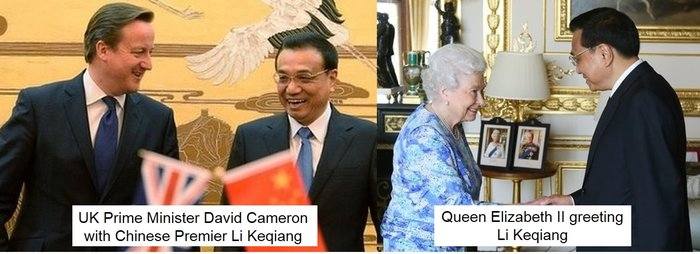
China and the UK are expected to sign deals worth $30bn (£18bn).
What is liquefied natural gas or LNG?
LNG is liquefied natural gas. It is a colorless, clear, non-toxic liquid that is formed when natural gas is cooled to a temperature of (minus) -260ºF (-162ºC).
When the natural gas is cooled and liquefied its volume shrinks 600 times, making it much easier to store and transport to towns and cities worldwide.
Natural gas has become a major source of energy globally. However, several cities and towns that require energy are far away from the gas fields.
When LNG arrives at its destination, regasification facilities turn it back into gas. It is then transported through pipes to factories, businesses, and people’s homes.
