
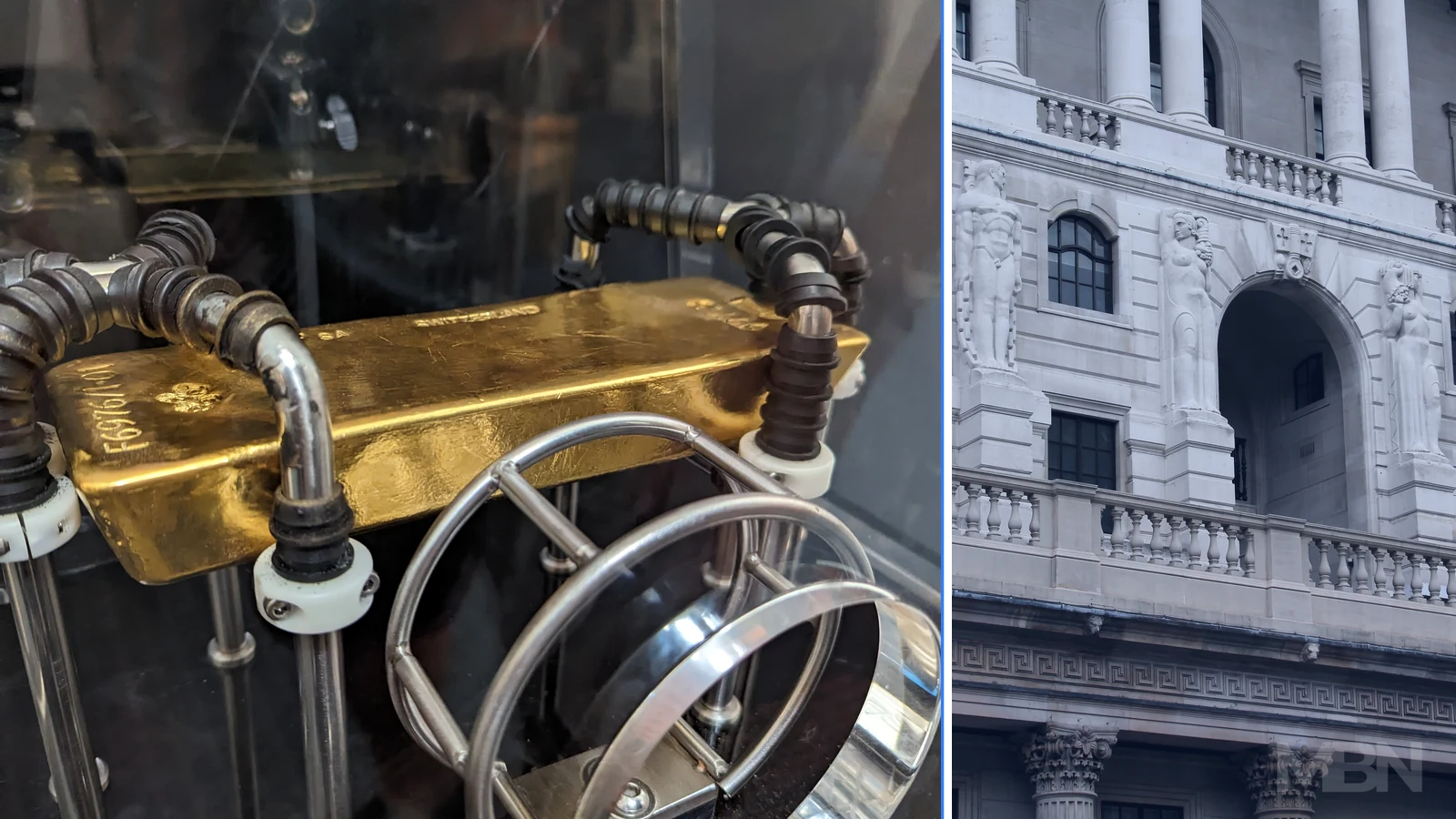
De Nederlandsche Bank has raised the share of Dutch gold reserves held in London from 18.1% to 32.1%, saying the reallocation will make the metal easier to trade during a severe crisis.
The operation shifted the equivalent of about 86 tonnes away from New York and Ottawa between March and August 2026. The Netherlands still owns 612.4 tonnes of gold, which was worth €72.2 billion at the end of 2025.
The Dutch central bank, known as DNB, said on 2 September that increasing geopolitical unrest had prompted it to strengthen its preparations for extreme financial disruption. Holding the reserves across the Netherlands, the United Kingdom, the United States and Canada also reduces the risks associated with relying heavily on one location.
Following the reallocation, the Bank of England holds 32.1% of the reserves and DNB’s Cash Centre in Zeist holds 30.8%. New York and Ottawa each hold 18.5%.
Before the operation, New York held the largest share at 31.3%, followed by Zeist at 30.8%, Ottawa at 19.7% and London at 18.1%.
Most of the shift did not involve transporting bars
DNB did not physically send all 86 tonnes from North America to Britain.
It sold about 59 tonnes of gold in New York and bought an equivalent quantity in London that met international market standards. The total amount of gold in the Dutch reserve remained unchanged.
The remaining part involved two physical transfers. More than 27 tonnes travelled from the United States and Canada to Zeist, while a similar quantity of standards-compliant gold was moved from Zeist to London.
This arrangement allowed DNB to place more readily tradable bars in London without having to remelt gold that did not meet the market’s current specifications. It also divided the operational risk between market transactions and physical transport.
London offers quicker access to the gold market
DNB said gold held at the Bank of England must meet modern international trading standards and can be used more quickly and directly than its holdings in New York and Ottawa.
The Bank of England stores around 400,000 gold bars for the UK government, other central banks and certain commercial firms. Its customers can trade with one another without necessarily moving the bars. In many transactions, the bar remains in the vault while the recorded owner changes.
The Bank’s custody system gives reserve managers direct access to London’s large gold market. If DNB needed to sell or otherwise use part of its reserve during a crisis, eligible bars already held there could be mobilised without first being transported to another financial centre or prepared for trading.
“With this relocation, we have improved the tradability of our gold reserves. We expect that we will never need to use them, but we do need to strengthen our resilience and preparedness,” DNB Governor Olaf Sleijpen said.
Total Dutch gold holdings remain unchanged
The reallocation was not a net purchase of gold, nor did DNB describe it as a withdrawal from North America. Both the United States and Canada continue to hold sizeable parts of the reserve.
Gold forms part of a central bank’s official foreign reserves, assets that can be used to obtain foreign currency or respond to financial stress. Unlike a government bond or bank deposit, a gold bar is not a promise owed by another institution. Its price can still fluctuate, and storing it securely carries costs.
DNB describes gold as an “anchor of trust” and a hedge against extreme systemic risks. Its latest operation addresses a narrower problem: gold kept in a secure vault may still be slow to use if the bars cannot be traded directly in the market where buyers and sellers are concentrated.
London now holds the largest single share of the Dutch reserve, but the balance remains spread across four locations. DNB said the combination gives it a more even geographical distribution while making a greater portion of the gold available for use if a severe crisis occurs.
