
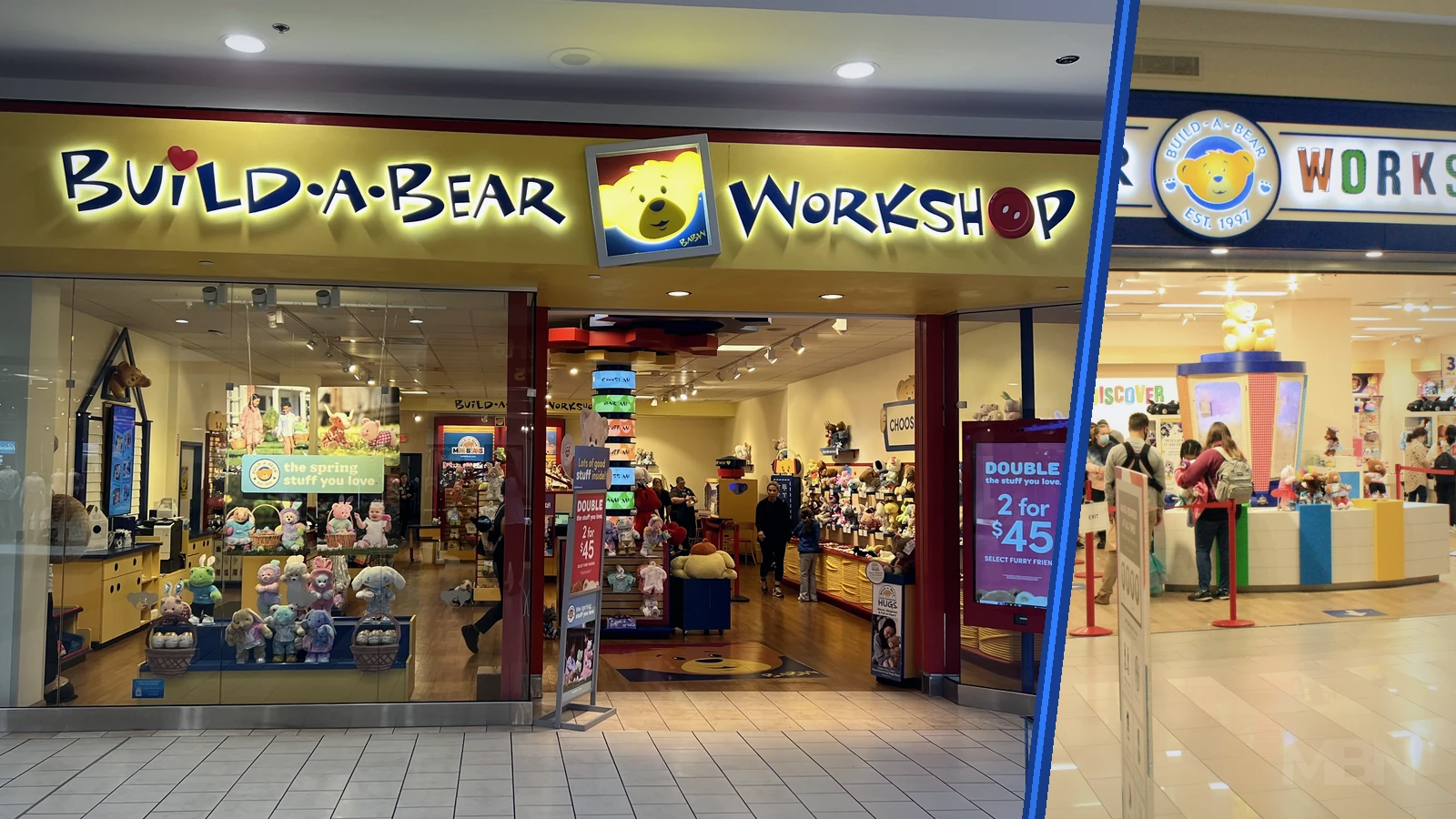
Build-A-Bear Workshop has lowered its full-year outlook after second-quarter revenue fell 7.2% to $115.3 million and pretax income dropped 24.1% to $11.6 million. Weaker retail demand and slower progress on wholesale deals are putting more pressure on the company’s planned store expansion to deliver growth.
The company said diluted earnings fell to $0.70 per share in the 13 weeks ended August 1, from $0.94 a year earlier.
The market reaction was severe. Build-A-Bear shares fell 27.3% on August 27, their largest one-day percentage decline on record, and closed at $28.44.
Chief Executive Chris Hurt said the quarter had fallen short of expectations and that some wholesale opportunities could take longer to materialize. The company had already reduced its sales forecast in May after reporting softer store traffic.
Retail and online demand weakened
Second-quarter retail sales fell 7.1% to $106.5 million. Online demand, which includes orders fulfilled from warehouses and stores, declined 15.6%.
The lower sales volume also weighed on profitability. Gross margin, the share of revenue left after the direct cost of merchandise, fell to 54.2% from 57.6%.
Build-A-Bear attributed the decline mainly to increased promotional activity and what it called occupancy cost deleverage. In plain terms, rent and other largely fixed store costs consumed a greater share of revenue as sales fell.
The pattern was also visible across the first half. Total revenue declined 4.8% to $240.6 million, with retail sales down 6.1% and online demand down 21.2%.
Commercial and international franchise revenue increased 11.6% during the same six-month period, but that growth was not enough to offset the larger retail decline. In the second quarter alone, the combined category fell 9%.
Wholesale growth plan loses momentum
Build-A-Bear now expects fiscal 2026 revenue of $500 million to $525 million, down from the $530 million to $550 million range issued in May. It also reduced its pretax income outlook to $60 million to $68 million from $72 million to $78 million.
The new sales range would represent a decline of approximately 0.9% to 5.6% from the $529.8 million reported in fiscal 2025, based on our calculation. The earlier forecast had allowed for growth.
A major change concerns commercial revenue, which includes sales through third-party businesses rather than Build-A-Bear’s own stores. The company now expects that revenue to be approximately flat with fiscal 2025. Three months earlier, it had forecast growth of at least 20%.
Reuters reported that Build-A-Bear was unable to renew a multimillion-dollar partnership with Walmart and said other wholesale opportunities were moving more slowly than expected.
The headline first-half profit figure also needs context. Pretax income increased slightly to $35.5 million from $34.9 million, but the latest period included a $7 million refund for tariffs paid in the prior fiscal year. Excluding that refund, the company reported adjusted pretax income of $28.5 million.
For the full year, Build-A-Bear expects $10 million to $11 million of ongoing tariffs and related costs, based on the 12.5% tariff rate used in its forecast.
A separate regulatory filing showed that Chief Growth Officer David Henderson was terminated without cause, effective August 26. The filing did not state a reason for the decision.
Store expansion remains on the schedule
Despite the weaker outlook, Build-A-Bear still expects to add at least 50 net new experience locations in fiscal 2026 through company-managed, partner-operated and franchise formats.
The retailer ended the second quarter with 674 locations worldwide after adding five on a net basis during the period. Hurt said openings would accelerate in the second half, including a new multilevel store at ICON Park in Orlando.
This puts more weight on the expansion program. New locations must begin contributing while existing retail sales remain under pressure and the commercial business is no longer expected to provide the growth previously forecast.
The result also shows why large retail growth percentages need context. As we recently reported in Gap’s results, strength in one brand or channel can be outweighed by weakness in a larger part of the business. For Build-A-Bear, first-half commercial growth was real, but its own retail operation still generated more than 90% of revenue.
The second half will therefore test two parts of Build-A-Bear’s strategy at once: whether a faster opening schedule can revive companywide sales, and whether delayed wholesale opportunities can become dependable revenue rather than remain prospective deals.
