
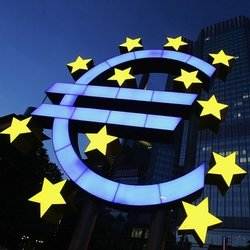
The ECB reduced interest rates today in response to a looming deflation threat in the Eurozone. ECB (European Central Bank) President, Mario Draghi, announced an unprecedented series of measures opted by the Governing Council.
It is hoped the central bank’s record low interest rates, and one negative one, will push the currency bloc out of persistent, record-low inflation.
In a press release today, the ECB announced:
- The benchmark interest rate on the main refinancing operations of the Eurosystem will be reduced to 0.15%, a reduction of ten basis points, as from June 11th, 2014.
- The marginal lending facility interest rate will be cut to 0.40%, a decline of 35 basis point.
- The interest rate on the deposit facility will be reduced to (minus) -0.10%. It is the first major central bank among ‘the big four’ – the US Federal Reserve, the Bank of England, the Bank of Japan, and the ECB – to push one of its main rates into negative figures. It means that banks will now have to pay out money for surplus funds they have deposited at the ECB. The aim is to get credit moving into parts of the economy that require it.
A bold move
Although the move into negative interest rates was widely expected, and has been criticized by some analysts as occurring too late, most economists see it as a bold and unprecedented move. How effective negative deposit rates will be remains to be seen.
It was tried in Denmark and Sweden, both non-Eurozone nations. In Sweden it made no significant difference, while in Denmark it lowered the value of its currency and hit banks’ profits.
Other measures
In a press conference, Mr. Draghi announced other measures:
- Commercial banks will be offered low-interest-loans until 2018. The loans would be limited to 7% of the total amount a bank lends to firms, i.e. a bank that lends more to companies will be entitled to more cheap borrowing from the ECB.
- The ECB is setting up a system whereby it can buy bundles of loans in the form of bonds directed at small businesses. The aim is to get small companies to more easily acquire credit through the financial markets.
- If inflation continues way off the ECB’s 2% (annual) target, the Governing Council unanimously agreed to consider further measures. Although Mr. Draghi did not mention a US Fed-like asset-buying stimulus program, many analysts believe it must have have been considered.
Reuters quoted Alvin Tan, a currency stategist at Société Générale, who said: “After those rate cut decisions, the market is anticipating further measures like stopping its sterilization program which will inject liquidity. Investors are also expecting it to announce asset purchases. What will keep the euro down is an asset purchase program.”
Shares rise, Euro falls
Soon after Mr. Draghi’s announcement, shares throughout Europe surged, with the German DAX index reaching 10,000 for the first time ever, and France’s CAC 40 increasing by 0.77%.
The euro dropped to $1.3558, a four-month low. It has lost more than 3% of its value since Mr. Draghi said on May 8th that the ECB is prepared to take further measures, to even consider a complete change in policy, to prevent the Eurozone from sliding into deflation.
The British pound rose to its highest level in 18 months against the Euro (80.99 pence per euro). The Bank of England has maintained its benchmark interest rate at 0.5%. With the economy surging ahead, there is talk in the UK about raising the benchmark rate, possibly to 1% in 2015.
At today’s press conference, Mr Draghi said:
“The key ECB interest rates will remain at present levels for an extended period of time in view of the current outlook for inflation. This expectation is further underpinned by our decisions today.”
“Moreover, if required, we will act swiftly with further monetary policy easing. The Governing Council is unanimous in its commitment to using also unconventional instruments within its mandate should it become necessary to further address risks of too prolonged a period of low inflation.”
