
UK Chancellor George Osborne is considering an emergency tax cut to stem the alarming decline in North Sea oil industry investments and jobs, as Brent crude slips from its $114 per barrel peak in June to less than $50 today.
Mr. Osborne commented that reduced taxes on North Sea oil companies may be included in the March Budget as part of a program to assist producers and explorers.
“I don’t want to pre-empt the Budget but I can see that it may well involve further reducing the burden of tax on investment in the North Sea,” Mr. Osborne said.
In December, Robin Allan, chairman of the UK’s independent explorers’ association, Brindex, said the UK oil industry was “close to collapse.” North Sea oil companies are dramatically cutting back on investment and workforce levels to cope with plummeting oil prices.
Mr. Allan, who is also director of Premier Oil plc, said there is a “huge crisis” in the British oil industry.
Mr. Allan commented:
“This has happened before, and the industry adapts, but the adaptation is one of slashing people, slashing projects and reducing costs wherever possible, and that’s painful for our staff, painful for companies and painful for the country.”
“It’s close to collapse. In terms of new investments – there will be none, everyone is retreating, people are being laid off at most companies this week and in the coming weeks. Budgets for 2015 are being cut by everyone.”
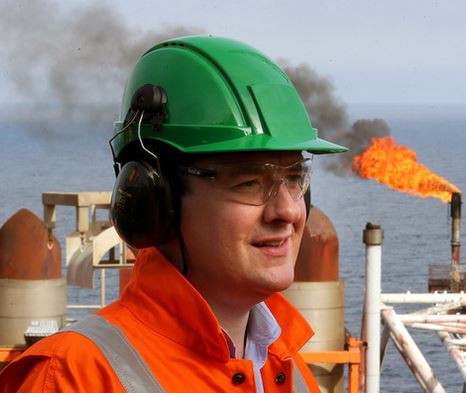
Mr. Osborne needs to act fast, say North Sea oil industry executives.
Executives across the whole industry are urging the government to come up with a rescue package to prevent total meltdown. Production in 2014 averaged 1.2 million barrels per day,, which was 75% lower than in 1999.
The UK government’s tax take, which can be as high as 80% for oil fields, is crippling the industry, executives say, especially now that the lower price of oil has reduced their margins to virtually zero.
Industry experts believe Mr. Osborne is considering scrapping a supplementary corporation tax charge that Chancellor Gordon Brown introduced thirteen years ago.
In 2011, when oil was over $100 per barrel, Mr. Osborne pushed through a large hike in North Sea taxes. The so-called supplementary charge on North Sea producers rose from 20p in the pound to 32p. The rate of corporation tax was also raised.
Industry lobbyists say action must be taken before the March Budget.
While such a tax regime may have been sustainable with high crude prices, at today’s prices companies say it is impossible to justify investing in what are essentially expensive-to-run, old oil & gas fields.
Mr. Osborne said:
“We have a record amount of investment in the North Sea. A lot of these investments take a long-term view but there’s no doubt the dramatic fall in the oil price has raised questions about future investment in the North Sea.”
With North Sea oil production at “historically low levels,” Fergus Ewing, Scotland’s energy minister, last night urged the Treasury to overhaul the tax system for oil exploration.
Mr. Ewing said:
“Instead of talking, it is time for the UK government to act and deliver a tax cut for the oil and gas industry. The Tories have promised much and delivered little for the North Sea.”
Regarding the UK’s tax regime for the sector, Oil & Gas UK’s chief executive Malcolm Webb said:
“If the Treasury’s new Investment Allowance is to have any impact it must be implemented by Budget 2015 at the very latest. However, with the oil price now at around $50 per barrel, it is becoming increasingly apparent that this measure is not enough and a significant reduction in the headline rate is required.”
“We are encouraged to see a growing political and industry consensus around the now pressing need for yet more fundamental and urgent changes to the tax regime. Oil & Gas UK is committed to playing a fully engaged and constructive part in this important process of reform and looks forward to working with both the UK and Scottish governments and all other stakeholders to that end.”
Unions warned last month that the North Sea oil industry faces job cuts of about 35,000 over the next five years unless drastic action is taken now.
