
OpenAI, a new artificial intelligence (AI) training gym backed by SpaceX and Tesla boss Elon Musk and other hi-tech magnates, aims to help people develop smarter computers rather than pumping iron. In other words, it is an open source AI gym where programmers can come, try things out and improve or fine-tune their systems.
Elon Musk, along with Prof. Stephen Hawking and Microsoft founder Bill Gates, have often expressed concern about the future of AI – specifically, that if it evolves with no controls, it could eventually become smarter than we are, with the capacity to wipe us out. In fact, in December last year they were nominated for Luddite of the Year, because of their publicly-voiced concerns.
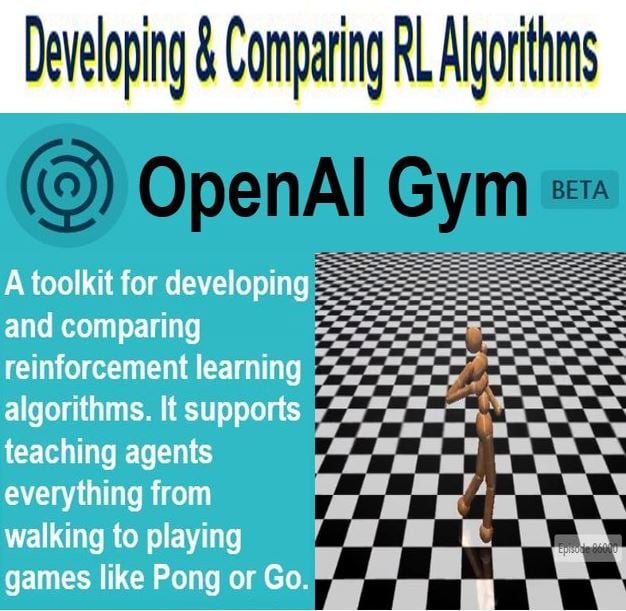 OpenAI, an artificial gym, might be the best possible way to make sure there is an even playing field by making knowledge open source and available to all.
Helping computer systems get better at learning
The new AI training gym for computer programmers – OpenAI Gym – is an open source tool to get developers from every corner of the world teaching computer systems improved ways to learn and develop more sophisticated reasoning systems.
On the OpenAI website, Greg Brockman and John Schulman write:
“We’re releasing the public beta of OpenAI Gym, a toolkit for developing and comparing reinforcement learning (RL) algorithms. It consists of a growing suite of environments (from simulated robots to Atari games), and a site for comparing and reproducing results.”
“OpenAI Gym is compatible with algorithms written in any framework, such as Tensorflow and Theano. The environments are written in Python, but we’ll soon make them easy to use from any language.”
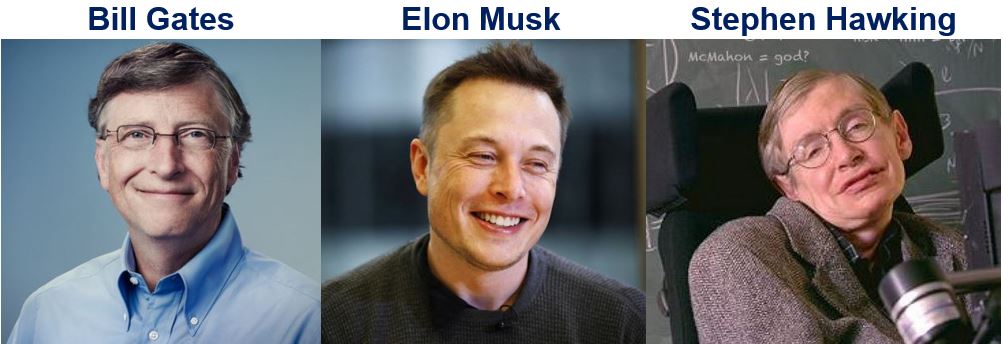 These three guys, leaders in their fields, were nominated for Luddite of the Year because they publicly expressed concerns about the future of artificial intelligence. Unless we start preparing the way properly now, they fear that AI could one day destroy humanity.
A $1 billion non-profit AI gym
In response to his concerns that AI could become the ‘biggest existential threat’ to the human race, if it ends up in the wrong hands, Mr. Musk, a South African-born Canadian-American business magnate, engineer, inventor and investor, is funding the $1 billion non-profit as a type of ‘do-good-not-evil’ champion for the future of AI.
Other hi-tech moguls are also backing the AI gym, including Peter Thiel, co-founder of PayPal (Musk is also a PayPal co-founder); Reid Hoffman, co-founder and executive chairman of LinkedIn; Greg Brockman, former CTO of Stripe, helping build it from 4 to 250 employees; and Sam Altman & Jessica Livingston, founders of Y-Combinator, an American seed accelerator. The giant online retailer Amazon is also investing in OpenAI.
At the AI gym, programmers and developers can train their bots to master, for example, the ancient game of Go on 9×9 and 19×19 boards, or learn how to play such Atari games as Space Invaders and Pac Man better.
Participants can also control simulated robots, beginning with teaching them how to walk on two legs.
Getting AI systems to carry out more complex tasks
As programmers and developers start creating more advanced AI systems, computers should become more proficient in carrying out sophisticated tasks, including driving a car in everyday traffic. As Mr. Musk owns electric car-maker Tesla, AI systems for self-driving cars are probably quite high up in his list of priorities.
According to OpenAI, its gym was originally built as a tool to accelerate its own RL research – a members-only club. Now it hopes it will be just as useful for the broader community.
Mr. Musk has long been a supporter of this type of open exchange of data.
The AI gym has a programmer’s lounge – a chatroom – where developers can vent their frustrations and come together with other like-minded people to solve problems.
John McCarthy (1927-2001), an American computer scientist and cognitive scientist who coined the term in 1955, defined AI as “the science and engineering of making intelligent machines”.
