
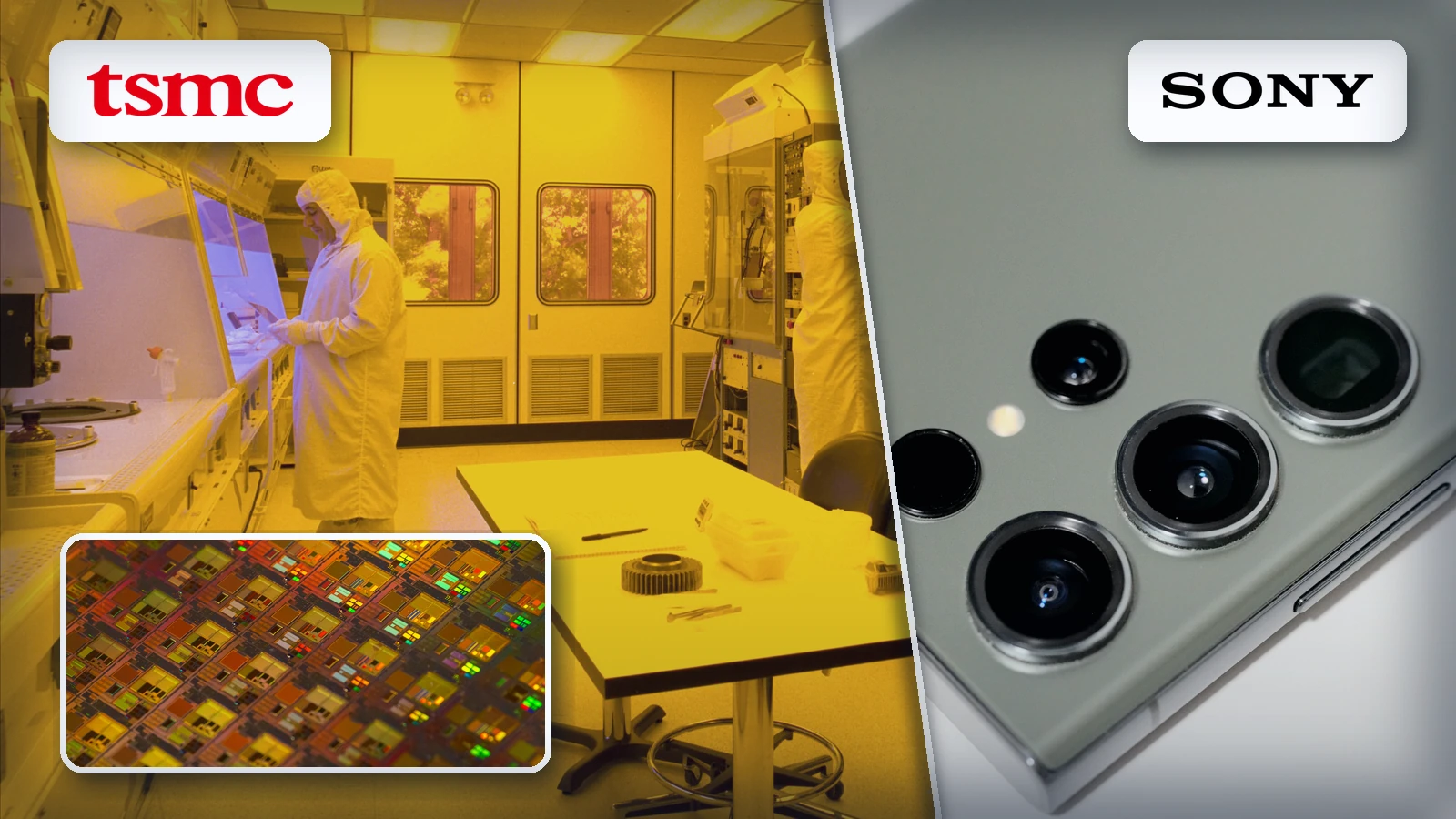
Sony Semiconductor Solutions and Taiwan Semiconductor Manufacturing Company have signed a legally binding agreement to establish a joint venture in Kumamoto, Japan, with planned capital contributions totaling 747 billion yen ($4.69 billion). The company is expected to begin volume production of next-generation smartphone image sensors in 2029.
The definitive agreement announced on August 11 follows the non-binding memorandum of understanding the companies signed in May.
Sony plans to contribute approximately 465 billion yen through a combination of cash and asset transfers. The transferred assets will include its newly constructed semiconductor fabrication plant in Koshi City, Kumamoto Prefecture. TSMC plans to contribute approximately 282 billion yen in cash.
The $4.69 billion total should not be read as an immediate cash payment. Part of Sony’s contribution consists of a factory in which it has already invested, while both companies expect to make their contributions in phases according to market demand and other business conditions.
Sony will control the new company
The joint venture will be named Advanced Vision Semiconductor Manufacturing Corporation. Sony will be its sole controlling shareholder, the company is planned to operate as a consolidated Sony Group subsidiary, and Sony plans to appoint its representative director.
The companies did not disclose their exact ownership percentages. The establishment of the venture and completion of the transaction also remain subject to regulatory approvals and other customary closing conditions.
Further investment may be needed to reach the planned production capacity. Sony and TSMC said they are considering that spending on the assumption that support from the Japanese government will be available. They did not disclose the expected amount of public support or the venture’s planned output.
Sony will retain product and design control
An image sensor is the semiconductor component that converts light entering a camera into digital information. In smartphones, its design affects factors such as image quality, low-light performance, autofocus and power use.
Under the agreement, Sony will lead the development of core image-sensor technologies, product planning and product design. The venture will use TSMC’s semiconductor process technology and manufacturing experience to prepare the products for volume production.
The announced production plan is focused on smartphone sensors. The companies’ May announcement also said the wider partnership would explore uses in cars and robotics. The August agreement says the other parts of that partnership remain unchanged, but no automotive or robotics production schedule has been announced.
The venture is part of Sony’s fab-light shift
Sony has described the partnership as the first step in a “fab-light” strategy. In Sony’s case, that means retaining control of sensor technology and product decisions while sharing more of the manufacturing work and investment burden with a partner.
In a May investor question-and-answer summary, Sony said it had previously operated much like an integrated device manufacturer, handling research, development and image-sensor manufacturing in-house.
The company said working with TSMC should help it control capital spending and expand beyond the limits of its own production capacity. Management also acknowledged a trade-off: a joint-venture structure can reduce risk by making more costs variable, but it can also put pressure on margins.
Sensor earnings are strong, but the smartphone outlook is mixed
The agreement comes after a strong quarter for Sony’s Imaging and Sensing Solutions business. Sales rose 26% year on year to 512.7 billion yen during the three months ended June 30, 2026. Operating income increased 125% to 122.2 billion yen, a first-quarter record for the segment.
Sony said the sales increase came mainly from higher average selling prices for mobile sensors, a better customer and product mix, and favorable exchange rates. Unit sales of mobile sensors increased only slightly.
Despite the first-quarter growth, Sony remains cautious about the rest of the fiscal year. It expects conditions in the memory-chip market to affect shipments of high-end smartphones during the second half and forecasts a slight year-on-year decline in mobile-sensor revenue for the full year.
Sony has also included approximately 10 billion yen of additional costs related to preparing the TSMC venture in its forecast for the fiscal year ending March 2027.
