
The US Federal Reserve increased interest rates for the first time since December 2008 in what’s being described as a historic moment for the global economy.
The central bank will raise short-term rates from the 0.0%-to-0.25% range to between 0.25% and 0.50%.
Today’s rate hike “marks the end of an extraordinary seven year period,” Fed Chair Janet Yellen said, adding that the world experienced the “worst financial crisis and recession since the Great Depression”.
The Great Depression started in 1929 and lasted for much of the 1930s in the United States.
Yellen said in a press conference after the rate decision was announced:
“With the economy performing well and expected to continue to do so, the committee judges that a modest increase in the federal funds rate is appropriate. The economic recovery has clearly come a long way.”
“The process is likely to proceed gradually,” she added, pointing out that monetary policy will remain “accomodative”.
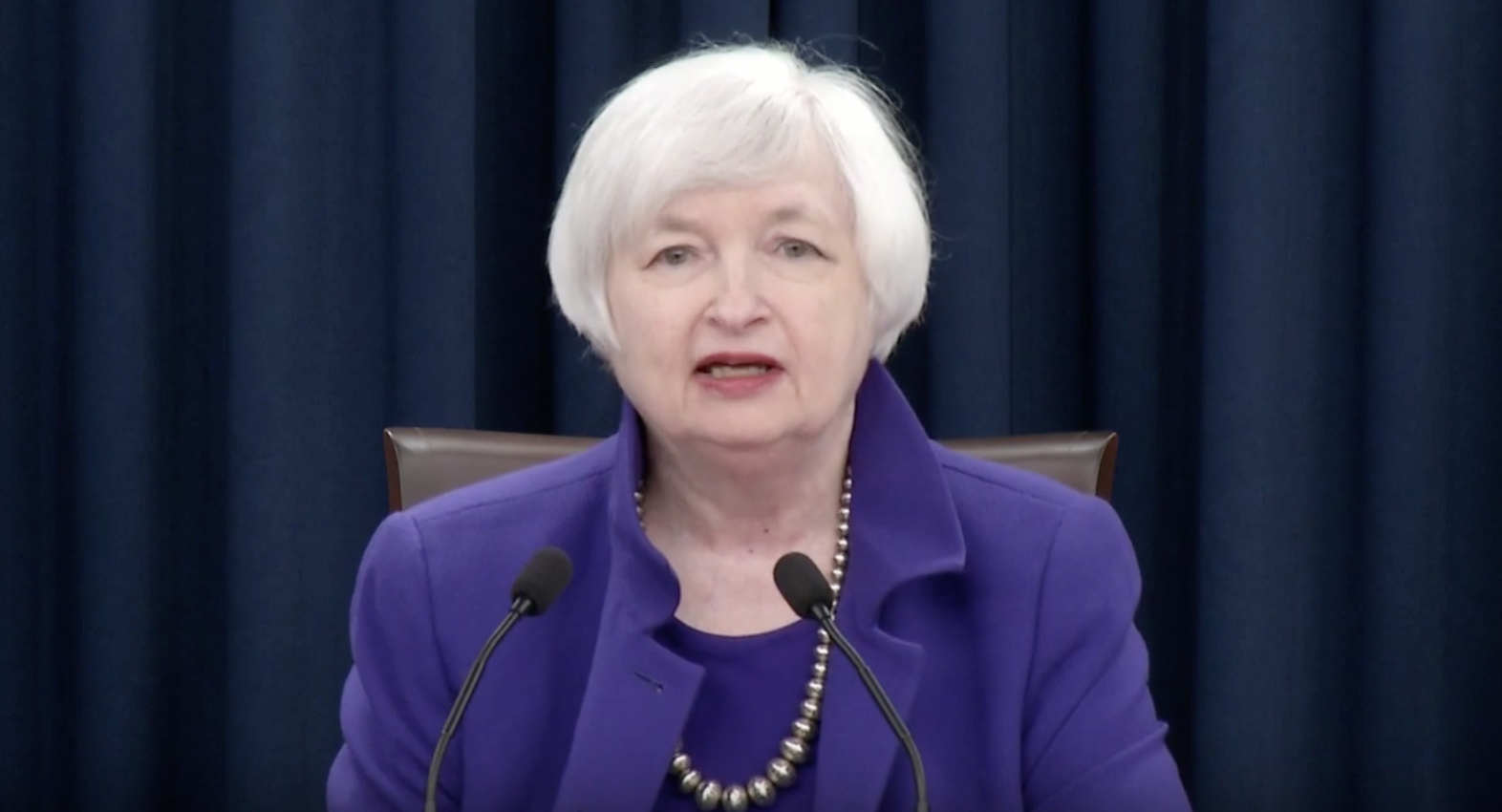
Janet Yellen, Chair of FOMC, announcing rate hike at press conference.
Why is the Fed hiking rates when inflation is well below its 2% target?
In October inflation was at 0.2%, much lower than the Fed’s target of 2%.
However, Yellen stressed that most of the downward pressure on inflation comes from “transitory factors” such as falling crude prices “that we expect to abate over time”.
Yellen added that “diminishing labour slack” is forecast to put “upward pressure” on inflation in the coming months.
The Fed’s policy statement also noted the “considerable improvement” in the U.S. labor market, citing the unemployment rate drop to 5 percent, adding that policymakers are “reasonably confident” inflation will rise over the medium term to the Fed’s target rate.
The Fed expects unemployment to drop to 4.7% next year and economic growth to reach 2.4%. Economic growth is forecast to slow to 2.2% in 2017, while core measure of inflation followed by the Fed is expected to return to 2% by 2018.
Press Conference with Chair of the FOMC, Janet L. Yellen:
Future adjustments
The Federal Reserve said:
“In determining the timing and size of future adjustments to the target range for the federal funds rate, the Committee will assess realized and expected economic conditions relative to its objectives of maximum employment and 2 percent inflation.
“This assessment will take into account a wide range of information, including measures of labor market conditions, indicators of inflation pressures and inflation expectations, and readings on financial and international developments. In light of the current shortfall of inflation from 2 percent, the Committee will carefully monitor actual and expected progress toward its inflation goal.
“The Committee expects that economic conditions will evolve in a manner that will warrant only gradual increases in the federal funds rate; the federal funds rate is likely to remain, for some time, below levels that are expected to prevail in the longer run. However, the actual path of the federal funds rate will depend on the economic outlook as informed by incoming data.”
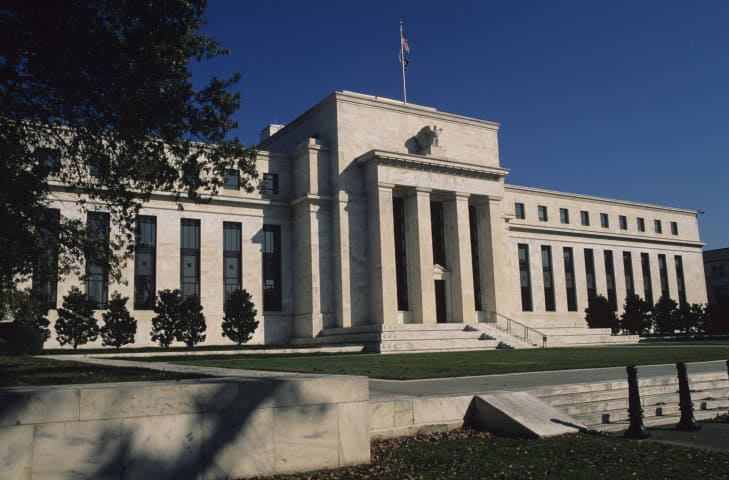
US Federal Reserve.
How markets responded to the news
U.S. stocks surged after the Fed announcement was made, mainly due to the fact that the central bank made it clear that it would proceed with future hikes slowly with further tightening. The S&P 500 stock market index gained 1.5% on Wednesday – up back into positive territory.
Yields on U.S. Treasuries rose to above 1% for the first time in over five years, while the dollar was largely unchanged against a basket of currencies.
What the rate hike means for emerging economies
Now that the US is offering better returns, many investors could decide to move money out of emerging economies. In addition, foreign governments will have to pay more for debt issues in US dollars.
A report by World Bank in September said that there will probably be a modest impact of a Fed rate hike on developing countries. The rate hike is expected to strengthen the US dollar.
The World Bank report said in its report: “A broad-based appreciation of the U.S. dollar can add significant pressure on EFE currencies, contribute to the cost of debt refinancing and balance sheet pressures, and expose vulnerabilities in domestic banking sectors.”
