
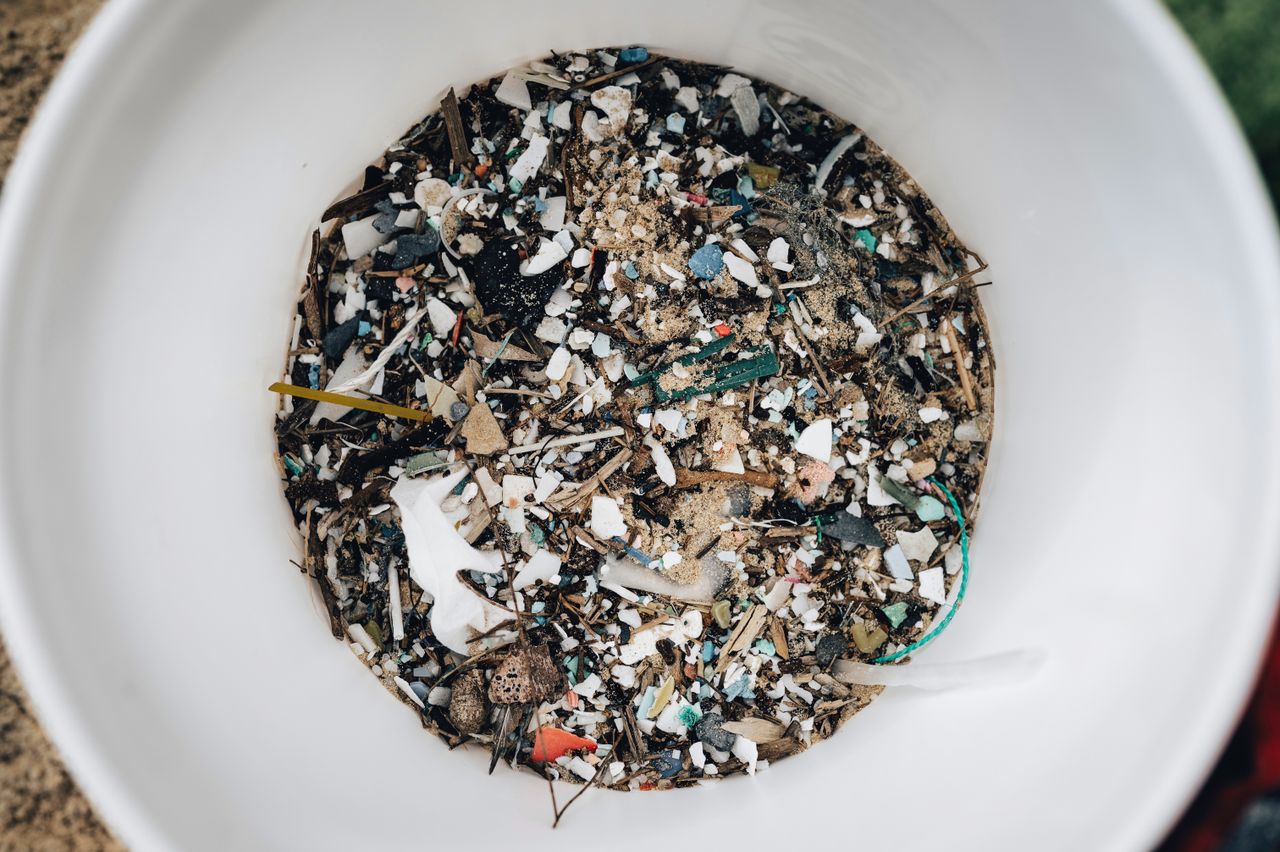
Microplastics are usually discussed as an environmental problem. However, a new white paper from researchers at the University of Technology Sydney (UTS) argues that companies should also view them as a developing commercial and compliance risk.
Businesses may be exposed through product ingredients, packaging, synthetic textiles, tyres, paints, industrial materials and plastic pellets. As monitoring improves, companies could face more questions about where these materials enter their supply chains, how much is released during production or use, and whether their environmental claims can be supported with evidence.
The report, Microplastics: Preparing for Australia’s Next Regulatory Shift, was written by Professor Martina Linnenluecke of the UTS Centre for Climate Risk and Resilience and Professor Ross Gordon of Change for Good at UTS Business School.
It is a policy-focused white paper that reviews existing evidence, examines emerging regulations and recommends steps businesses can take. It is not a journal article reporting a single new experiment.
What are microplastics?
Microplastics are generally defined as plastic particles measuring five millimetres or less.
Some are deliberately manufactured or added to products. Others form when larger plastic items break down through sunlight, weathering, abrasion or ordinary wear. Sources commonly discussed by researchers and regulators include plastic pellets, paint, synthetic textile fibres and particles released by vehicle tyres.
Definitions can differ between studies and regulations. A synthetic polymer ingredient, for example, does not automatically meet every legal definition of a microplastic. Its physical form, size, solubility and biodegradability may all matter.
Plastic use continues to grow
According to the Organisation for Economic Co-operation and Development, global plastics use reached approximately 460 million metric tons in 2019, up from 234 million metric tons in 2000.
The world generated around 353 million metric tons of plastic waste in 2019. After losses during the recycling process were taken into account, only 9% was ultimately recycled. Approximately 19% was incinerated, almost 50% went to sanitary landfills, and the remaining 22% was disposed of in uncontrolled dumpsites, openly burned or leaked into the environment.
Those percentages refer specifically to plastic waste generated in 2019. They should not be treated as a breakdown of all plastic waste created since large-scale plastic production began.
Without stronger policies, the OECD projects that annual plastics use could increase to approximately 1.23 billion metric tons by 2060.
What the handwash analysis found
One example in the UTS report concerned 33 handwash products available in Australian supermarkets.
According to the UTS announcement, one-third of the products were identified as containing “probable microplastics or synthetic polymers.” That is equivalent to 11 of the 33 products examined.
The qualification is important. UTS did not present the result as laboratory confirmation that microplastic particles had been detected in every product. The category also included synthetic polymers, which may not meet every scientific or regulatory definition of a microplastic.
Even so, the analysis illustrates a practical problem for businesses and consumers: it can be difficult to determine where synthetic polymers are present when ingredient and supply-chain information is incomplete, inconsistent or difficult to interpret.
Evidence of human exposure is growing, but health effects remain uncertain
Microplastics and smaller nanoplastics have been reported in food, water and a range of human samples.
The U.S. Food and Drug Administration says researchers have reported finding the particles in samples including blood, urine, stool and human organs. However, detecting particles does not by itself show that they caused disease or other health effects.
The FDA also says current scientific evidence does not demonstrate that the levels of microplastics or nanoplastics detected in food pose a risk to human health. Important uncertainties remain because researchers do not yet have fully standardised methods for detecting, measuring and classifying the particles.
That does not mean there is no potential risk. It means the evidence is still developing and does not support definitive claims about the long-term health effects of typical exposure.
Regulation is developing unevenly
Businesses currently face a patchwork of rules rather than one global microplastics standard.
In the European Union, a REACH restriction on synthetic polymer microparticles began applying on October 17, 2023. It covers particles placed on the market on their own or intentionally added to certain mixtures, although exemptions and lengthy transition periods apply to some products.
The EU has also adopted a separate regulation intended to prevent plastic-pellet losses across the supply chain.
Other EU measures are related to the broader plastics problem without being microplastics-specific. The bloc’s Packaging and Packaging Waste Regulation, which generally begins applying on August 12, 2026, introduces wider sustainability, labelling, reuse and recycling requirements for packaging.
The EU’s Euro 7 vehicle rules also create a framework for measuring and limiting non-exhaust emissions, including particles produced through tyre abrasion.
In the United States, federal legislation is considerably narrower. The Microbead-Free Waters Act prohibits intentionally added plastic microbeads in rinse-off cosmetics, including certain toothpastes and other non-prescription products. It is not a general federal ban on microplastics.
The U.S. Environmental Protection Agency also published a National Strategy to Prevent Plastic Pollution in 2024. However, the EPA currently states that the strategy is under review to determine how it aligns with the present administration’s priorities.
Why prevention is more practical than cleanup
One of the white paper’s central arguments is that preventing microplastic releases is generally more practical than trying to recover the particles after they have entered the environment.
Larger plastic items can sometimes be collected, reused or recycled before they break apart. Once microscopic particles have spread through rivers, oceans, soil or the atmosphere, recovering them at a meaningful scale becomes far more difficult.
For businesses, prevention could involve reducing unnecessary plastic use, redesigning products, containing plastic pellets, reducing material loss during manufacturing and examining whether alternative materials can perform the same function with fewer environmental effects.
Recycling remains important, but it does not address every source of microplastic pollution. Particles can also be released while products are being manufactured or used, including through tyre wear, textile washing and the deterioration of paints and coatings.
Detection technology is improving
Measuring microplastics remains technically difficult because particles differ in size, shape, colour and chemical composition.
Established laboratory methods include Fourier-transform infrared spectroscopy and Raman spectroscopy. These techniques can help researchers identify polymers by examining their chemical signatures, but analysis can be expensive, time-consuming and difficult to compare across laboratories.
The European Commission’s Joint Research Centre has developed a methodology for measuring microplastics in drinking water, illustrating the wider effort to make testing more consistent.
The UTS white paper also discusses emerging approaches involving automated imaging, hyperspectral imaging and artificial intelligence. These systems may eventually help classify particles more quickly and support more continuous monitoring.
However, many of these applications remain experimental. Businesses should not assume that rapid, inexpensive and fully standardised microplastic monitoring is already widely available.
What businesses can do now
The report recommends that companies begin by understanding where microplastics or related synthetic materials may enter their operations.
- Map possible sources: Examine ingredients, packaging, textiles, coatings, vehicle use, manufacturing materials and plastic-pellet handling.
- Request better supplier information: Ask suppliers for clearer data about polymer content, product composition and potential particle releases.
- Assess alternatives carefully: Consider whether products or processes can be redesigned without creating new safety, performance or environmental problems.
- Improve measurement and disclosure: Report what is known, explain important limitations and avoid making environmental claims that cannot be verified.
- Monitor rules in each market: Requirements differ significantly between countries and may include exemptions, reporting duties and transition periods.
The authors argue that companies which begin this work early may be able to adapt with less disruption than those that wait for detailed regulations to arrive.
That remains a strategic recommendation rather than a measured financial result. The white paper does not calculate how much early action would save, nor does it prove that every company reducing microplastics will gain customer loyalty or a competitive advantage.
An emerging business risk
The report’s broader message is that microplastics should no longer be treated only as a waste-management issue.
For companies that rely heavily on plastics, the subject increasingly touches product design, supply-chain visibility, legal compliance, environmental disclosure and the credibility of sustainability claims.
As Professor Linnenluecke put it: “The question is not whether supply chains including plastics will change but how quickly, and who will lead it.”
Businesses do not yet have complete scientific evidence or a single set of global rules to follow. However, waiting for every uncertainty to disappear could leave companies with less time to understand their exposure once monitoring and disclosure requirements become more demanding.
