
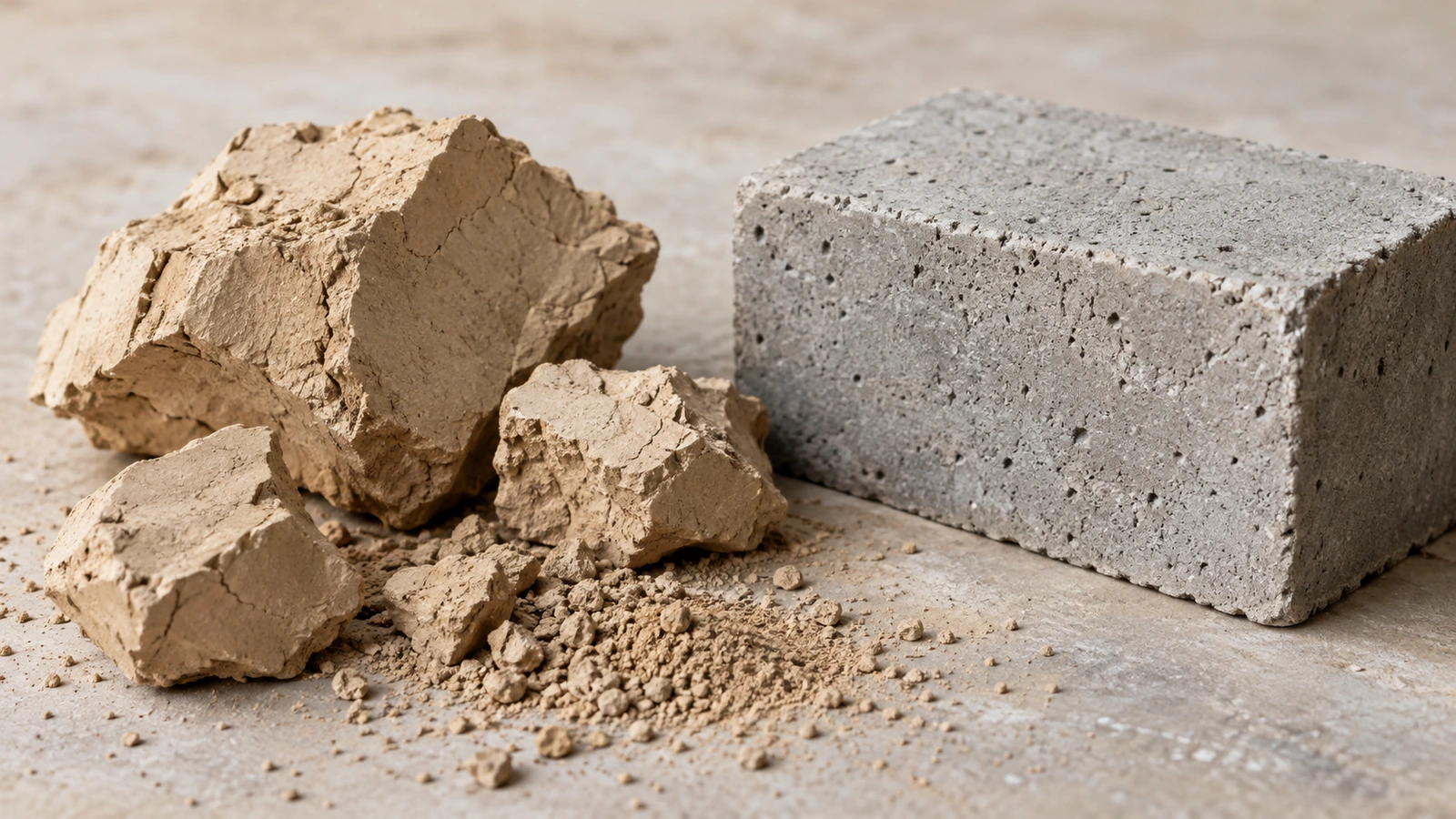
Researchers in Switzerland have activated clay for use in cement at 550°C, compared with the 800°C used in conventional calcination. Mechanically treating the material before heating it could reduce manufacturers’ fuel requirements.
The team at the École Polytechnique Fédérale de Lausanne (EPFL) disrupted the structure of kaolinite, a clay mineral, before applying heat. The researchers reported better early- and later-age reactivity and strength than with conventionally heated clay.
Lei Xu, Alastair T. M. Marsh, Mehnaz Dhar and Karen L. Scrivener conducted the study, published in Communications Engineering on 15 September. Its laboratory findings concern the preparation of a cement ingredient, not a reduction of the temperature needed to manufacture conventional clinker.
What is calcined clay?
Calcined clay has been heated to alter its mineral structure and make it more reactive. Suitable varieties can replace part of the clinker in cement. Clinker is the material produced by heating limestone and other ingredients, then grinding it to make the finished binder.
Cement binds the sand and gravel in concrete. Making clinker releases carbon dioxide both from burning fuel and from the chemical transformation of limestone. Replacing some clinker can reduce both sources of emissions.
Other materials are being investigated for related uses. We reported in 2018 on research into crushed mining waste as a partial replacement for cement in concrete.
The electricity supply affects the savings
The Swiss team’s modelling estimated an average saving of 22 kilograms of carbon dioxide per tonne of activated clay under current energy mixes, rising above 43 kilograms with low-carbon electricity.
Its estimate of up to 28 million tonnes saved annually assumes immediate, full-scale global deployment. That is a scenario calculation, not a forecast of adoption or an emissions reduction already achieved.
Mechanical treatment also consumes energy. A lower heating temperature alone cannot determine the financial return. Manufacturers would need to compare fuel savings with electricity, machinery and maintenance costs.
Commercial production remains small
A separate September analysis by the Leadership Group for Industry Transition found commercial calcined clay projects across every continent. The largest operating facilities were concentrated in emerging markets and developing economies.
The analysis estimates that announced and operating projects could provide 26 million tonnes of lower-carbon cement capacity annually. Even using its optimistic blend assumption, that represents less than 1% of current global cement production.
Existing calcined clay plants establish a market for the ingredient, but they do not demonstrate that EPFL’s pretreatment is commercially viable. Consistent results with local clay supplies, industrial production rates and installation costs would still need to be assessed.
