

The Federal Communications Commission (FCC) is to investigate the Netflix versus Verizon feud. Over the last few weeks Netflix has blamed Verizon for slow streaming speeds, while Verizon says it is Netflix’s fault.
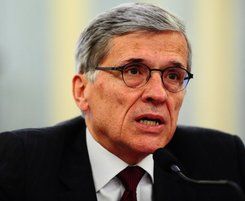
FCC chair Tom Wheeler has asked some members of his team to gather data on the dispute from broadband providers including Verizon, as well as Netflix, in order to determine exactly what is happening and “whether consumers are being harmed.”
Protecting Internet consumers
Mr. Wheeler said there has been talk about protecting Internet consumers for some time. At the heart of discussions is whether Internet Service Providers (ISPs) that provide the final mile of connectivity to the home can advantage or disadvantage content providers, and subsequently advantage or disadvantage consumers.
“What we call the Open Internet rule on which we are currently seeking comment is one component of this. If adopted, the new rule would prohibit bad acts such as blocking content or degrading access to content. This kind of activity within an ISP’s network has traditionally been the focus of net neutrality.”
The recent disputes between ISPs such as Verizon and Comcast have highlighted the problems in the exchange of traffic between ISPs and other network and services, another area of Internet access.
Is Verizon abusing Net Neutrality
Mr. Wheeler quoted the following email from “George”, which he said pretty well sums up public concern:
“Netflix versus Verizon: Is Verizon abusing Net Neutrality and causing Netflix picture quality to be degraded by “throttling” transmission speeds? Who is at fault here? The consumer is the one suffering! What can you do?”
The FCC says it does not know the answer to George’s question and emphasized it is not suggesting that any company is at fault. Mr. Wheeler says George’s message goes to the heart of the matter: “What is going on and what can the FCC do on behalf of consumers?”
Consumers pay their content providers like Amazon, Netflix or Hulu, and also pay their ISP. When the service is substandard they wonder what is going on.
Consumers must get value for money
Mr. Wheeler said:
“I have experienced these problems myself and know how exasperating it can be. Consumers must get what they pay for.”
The FCC stressed that what it is currently doing is looking under the hood and gathering information, not regulation. Consumers want transparency, they want answers, and so does the FCC.
“The bottom line is that consumers need to understand what is occurring when the Internet service they’ve paid for does not adequately deliver the content they desire, especially content they’ve also paid,” Mr. Wheeler said.
The Netflix versus Verizon dispute
Earlier this month, Verizon told Netflix in a “cease and desist” letter to stop informing its clients that the sole cause of their poor download speed is Verizon’s crowded network.
Verizon wrote:
“There is no basis to assert that issues with respect to playback of any particular video session are attribulate solely to the Verizon network. As Netflix knows, there are many different factors that can affect traffic on the internet, including choices by Netflix in how to connect to its customers and deliver content to them, interconnection between multiple networks, and consumer in-home issues such as in-home wiring, WiFi, and device settings and capabilities.”
Netflix spokesman Joris Evers responded via a Netflix tweet with “This is about people not getting what they paid for from their Internet service providers. Netflix is transparent, (Verizon) is shutting that down.”
Verizon asked Netflix to provide evidence showing that the slow connection is Verizon’s fault.
Verizon says it is concerned that Netflix’s claim could be bad for business, making Verizon customers conclude that any type of video, including YouTube ones, would clog up their systems. The responsibility for its customers’ experience “falls squarely on Netflix itself,” Verizon added.
Verizon said that Netflix relies on a mish-mash of intermediary networks to reach its consumers because it is cheaper that way, even though it could connect to every broadband network in the US if it wanted to.
Verizon wrote:
“To now accuse last-mile ISPs of being solely responsible for service issues that may relate to congestion on peering circuits stemming from network arbitrage by upstream providers is self-serving, deceptive, inaccurate and an unfair business practice.”
In a blog in March, Redd Hastings, Netflix CEO, wrote that lack of sufficient interconnectivity by certain large ISPs was undermining Netflix’s performance. He specifically mentioned Verizon, as well some other ISPs for demanding a fee to maintain video quality.
Netflix eventually agreed on a fee with Verizon so that direct connection could be maintained to its network, thus ensuring adequate Internet speeds to Netflix viewers.
Verizon threatened legal action if Netflix continued displaying messages to its viewers blaming Verizon for slow connections.
The row started when Vox Media designer Yuri Victor tweeted that when he attempted to stream a movie, Netflix placed a message (below) on the buffering screen.

Verizon heard about the Netflix message after it was pasted in a Twitter message.
